‘Pokémon Go’ players have been unknowingly training delivery robots
Published on March 13, 2026, by Mack DeGeurin
Nearly a decade after its launch, the augmented reality game, Pokémon Go, has evolved from a simple digital scavenger hunt into a sophisticated tool for training delivery robots. This unexpected development highlights the innovative ways in which crowdsourced data can be repurposed for entirely different applications.
The Rise of Pokémon Go
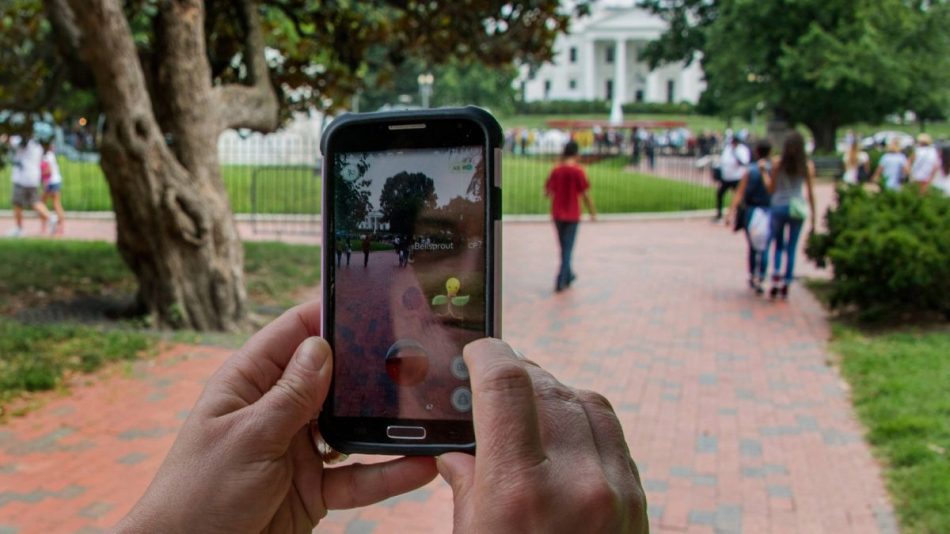
Launched in 2016, Pokémon Go transformed the real world into an interactive gaming experience, encouraging players to explore parks, streets, and various urban landscapes in search of virtual creatures. The app became a cultural phenomenon, attracting hundreds of millions of players who roamed their neighborhoods, capturing Pokémon through their smartphone cameras.
Fast forward to 2026, and the game has significantly evolved, but its legacy continues to influence technology. Recently, Niantic Spatial, the company behind Pokémon Go, announced a partnership with Coco Robotics, a firm specializing in short-distance delivery robots. This collaboration aims to enhance the navigation capabilities of delivery robots, allowing them to operate more effectively in urban environments.
The Role of Visual Positioning System (VPS)
At the heart of this partnership is Niantic’s Visual Positioning System (VPS), a navigation tool designed to pinpoint locations with remarkable accuracy—down to a few centimeters—by analyzing nearby buildings and landmarks. The VPS was trained using over 30 billion images collected from Pokémon Go players, who unwittingly contributed to this vast database while searching for Pokémon.
According to John Hanke, CEO of Niantic Spatial, the challenge of accurately navigating a robot through the real world is akin to making a virtual creature like Pikachu move realistically. The data collected from players has proven invaluable in developing a model that allows delivery robots to understand their surroundings better.
Crowdsourced Data Collection
The data used to train the VPS came from various features within Pokémon Go, particularly the “Field Research” tasks introduced in 2020. These tasks encouraged players to scan real-world landmarks and statues with their cameras in exchange for in-game rewards. This feature significantly boosted the amount of data available for training the VPS, creating 3D models of the real world that would later assist in robot navigation.
Moreover, the extensive player base of Pokémon Go has provided a wealth of information. At its peak, the game boasted around 230 million monthly active users, and even today, it maintains approximately 50 million active users. This vast pool of data allows Niantic to capture images of the same locations under different conditions—varying weather, lighting, and angles—enhancing the accuracy of the VPS.
Challenges in Delivery Robotics
Despite advancements in technology, navigating urban environments remains a significant challenge for autonomous delivery robots. Many current systems rely heavily on GPS, which can be unreliable in densely populated areas with tall buildings that obstruct signals. This unreliability can lead to delays and confusion for delivery robots, impacting their efficiency.
Niantic and Coco Robotics believe that the VPS will enable delivery robots to navigate more accurately by interpreting visual information from their surroundings. Equipped with four cameras, these robots can analyze landmarks and make real-time adjustments to their routes, ensuring timely deliveries.
The Future of Data Utilization
This isn’t the first instance of crowdsourced data being repurposed for different applications. For example, Google’s CAPTCHA tests, which require users to identify images of objects, have been speculated to contribute to training AI vision models. Similarly, user-generated content from mapping applications like Waze has been utilized by law enforcement for investigations.
While Niantic has not indicated any plans to share VPS data with authorities, the potential for such technology to be used in various sectors raises important questions about privacy and data ownership. As Niantic continues to develop its “living map” of the world, the data collected from delivery robots will further enhance the VPS, creating a feedback loop of continuous improvement.
Conclusion
As we look to the future, the partnership between Niantic and Coco Robotics exemplifies how seemingly unrelated technologies can converge to solve real-world problems. The data generated by Pokémon Go players, once used solely for entertainment, is now paving the way for more efficient delivery systems. This innovative use of crowdsourced data not only highlights the potential of augmented reality but also underscores the importance of user engagement in shaping the technologies of tomorrow.
Note: The information in this article is based on data available up to October 2023 and reflects the ongoing developments in technology and data utilization.