
One of the Internet’s Most Iconic Websites Just Took a Bold Stand. The Rest Should Follow.
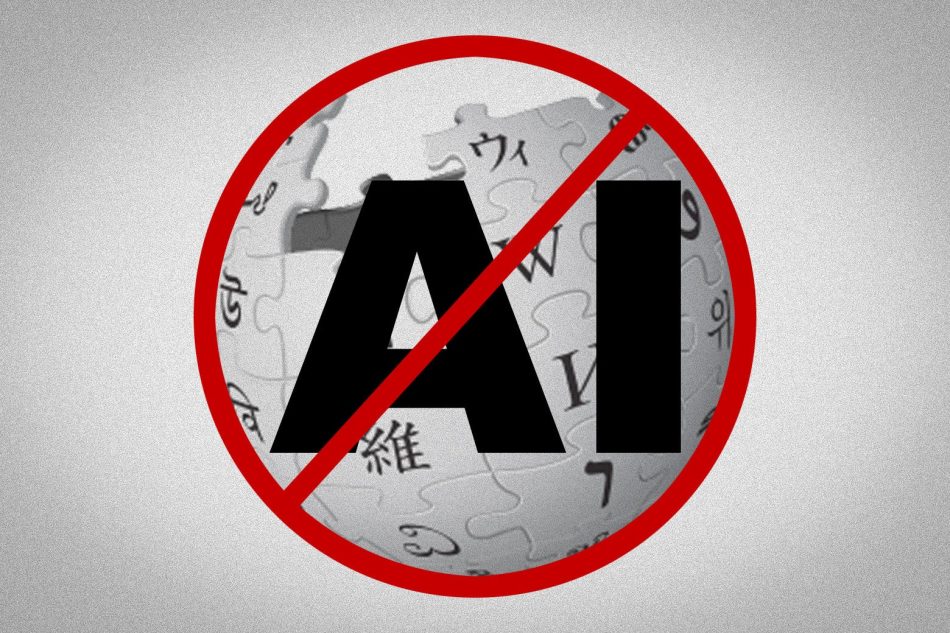
On March 20, 2026, Wikipedia’s English-language platform made a significant decision by officially banning all A.I.-generated text from its vast repository of over 7.1 million articles. This policy marks a pivotal moment in the ongoing debate about the role of artificial intelligence in content creation and the integrity of online information.
The Decision to Ban A.I. Content
The new policy eliminates any ambiguity regarding the presence of bot-generated text on Wikipedia. The clear stance is a definitive “no” to A.I.-created content on public pages. However, editors are still permitted to utilize A.I. tools for proofreading their work or translating foreign-language entries. This decision comes in response to the increasing number of low-quality, hallucination-prone articles that have surfaced since the launch of ChatGPT.
Background of the A.I. Ban
The push for this ban was initiated by Ilyas Lebleu, an A.I. research student from France, who edits Wikipedia under the username Chaotic Enby. The proposal for the A.I. ban stemmed from concerns that A.I. content was frequently violating Wikipedia’s core principles of neutrality and factual accuracy. Lebleu noted that A.I.-generated articles often contained misleading citations and promotional language, which contradicted the encyclopedia’s commitment to objective information.
Identifying the Problem
As early as a year after the release of ChatGPT, Wikipedia editors began noticing a surge in problematic articles. Common issues included:
- Presence of prompts from A.I. models left in the text.
- Nonexistent citations that could not be verified.
- Overuse of vague phrases like “rich cultural heritage.”
These issues led to the creation of a WikiProject called “AI Cleanup,” where editors could share strategies for identifying A.I.-generated content. The growing burden of verifying A.I. content prompted the need for a formal policy to address the problem.
Arguments Against the Ban
While the decision to ban A.I. content was ultimately passed, it was not without controversy. Opponents of the ban presented several arguments:
- Positive Use of A.I.: Some argued that A.I. could enhance the writing and source-reviewing process, leading to high-quality articles.
- Enforcement of Existing Policies: Others believed that banning A.I. was unnecessary since A.I. content already tended to violate Wikipedia’s existing rules.
- Detection Challenges: Concerns were raised about the difficulty of distinguishing between human and A.I. writing, especially given the limitations of detection tools.
In response, Lebleu emphasized that while some A.I. articles were rated “Good,” they were exceptions rather than the rule. The majority of A.I. content failed to meet Wikipedia’s standards, necessitating the ban.
Addressing Concerns and Compromises
As discussions progressed, Wikipedia editors sought to find a balance between banning A.I. content and allowing for its beneficial use. Several compromise measures were introduced:
- Speedy Deletion for A.I. Images: A criterion was established to expedite the removal of A.I.-generated images, making it easier for editors to address clear violations.
- Guidelines for A.I. Detection: A page titled “Signs of AI Writing” was created to help editors identify A.I. content more effectively.
- Protection Against False Positives: Guidelines were implemented to ensure that editors were not penalized for using writing styles that might resemble A.I. output.
These measures aimed to create a more structured approach to handling A.I. content while addressing the concerns of various stakeholders within the Wikipedia community.
The Future of A.I. on Wikipedia
Despite the ban on A.I.-generated text, the decision does not signify a complete rejection of A.I. tools. Editors can still utilize A.I. for tasks such as proofreading and translation. The challenge lies in maintaining the integrity of Wikipedia’s content while adapting to the evolving landscape of technology.
Lebleu noted that the introduction of stricter guidelines was essential, especially after an incident where an A.I. agent created its own account and began editing Wikipedia. This incident highlighted the potential risks associated with A.I. involvement in content creation and reinforced the need for robust policies to safeguard the platform.
Lessons for Other Platforms
Wikipedia’s decision to ban A.I. content offers valuable insights for other platforms grappling with similar challenges. Key takeaways include:
- Establish Clear Policies: Platforms should create explicit guidelines regarding the use of A.I. to maintain content quality.
- Encourage Community Involvement: Engaging users in discussions about A.I. can help build consensus and address concerns effectively.
- Monitor and Adapt: Continuous monitoring of A.I. content and its impact on the platform is crucial for making informed policy adjustments.
As technology continues to advance, the need for clear standards and community engagement will only grow more critical.
Conclusion
Wikipedia’s bold stand against A.I.-generated content sets a precedent for other online platforms. By prioritizing the integrity of information and engaging in thoughtful discussions about technology’s role in content creation, Wikipedia demonstrates the importance of maintaining high standards in an increasingly automated world.
Note: The ongoing dialogue surrounding A.I. in content creation is essential for ensuring that platforms like Wikipedia remain reliable sources of information for users worldwide.


