Is AI the new fracking?
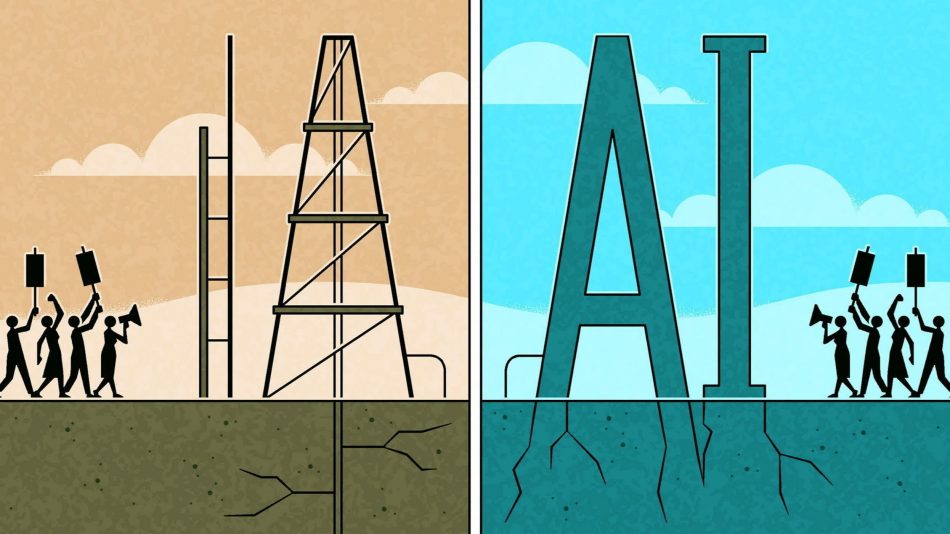
In recent years, artificial intelligence (AI) has emerged as a transformative force across various sectors, much like fracking did for the energy industry. While fracking revolutionized oil and gas extraction, AI is reshaping how businesses operate, how decisions are made, and how data is utilized. This article explores the parallels between AI and fracking, their impacts on economies, and the potential risks and rewards associated with each.
The Fracking Revolution
Fracking, or hydraulic fracturing, is a technique used to extract oil and natural gas from deep underground. It gained prominence in the early 2000s, particularly in the United States, leading to a significant increase in domestic energy production. The benefits of fracking included:
- Increased Energy Independence: The U.S. became less reliant on foreign oil, bolstering national security.
- Economic Growth: Fracking created thousands of jobs and stimulated local economies.
- Lower Energy Prices: The surge in supply led to reduced energy costs for consumers.
However, fracking also raised environmental concerns, including groundwater contamination and increased seismic activity. The debate surrounding its safety and sustainability continues to this day.
The Rise of Artificial Intelligence
Artificial intelligence encompasses a range of technologies, including machine learning, natural language processing, and robotics. AI has the potential to revolutionize industries by:
- Enhancing Efficiency: AI can automate repetitive tasks, allowing human workers to focus on more complex problems.
- Improving Decision-Making: AI systems can analyze vast amounts of data to provide insights and recommendations.
- Driving Innovation: AI fosters the development of new products and services, creating new markets and opportunities.
As companies increasingly adopt AI technologies, the implications for the workforce and the economy are profound. Many fear job displacement, while others see the potential for new job creation in AI-related fields.
Comparing Economic Impacts
Both AI and fracking have had significant economic impacts, but they differ in scope and scale:
Job Creation vs. Job Displacement
Fracking created numerous jobs in extraction, transportation, and support services. Conversely, AI has the potential to displace jobs in sectors such as manufacturing, customer service, and data entry. However, it also creates new opportunities in technology, data analysis, and AI development.
Investment and Capital Flow
Fracking attracted billions in investment, driving growth in energy stocks and related industries. Similarly, AI has become a focal point for venture capital, with billions invested in startups and established companies developing AI technologies. This influx of capital fuels innovation but also raises concerns about market bubbles.
Global Competitiveness
The U.S. became a global leader in energy production due to fracking. In the realm of AI, countries are racing to establish dominance, with nations like China and the U.S. investing heavily in research and development. The competition for AI supremacy could lead to geopolitical tensions and economic disparities.
Environmental and Ethical Considerations
While fracking has faced scrutiny for its environmental impact, AI raises ethical questions that are equally important:
Environmental Footprint
Fracking’s environmental concerns include water usage, pollution, and land degradation. AI, while less directly harmful, has its own environmental footprint, particularly in energy consumption associated with data centers and training large models.
Ethical Implications
AI technologies can perpetuate biases present in training data, leading to unfair outcomes in areas like hiring, law enforcement, and lending. Addressing these ethical concerns is crucial to ensure that AI benefits society as a whole.
Future Outlook
As we look toward the future, the trajectories of AI and fracking will likely continue to diverge:
Sustainability and Regulation
The fracking industry faces increasing regulatory scrutiny aimed at minimizing environmental damage. AI, too, will require thoughtful regulation to address ethical concerns and ensure responsible use of technology.
Innovation and Adaptation
Just as the energy sector is adapting to new technologies and renewable energy sources, industries will need to adapt to the rapid advancements in AI. Organizations that embrace AI will likely gain a competitive edge, while those that resist may fall behind.
Conclusion
In conclusion, AI can be viewed as the new fracking in terms of its potential to disrupt industries, create economic opportunities, and raise ethical questions. While both technologies offer significant benefits, they also pose challenges that require careful consideration. As society navigates the complexities of AI, it is crucial to balance innovation with responsibility to ensure a sustainable and equitable future.
Note: This article is intended for informational purposes only and does not constitute financial or investment advice.