Delhi Cloud Seeding Trial 2026: Will Delhi Finally Get Artificial Rain This Summer? Here’s All on IIT Kanpur’s New Cloud Seeding Plan, What Went Wrong Last Time & What Changes Now
The National Capital of India, Delhi, may witness another attempt at artificial rain this summer, with the Indian Institute of Technology (IIT) Kanpur seeking approval from the Directorate General of Civil Aviation (DGCA) to conduct fresh cloud seeding trials. These trials are proposed to take place between April and June 2026, aiming to address the ongoing air pollution crisis in the city.
Background of Cloud Seeding in Delhi
Cloud seeding is a weather modification technique that aims to enhance precipitation by dispersing substances into existing clouds. The hope is that these substances will encourage the formation of raindrops, thereby artificially inducing rainfall. This initiative comes after two unsuccessful trials conducted in October 2025, which failed to produce any rainfall.
What Went Wrong With the October 2025 Cloud Seeding Trials?
During the October 2025 trials, IIT Kanpur attempted to induce rainfall by releasing chemical flares containing silver iodide, iodized salt, and rock salt into the atmosphere. Unfortunately, both trials did not succeed due to unfavorable atmospheric conditions. The primary reason cited for the failure was the low moisture levels in the clouds, which were reported to be around 15 to 20 percent.
IIT Kanpur stated, “While rainfall could not be triggered yesterday because moisture levels were around 15 to 20 percent, the trial delivered valuable insights.” Despite the lack of rain, the Delhi government claimed that the trials had a positive impact by reducing particulate matter in targeted locations.
IIT Kanpur’s Plans for Summer 2026
In light of the previous trials, IIT Kanpur is currently analyzing the data and observations gathered from the October experiments. An official familiar with the matter indicated that the institution is reviewing the findings and may plan further trials this summer. The final decision regarding the timing of these trials will be made by IIT Kanpur.
If the DGCA grants approval, the trials are expected to be conducted during a period when moisture levels in the atmosphere are typically higher, thus increasing the likelihood of success compared to the previous attempts.
Understanding Cloud Seeding: How Does It Work?
Cloud seeding involves the introduction of specific substances into clouds to enhance their ability to produce rainfall. The most commonly used substance is silver iodide, which serves as a nucleating agent. When dispersed into clouds, these particles provide a surface for water vapor to condense upon, leading to the formation of ice crystals or raindrops that are heavy enough to fall as precipitation.
It is important to note that cloud seeding does not create clouds from scratch; it merely enhances the precipitation potential of existing clouds. This is why the atmospheric conditions, particularly moisture levels, are critical for the success of cloud seeding efforts.
Government Support for Cloud Seeding Trials
There is official backing for the upcoming cloud seeding trials. The Economic Survey of Delhi for 2025-26, released on March 23, explicitly mentioned the intention to conduct more cloud seeding trials in consultation with the India Meteorological Department. The survey described these trials as a “short-term emergency measure for artificial rainfall generation to disperse and reduce ambient air pollution levels.”
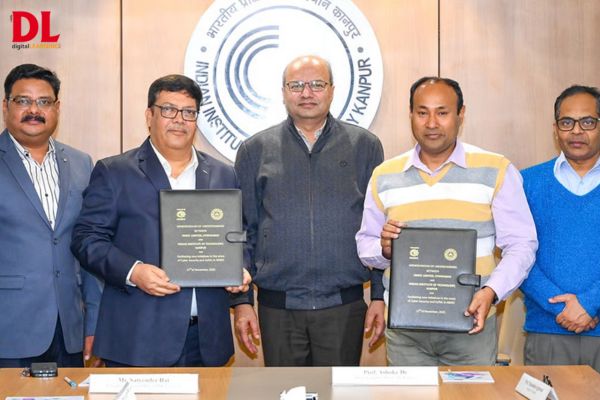
Furthermore, on September 25, 2025, IIT Kanpur and the Delhi Environment Department signed a Memorandum of Understanding (MoU) to formalize their collaboration on these experiments, establishing a framework for future cloud seeding initiatives.
Frequently Asked Questions (FAQs)
When will the cloud seeding trials happen?
If approved by the DGCA, the trials could take place between April and June 2026.
Why did the October 2025 trials fail?
The trials failed primarily due to insufficient moisture levels in the atmosphere, which were only around 15 to 20 percent.
What substances were released during the trials?
The trials involved the release of silver iodide, iodized salt, and rock salt through chemical flares.
Did the trials have any positive effect?
According to the Delhi government, the trials helped reduce particulate matter at targeted locations, despite the absence of rainfall.
What is cloud seeding?
Cloud seeding is a weather modification technique that disperses substances into clouds to promote rainfall.
Who is conducting the trials?
The trials are being conducted by IIT Kanpur in collaboration with the Delhi Environment Department.
Conclusion
As Delhi prepares for another round of cloud seeding trials, the focus remains on overcoming the challenges faced during previous attempts. With the support of government initiatives and improved atmospheric conditions anticipated in the summer months, there is cautious optimism that these trials may yield the desired results in combating air pollution through artificial rain.
Note: This information is based on inputs from news agency reports and does not independently confirm the information provided by the relevant sources.