
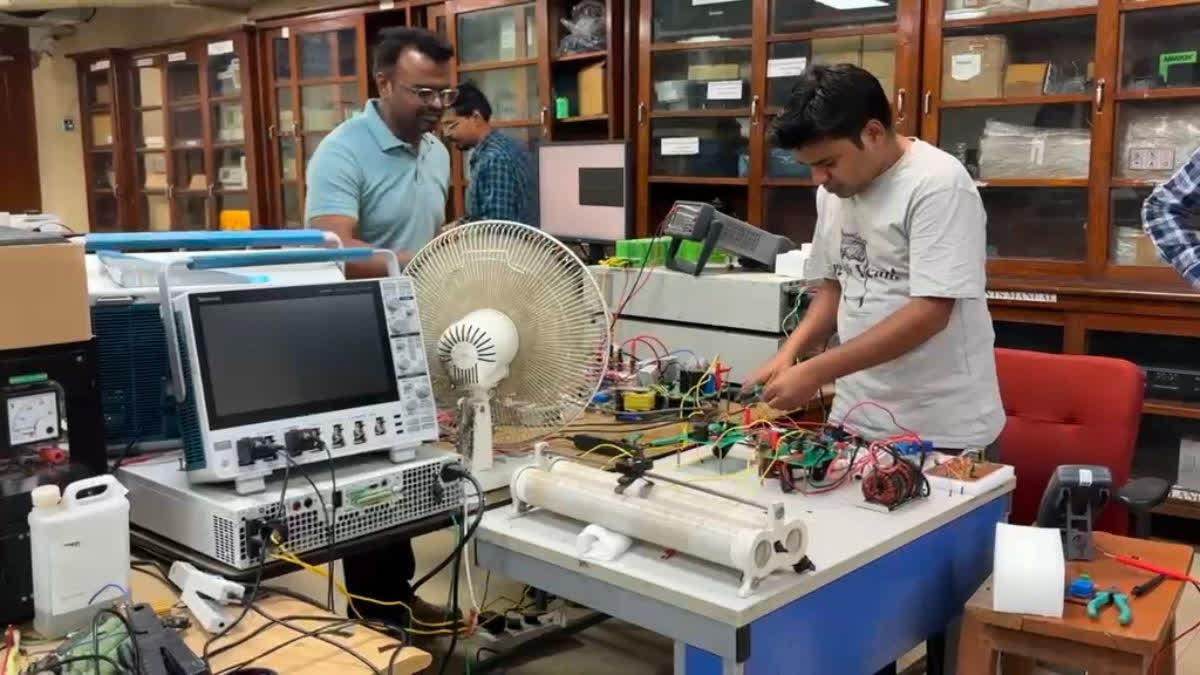
IIT BHU Researchers Working On 'Battery Aadhaar' To Track EV Battery Life
Researchers at the Indian Institute of Technology, Banaras Hindu University (IIT BHU), are pioneering a digital identification system known as ‘Battery Aadhaar’. This innovative project aims to assign a unique 21-character identification number to each electric vehicle (EV) battery, allowing for comprehensive tracking of its lifecycle from production to recycling.
Overview of Battery Aadhaar
The ‘Battery Aadhaar’ initiative is part of a new Government of India scheme designed to enhance the traceability, safety, and sustainability of EV batteries. By providing each battery with a distinct digital identity, the project seeks to revolutionize how batteries are monitored and managed throughout their lifespan.
Significance of the Initiative
Professor RK Singh, Head of the Department of Electronic Engineering at IIT BHU, emphasized the importance of this development. He stated, “The complete data from the production of the battery to its re-birth will be available.” This system is designed to function similarly to India’s existing Aadhaar identification framework, which has successfully provided a comprehensive biography of individuals. In this case, it will offer detailed insights into each EV battery unit.
Dynamic Data Tracking
Unlike traditional documentation provided by manufacturers, which typically records basic specifications like lifecycle duration and temperature tolerance at the point of production, Battery Aadhaar will offer dynamic updates throughout the battery’s usage. This means that users and operators can monitor real-time metrics, including:
- Remaining useful life
- Current state of health
- Historical performance data
Extending Battery Life: The Concept of ‘Second Life’
One of the most innovative aspects of Battery Aadhaar is its introduction of the “second life” concept for batteries. Once an EV battery is deemed unsuitable for use in vehicles, the data collected can help determine whether the battery is still viable for lower-power applications. This approach not only reduces waste but also extends the overall utility of the battery, contributing to a more sustainable environment.
How Battery Aadhaar Works
Battery Aadhaar operates as a one-way digital identification technology, utilizing a QR code infrastructure. This makes it easily accessible via smartphones, allowing users to quickly scan and retrieve information about their battery’s status. The platform aims to provide full transparency across the battery supply chain, from manufacturing and active use to end-of-life recycling.
Benefits of Battery Aadhaar
The implementation of Battery Aadhaar is expected to bring several benefits to the EV industry, including:
- Enhanced Traceability: Each battery’s lifecycle can be tracked meticulously, ensuring accountability and reliability.
- Improved Safety: Real-time data can help identify potential issues before they become critical, enhancing user safety.
- Sustainability: By promoting the second life of batteries, the initiative supports environmental sustainability by reducing waste.
- Data-Driven Decisions: Users and manufacturers can make informed decisions based on accurate data regarding battery health and performance.
Future Implications
The development of Battery Aadhaar is a significant step towards creating a more robust and sustainable EV ecosystem. As the demand for electric vehicles continues to rise, the need for efficient battery management systems becomes increasingly critical. This initiative not only addresses current challenges but also sets a precedent for future innovations in battery technology.
Conclusion
The ‘Battery Aadhaar’ system developed by IIT BHU researchers represents a groundbreaking approach to managing EV batteries. By providing a unique digital identity for each battery, the initiative promises to enhance traceability, safety, and sustainability within the EV battery ecosystem. As the world shifts towards electric mobility, innovations like Battery Aadhaar will play a vital role in ensuring that the transition is both efficient and environmentally responsible.
Note: The information presented in this article is based on the latest developments as of April 2026 and may be subject to change as further research and implementation occur.


