IIT Bhubaneswar, NIMHANS Decode Schizophrenia Through Chaos-Driven Dynamics
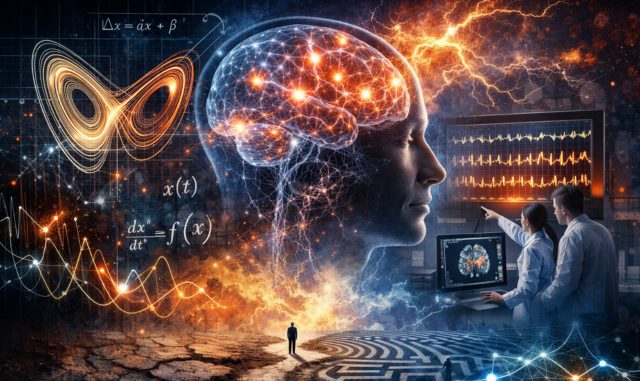
In a groundbreaking interdisciplinary research collaboration, scientists from the National Institute of Mental Health and Neurosciences (NIMHANS) in Bangalore and the Indian Institute of Technology (IIT) Bhubaneswar have developed a novel approach to understanding schizophrenia using chaos-driven dynamical systems. This pioneering study offers promising insights into brain function, disease progression, and potential treatment pathways for one of the most complex mental health disorders.
Understanding Schizophrenia
Mental health disorders affect nearly 15% of the global population, with schizophrenia being among the most severe due to its disabling symptoms and early onset, typically during late adolescence or early adulthood. This timing significantly impacts individuals during their most productive years. Understanding the biological and neural mechanisms underlying such disorders is essential for early diagnosis and the development of effective treatments.
Modern neuroscience recognizes mental illnesses as brain-based conditions involving dysfunction in neural networks, neurotransmitter imbalances, and structural abnormalities. The complexity of these interactions calls for innovative research methodologies.
Research Methodology
The research team employed functional magnetic resonance imaging (fMRI), a technique that measures brain activity by detecting changes in blood oxygen levels, known as the blood-oxygen-level-dependent (BOLD) signal. The study focused on resting-state fMRI (rs-fMRI) signals to examine brain network dysfunction and synchronization patterns.
To analyze these complexities, the team utilized a specially designed chaotic dynamical system. Each patient’s brain signal uniquely influenced this system, enabling researchers to observe how brain activity evolves over time and responds to treatments such as:
- Antipsychotic medications
- Transcranial magnetic stimulation (TMS)
- Electroconvulsive therapy (ECT)
Innovative Findings
A key innovation of this research is the development of a Chaotic Dynamics Marker (CDM), which can assess disease recovery and guide treatment strategies. Notably, the study revealed that beyond a certain threshold, some treatments may have opposite effects on brain excitation, offering critical insights for personalized medicine.
The research introduces a unique dynamical system named U-KBBC, developed collaboratively by experts across various fields, including psychiatry at NIMHANS, and chemistry, materials engineering, electronics engineering, and high-performance computing at IIT Bhubaneswar. This system produces a distinct attractor pattern named “Sudarshan,” which changes shape based on individual brain signals.
Patient-Specific Markers
These variations generate patient-specific markers, including the CDM and a synchronization measure (SyncSZ), enabling detailed tracking of disease assessment, progression, and recovery. The team at IIT Bhubaneswar also developed a portable electronic device, “Chinmoy,” embedded with the U-KBBC system, enhancing the potential for real-world clinical applications.
Intellectual Property and Future Directions
A joint patent has been filed by NIMHANS Bangalore and IIT Bhubaneswar to protect this innovation. This study is the first of its kind globally and represents a major step toward integrating advanced chaotic dynamics-based models with clinical neuroscience.
While the findings are promising, further validation through large-scale studies is underway. The application of chaotic dynamics is also expanding into other medical domains, including:
- Depression
- Epilepsy
- Cancer
- Cardiovascular disorders
Collaboration and Multidisciplinary Approach
This collaboration exemplifies the power of multidisciplinary and multi-institutional research in addressing complex health challenges. The team aims to extend this work across medical institutions in India and globally, contributing to improved diagnosis, treatment, and understanding of mental health disorders.
Conclusion
The innovative research conducted by IIT Bhubaneswar and NIMHANS marks a significant advancement in the understanding and treatment of schizophrenia. By employing chaos-driven dynamics, the study not only sheds light on the complexities of brain function but also paves the way for personalized treatment approaches that could greatly benefit individuals affected by this debilitating disorder.
Note: This article is based on the research findings and developments reported as of April 2026, and further studies are anticipated to validate these findings and expand their applications in mental health.