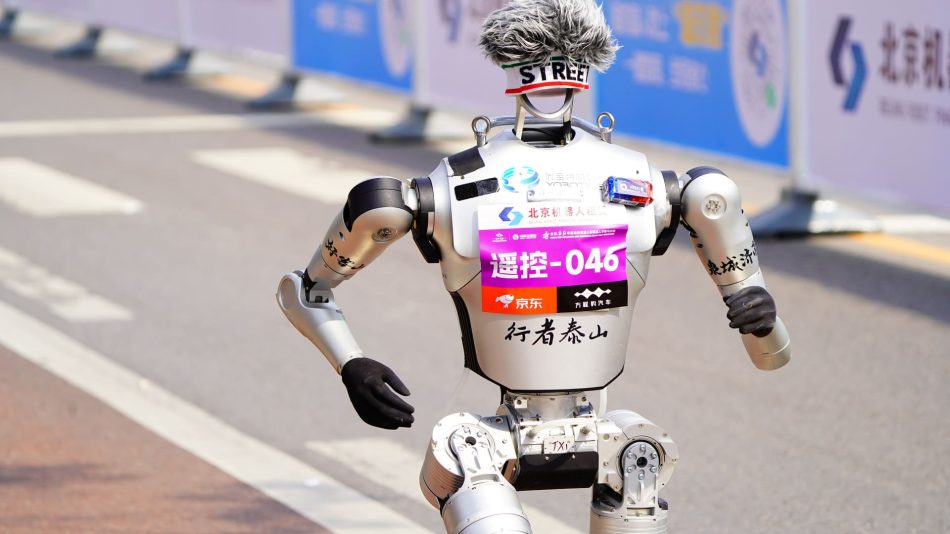
A non-human race: Beijing half-marathon shows how far robots have come
On April 19, 2026, the Beijing E-Town Humanoid Robot Half-Marathon took place, showcasing the remarkable advancements in robotics technology. This year, the event saw a significant increase in participation, with over 100 humanoid robots competing alongside 12,000 human runners, marking a stark contrast to the inaugural race held the previous year.
Record-Breaking Performance
The highlight of the event was a humanoid robot developed by the Chinese smartphone maker Honor, which not only participated but also broke the half-marathon world record. The robot completed the 21-kilometer (13-mile) race in an impressive time of 50 minutes and 26 seconds, surpassing the previous human record set by Ugandan runner Jacob Kiplimo just a month earlier in Lisbon.
Last year, the race was riddled with challenges, with many robots failing to finish. The best-performing robot from the inaugural event recorded a time of 2 hours and 40 minutes, which was more than double the time of the human winner. This year’s event demonstrated the rapid evolution of robot technology, with several robots outpacing professional athletes by more than 10 minutes.
Autonomous Navigation and Enhanced Technology
One of the most significant advancements this year was the ability of nearly half of the robot entrants to navigate the course autonomously, as opposed to being controlled remotely. This improvement in autonomous navigation is crucial for future applications of humanoid robots in various industries.
Du Xiaodi, an engineer from Honor, explained that the winning robot had been in development for a year and was designed with legs measuring 90 to 95 cm (35 to 37 inches) long to mimic elite human runners. The robot also incorporated liquid cooling technology, similar to that used in smartphones, which contributed to its performance.
Public Reception and Future Aspirations
The event attracted a diverse audience, including engineering students and young robotics enthusiasts. Chu Tianqi, a 23-year-old engineering student, expressed his admiration for the robots’ running postures and acknowledged the rapid progress in artificial intelligence (AI) technology. He emphasized the importance of adapting to AI advancements to avoid becoming obsolete in the job market.
Young spectators, such as 11-year-old Guo Yukun, were inspired by the event and expressed their aspirations to pursue careers in robotics. Guo, who participates in robotics classes and competitions, highlighted the importance of education in preparing for a future dominated by technological advancements.
Challenges and Economic Viability
Despite the impressive display of athleticism, the commercialization of humanoid robots in industrial settings remains a challenge. Experts noted that while the robots demonstrated remarkable physical capabilities, they still lack the AI software necessary to match the efficiency of human workers in complex tasks. Skills such as manual dexterity and real-world perception are essential for successful integration into industries.
China aims to become a global leader in humanoid robotics, implementing various policies to support local firms. These initiatives include subsidies and infrastructure projects designed to cultivate innovation in the robotics sector. The country’s commitment to advancing humanoid technology was also evident during the annual CCTV Spring Festival gala, which featured a martial arts demonstration performed by humanoid robots.
The Future of Humanoid Robotics
The advancements showcased during the Beijing half-marathon highlight the potential of humanoid robots to transform various sectors, including manufacturing, logistics, and even combat scenarios. As technology continues to evolve, the integration of humanoid robots into everyday tasks may become increasingly feasible.
While the journey toward widespread adoption of humanoid robots is still in its early stages, the progress made in events like the Beijing half-marathon serves as a testament to the dedication and innovation within the robotics community. As engineers and researchers continue to push the boundaries of what is possible, the future of humanoid robotics appears bright.
Conclusion
The Beijing E-Town Humanoid Robot Half-Marathon not only showcased the remarkable capabilities of humanoid robots but also emphasized the rapid advancements in robotics technology. With continued investment and innovation, the potential for humanoid robots to reshape industries and improve efficiency is immense.
Note: The information presented in this article is based on events and advancements up to October 2023. Further developments in robotics may have occurred since this date.