AI is making college students change majors
As artificial intelligence (AI) continues to evolve and permeate various sectors, it is significantly influencing the academic paths of college students. A recent poll conducted by the Lumina Foundation and Gallup reveals that nearly half of college students have considered changing their major or field of study due to the potential impact of AI on the job market.
The Impact of AI on Academic Choices
The landscape of higher education is rapidly changing as students respond to the technological advancements brought about by AI. According to the survey, 14% of students have thought “a great deal” about switching their major, while 33% have considered it “a fair amount.” This shift in thinking is largely driven by concerns about how AI will affect job opportunities in various fields.
Demographic Insights
The survey highlights significant differences in how various demographics are responding to the AI boom:
- Gender: 60% of male students have contemplated changing their major due to AI, compared to 38% of female students.
- Field of Study: Students in technology (70%) and vocational fields (71%) show the highest levels of concern, while those studying business (54%), humanities (54%), and engineering (52%) are also affected.
Changing Majors: A Growing Trend
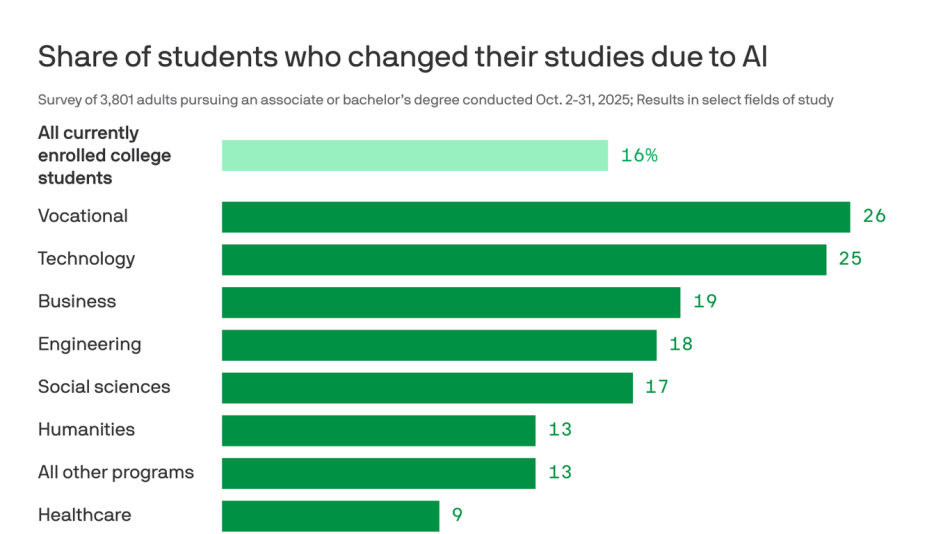
In addition to contemplating changes, 16% of students have already changed their major as a direct response to the perceived impact of AI. This trend is particularly pronounced among:
- Male students (21%) compared to female students (12%).
- Students in vocational majors (26%) and technology fields (25%).
Employers’ Expectations
Christina Eid, a senior at American University majoring in business administration with a focus on marketing, emphasizes the necessity for students to adapt to the AI landscape. Her research indicates a significant increase in employer inquiries regarding AI skills:
- In 2024, 12% of students reported being asked about their AI capabilities in job interviews.
- By 2025, that number surged to 30%.
Eid notes that regardless of personal opinions about AI, it is crucial for students to be prepared for a future where AI proficiency may be a requirement for employment.
Institutional Responses to AI
Despite the urgency for students to engage with AI, the responses from educational institutions vary widely. The survey indicates that:
- 42% of students feel discouraged from using AI in their coursework, except in specific instances.
- 11% of institutions prohibit AI usage in academic work.
- 7% of colleges encourage extensive use of AI.
Interestingly, even in environments where AI is discouraged, students still find ways to incorporate it into their studies. For example, 15% of students at such colleges use AI daily, while 33% use it weekly.
Understanding AI’s Implications
Courtney Brown, vice president of impact and planning at Lumina Foundation, expresses concern that students may not fully grasp the implications of AI technology. She states, “They don’t understand who it could hurt or help, and that’s where they’re going to be harmed the most.” This highlights the necessity for educational institutions to not only teach students how to use AI but also to explore its biases and broader societal impacts.
Advice for Students and Institutions
Eid advocates for a proactive approach to AI education, urging both students and institutions to embrace AI technology. She suggests that regardless of institutional hesitance, it is ultimately up to students to prepare themselves for the future job market. Her straightforward advice is simple: “Get on with it.”
Conclusion
The rise of AI is reshaping the academic and professional landscape for college students. As they navigate this changing environment, it is crucial for both students and educational institutions to adapt and prepare for the future. The implications of AI on career prospects are significant, and understanding its role in the job market will be essential for success in the coming years.
Note: This article is based on a poll conducted by the Lumina Foundation and Gallup, reflecting the changing attitudes of college students towards their majors in light of AI advancements.