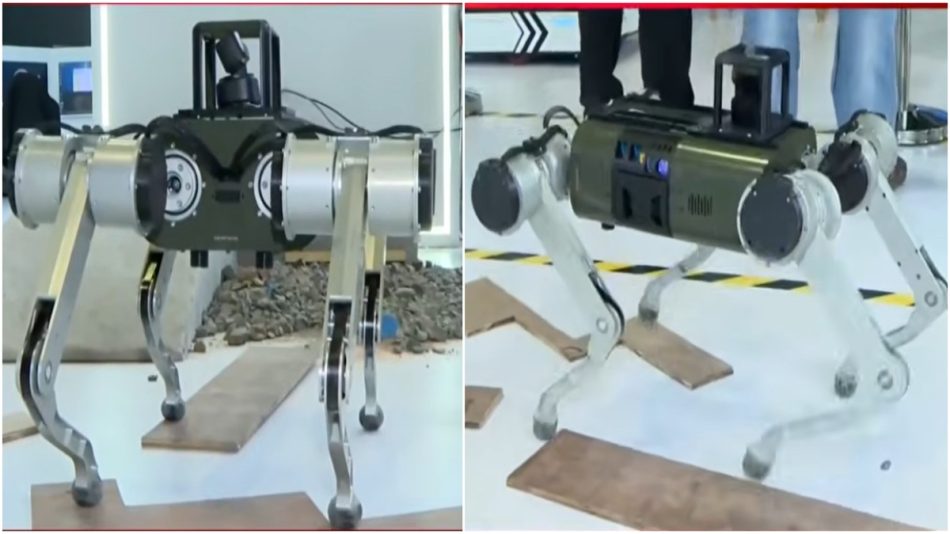
AI Summit 2026: IIT Kanpur’s Robodog Steals Spotlight as a Game-Changing Disaster Response Machine
The AI Summit 2026, held at the Indian Institute of Technology (IIT) Kanpur, showcased groundbreaking advancements in artificial intelligence and robotics. Among the highlights was the presentation of a revolutionary device known as the “Robodog,” developed by a team of researchers and engineers at IIT Kanpur. This innovative machine is poised to transform disaster response operations, offering new hope in emergency situations.
What is the Robodog?
The Robodog is an advanced robotic system designed to assist in various disaster scenarios, including natural calamities such as earthquakes, floods, and landslides. Equipped with cutting-edge AI technology, the Robodog can navigate through challenging terrains, locate survivors, and deliver essential supplies in areas that are otherwise inaccessible to humans.
Key Features of the Robodog
- Autonomous Navigation: The Robodog employs sophisticated algorithms that allow it to move independently through complex environments, avoiding obstacles and adapting to changing conditions.
- Survivor Detection: Utilizing advanced sensors and imaging technology, the Robodog can identify human presence under debris or in hazardous areas, significantly increasing the chances of rescue.
- Supply Delivery: The machine can carry and deliver essential items such as food, water, and medical supplies to those in need, ensuring that help reaches victims quickly.
- Remote Operation: The Robodog can be controlled remotely, allowing rescue teams to operate it from a safe distance, minimizing risks to human life.
- Real-Time Data Transmission: Equipped with communication tools, the Robodog can send real-time updates and data back to rescue teams, aiding in decision-making processes during emergencies.
The Development Journey
The development of the Robodog was a collaborative effort involving multiple departments at IIT Kanpur, including robotics, artificial intelligence, and mechanical engineering. The project began in early 2024, driven by the need for more effective disaster response tools in India and around the world.
Researchers conducted extensive field studies to understand the challenges faced by rescue teams during disasters. This research informed the design and functionality of the Robodog, ensuring it meets the specific needs of emergency responders.
Real-World Applications
The potential applications of the Robodog are vast. Here are some scenarios where it could make a significant impact:
Earthquake Response
In the aftermath of an earthquake, traditional rescue efforts can be hampered by debris and unstable structures. The Robodog can navigate through rubble, identify trapped individuals, and deliver supplies to those in need.
Flood Relief
During floods, access to affected areas can be challenging. The Robodog can traverse flooded terrains, providing essential aid and helping to locate missing persons.
Search and Rescue Operations
In various disaster scenarios, time is of the essence. The Robodog’s ability to quickly assess situations and deliver aid can significantly enhance the efficiency of search and rescue operations.
Challenges and Future Developments
While the Robodog represents a significant advancement in disaster response technology, several challenges remain. Ensuring reliability in extreme conditions, improving battery life, and enhancing communication capabilities are areas that require ongoing research and development.
Looking ahead, the team at IIT Kanpur is exploring partnerships with government agencies and NGOs to conduct field tests and refine the Robodog’s capabilities. They are also considering the integration of additional features, such as environmental monitoring and enhanced navigation systems using machine learning.
Conclusion
The Robodog developed by IIT Kanpur is a testament to the potential of artificial intelligence and robotics in enhancing disaster response efforts. As the technology continues to evolve, it holds the promise of saving lives and improving the efficiency of emergency services worldwide. The AI Summit 2026 served as a platform to highlight such innovations, paving the way for future advancements in this critical field.
Note: The information presented in this article is based on developments reported up to October 2023 and may be subject to change as further advancements occur.