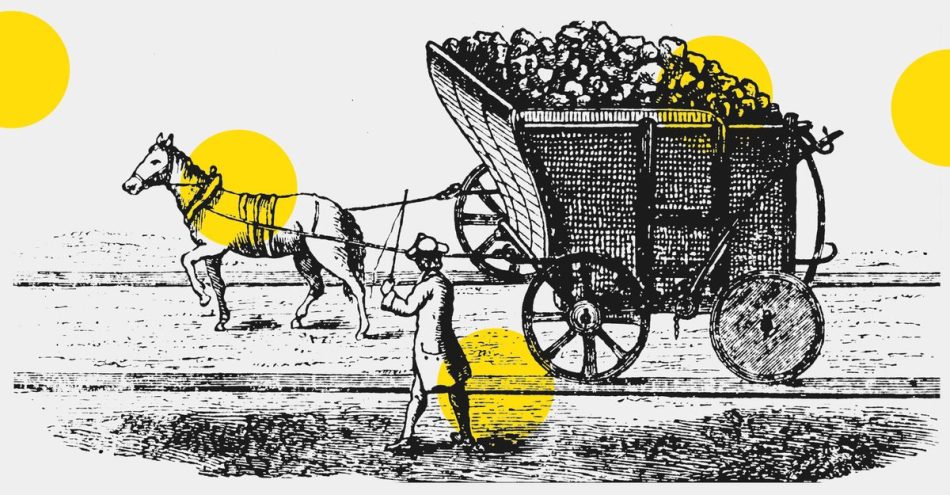
Are You Coal or a Horse?
The question of job security in the age of artificial intelligence (AI) has become increasingly pressing. With advancements in AI technology, many white-collar workers are left wondering whether their jobs will exist in the near future. In this context, a provocative analogy has emerged: Are you coal, or are you a horse?
The Decline of Horses in the Workforce
Historically, horses played a crucial role in agriculture and transportation. In 1915, American farms employed approximately 26.5 million horses. However, by 2015, this number had plummeted to around 700,000. The introduction of tractors and trucks rendered horses largely obsolete in farming. Despite their utility, horses did not adapt to the changing landscape of labor; they remained stubbornly rooted in their roles, failing to seek new opportunities.
Human Adaptability
In contrast to horses, humans have demonstrated a remarkable ability to adapt to changing job markets. In 1880, over half of the American labor force was employed in agriculture. Today, that figure stands at just 2 percent. Rather than becoming obsolete, workers transitioned to new roles, evolving from agricultural jobs to positions in manufacturing, services, and technology. This adaptability is a hallmark of human labor history.
Historical Context of Job Transitions
The shift from agricultural to industrial employment was not without its challenges. The transition involved significant upheaval, including mass migrations and economic hardships such as the Great Depression. Communities that once thrived on manufacturing faced decline as jobs disappeared. Nevertheless, humans have consistently found ways to reinvent themselves and their careers, even in the face of technological disruption.
The Role of Technology
Technological advancements have historically led to both job displacement and the creation of new opportunities. The Industrial Revolution, fueled by coal, transformed economies and societies. In 1865, economist William Stanley Jevons published “The Coal Question,” emphasizing coal’s critical role in powering the economy. He argued that while coal was essential, its finite nature posed a significant challenge for future growth.
The Jevons Paradox
The Jevons Paradox suggests that as technology improves efficiency, the demand for resources can actually increase rather than decrease. For instance, while energy-efficient appliances reduce electricity consumption per unit, the overall demand for electricity has risen due to the proliferation of electronic devices. This paradox is relevant in the labor market as well, where technology can enhance human work rather than replace it.
AI and Job Security
The rise of AI has sparked fears of widespread job loss, particularly among white-collar workers. Many professions, from engineering to consulting, are being transformed by AI capabilities. However, it is essential to recognize that technology often complements human skills rather than outright replacing them. For example, advancements in medical imaging have led to increased demand for radiologists, as more tests are ordered and interpreted.
Case Studies in Job Transformation
- Radiology: Despite predictions that AI would render radiologists obsolete, the demand for their expertise has grown as technology enhances diagnostic capabilities.
- Software Engineering: In the tech sector, companies are actively hiring more software engineers to develop and implement AI products, indicating a continued need for human expertise.
- Fintech Innovations: Companies like Block have made significant workforce reductions, but this reflects broader shifts in corporate strategy rather than a wholesale replacement of human labor by AI.
Conclusion: Are You Coal or a Horse?
As workers navigate the evolving job landscape shaped by AI and technology, the analogy of coal versus horses serves as a poignant reminder of the importance of adaptability. While some roles may become obsolete, others will emerge, and those who embrace change and seek new skills will likely thrive. The key is to remain proactive and open to learning in an ever-changing environment.
Note: The future of work will inevitably be influenced by technological advancements, but history shows us that human adaptability can lead to new opportunities and growth.