Bernie Sanders' plans to schmooze with top Beijing AI experts ignites backlash: 'Holy sh–'
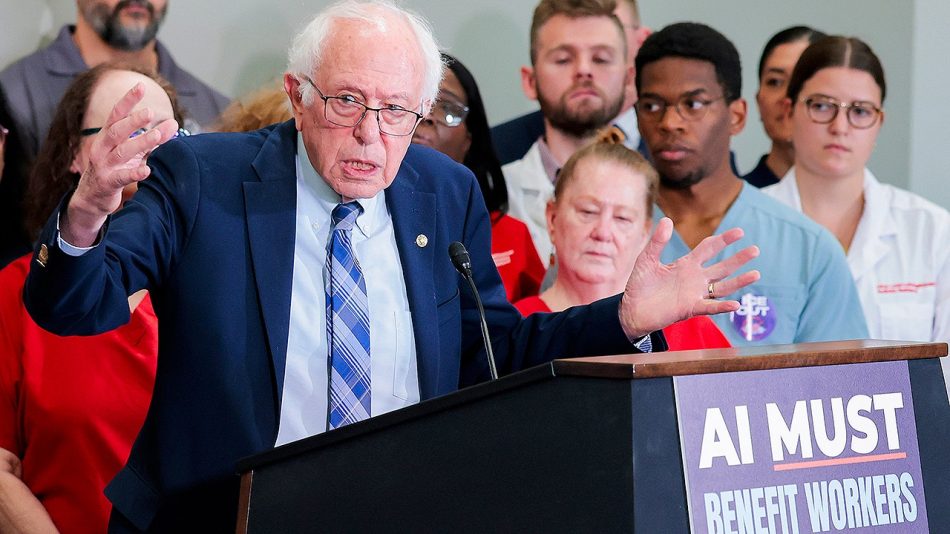
Senator Bernie Sanders, a prominent figure in American politics, is facing significant scrutiny for his upcoming participation in a panel discussion on artificial intelligence (AI) at Capitol Hill. The event is set to feature key Chinese AI governance officials, raising concerns among critics about the implications of such engagement in the context of U.S.-China relations and the ongoing global AI competition.
Background on the Event
The panel discussion is scheduled for Wednesday and will include notable figures such as Xue Lan and Zeng Yi, both of whom are associated with the Chinese Ministry of Science and Technology. Xue Lan is a professor at Tsinghua University and serves as the chairman of the New Generation Artificial Intelligence Governance Professional Committee, while Zeng Yi is the Dean of the Beijing Institute of AI Safety and Governance. Their involvement in the panel has sparked a backlash, particularly among those who view it as an opportunity for the Chinese Communist Party (CCP) to exert influence over American policy discussions regarding AI.
Concerns Over U.S.-China Relations
Critics argue that Sanders’ participation in this event could undermine U.S. efforts to maintain a competitive edge in the global AI landscape. The concerns are particularly pronounced given the increasing tensions between the United States and China, especially in areas related to technology and national security. Many believe that engaging with Chinese officials in this manner sends the wrong message about America’s stance on competition and collaboration with a country that has been accused of intellectual property theft and aggressive technological advancement.
Responses from Political Figures
Political commentators and opponents of Sanders have expressed their discontent with his decision to engage with Chinese officials. Some have taken to social media to voice their frustration, with one user exclaiming, “Holy sh–,” reflecting the shock and disbelief that some feel regarding Sanders’ choices. This sentiment has been echoed by various political analysts who argue that such interactions could be seen as legitimizing the CCP’s influence in global discussions on AI governance.
Sanders’ Stance on AI and Technology
Despite the backlash, Sanders has been vocal about the need for ethical considerations in the development and deployment of AI technologies. He, along with Congresswoman Alexandria Ocasio-Cortez, has advocated for a moratorium on AI data centers, emphasizing the potential risks associated with unchecked technological advancement. Sanders argues that the focus should be on ensuring that AI serves the public good rather than corporate interests, which he believes could lead to significant societal harm.
Implications for AI Policy
The involvement of Chinese experts in discussions about AI governance raises important questions about the future of AI policy in the United States. As AI continues to evolve rapidly, the need for comprehensive governance frameworks becomes increasingly critical. The panel discussion aims to address these frameworks, but the presence of Chinese officials complicates the narrative, as many fear that their involvement could lead to the adoption of policies that may not align with American values or interests.
Expert Opinions on AI Governance
Experts in the field of AI governance have weighed in on the implications of such international collaborations. Max Tegmark from the Massachusetts Institute of Technology (MIT), who is also scheduled to speak at the event, has highlighted the importance of global cooperation in addressing the challenges posed by AI. However, he acknowledges the delicate balance that must be maintained, particularly when engaging with nations that have differing approaches to governance and ethical considerations.
Public Reaction and Future Prospects
The public reaction to Sanders’ plans has been mixed, with some supporting the idea of international dialogue on AI governance, while others vehemently oppose it. The backlash reflects a broader concern about the implications of globalization in technology and the potential risks associated with sharing knowledge and strategies with countries that may not share the same ethical standards.
Conclusion
As the panel discussion approaches, the debate surrounding Sanders’ engagement with Chinese AI experts is likely to intensify. The outcome of this event could have lasting implications for U.S. AI policy and international relations in the tech sector. It remains to be seen how Sanders and other participants will navigate the complexities of these discussions while addressing the legitimate concerns of their constituents and the broader American public.
Note: The information presented in this article is based on current events and may evolve as new developments arise in the discussions surrounding AI governance and U.S.-China relations.