
Bioengineering technique can protect coast from erosion, says professor in IIT Indore
In a groundbreaking development, a novel bioengineering technique known as Microbially Induced Calcite Precipitation (MICP) is emerging as a promising and sustainable solution to tackle coastal erosion. This innovative approach marks a significant shift from traditional engineering methods to more nature-based strategies.
Overview of MICP Technology
Developed through successful laboratory experiments and recently patented, the MICP technology is currently undergoing outdoor commercial testing. It aims to provide a new pathway for protecting vulnerable shorelines, particularly in areas like Visakhapatnam, which are facing severe erosion challenges.
How MICP Works
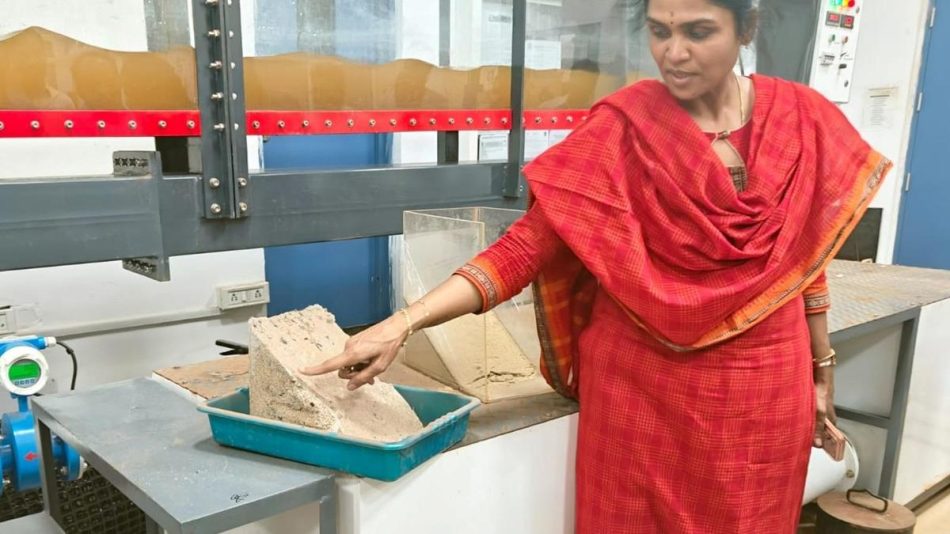
The MICP technique utilizes a urease-producing bacterial strain, Sporosarcina pasteurii, to enhance the strength of loose coastal sand through bio-mediated calcite formation. Laboratory findings indicate that samples treated with this method exhibit improved resistance to erosion caused by rainfall and wave action. Essentially, the coastal sand can transform into sandstone within a couple of weeks through this bio-mediation process.
Significance of the Research
During a media visit organized by the Press Information Bureau in March 2026, Dr. Neelima Satyam D., Institute Chair Professor in the Department of Civil Engineering at the Indian Institute of Technology (IIT) Indore, emphasized the importance of this research. She noted that coastal erosion is a significant environmental challenge in India. A report from December 2023 documented how a section of Baby Park along Beach Road in Visakhapatnam was washed away during high tides caused by Cyclone Michaung. Dr. Satyam believes that the newly developed MICP technique could help prevent similar damage in the future.
The Extent of Coastal Erosion in India
According to data from the National Centre for Coastal Research, nearly 34% of India’s coastline, approximately 7,500 kilometers, is affected by erosion. Coastal land is gradually eroded by various natural forces, including wave action, tidal currents, strong winds, and drainage. Additionally, human activities such as dredging, coastal development, and construction further accelerate the erosion process.
Traditional Coastal Protection Measures
Traditional coastal protection methods can be broadly categorized into two types: hard engineering and soft engineering. Hard engineering structures, such as seawalls, groynes, and breakwaters, provide immediate protection but are often expensive and can disrupt natural coastal processes. On the other hand, soft engineering approaches, including beach nourishment and managed retreat, are more environmentally sustainable but require ongoing maintenance.
A Sustainable Approach to Coastal Erosion
In light of these challenges, Dr. Neelima and her team began exploring a sustainable, economical, and eco-friendly approach to effectively mitigate coastal erosion. The MICP-based bioengineering technique represents a transition from “building in nature” to “building with nature.” Experimental findings have shown that bio-mediated treatment significantly enhances the strength and durability of coastal sand.
Research Findings and Erosion Testing
Through strength and durability assessments, optimal reinforcement configurations were identified before conducting erosion testing. The results indicate that the MICP technique not only strengthens coastal sand but also provides a viable alternative to traditional methods of coastal protection.
Broader Policy Relevance
Beyond its immediate applications, the MICP technique has broader policy implications. It supports India’s Blue Economy initiative and contributes to the development of climate-resilient coastal infrastructure envisioned under the Viksit Bharat 2047 vision and the National Coastal Mission. Furthermore, it aligns with several United Nations Sustainable Development Goals (SDGs), including:
- Climate Action (SDG 13)
- Life Below Water (SDG 14)
- Sustainable Cities and Communities (SDG 11)
Conclusion
Dr. Neelima Satyam D. concluded that nature-based bioengineering solutions like MICP can effectively protect India’s coastlines while promoting sustainable development. This innovative approach not only addresses the pressing issue of coastal erosion but also contributes to the overall sustainability of coastal ecosystems.
Note: The information presented in this article is based on research conducted at IIT Indore and reflects the current understanding of the MICP technique as of March 2026.

