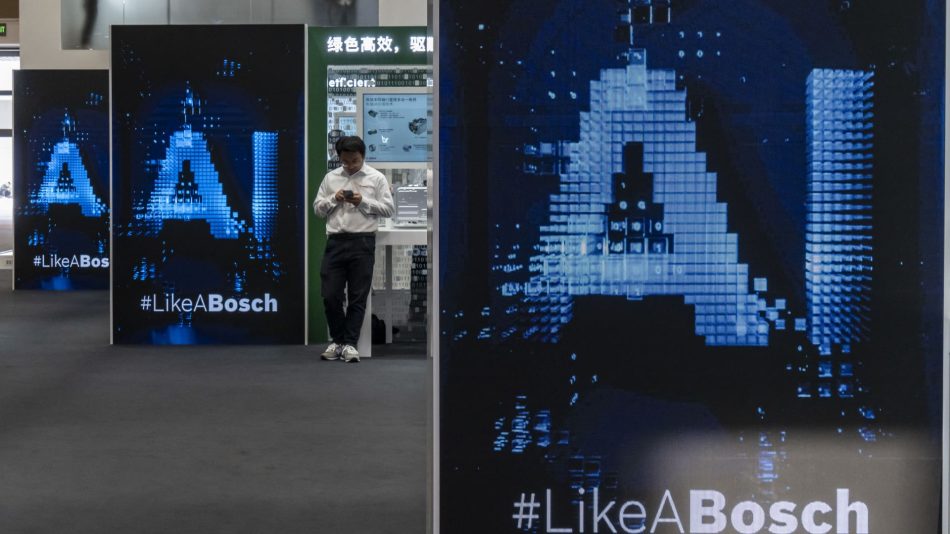
China’s EV price war turns into AI arms race beyond cheaper cars
As the electric vehicle (EV) market in China continues to grow, the competition among automakers is evolving beyond just pricing strategies. The focus is shifting towards integrating advanced artificial intelligence (AI) features into vehicles, transforming the landscape of the automotive industry.
The Shift from Price to Features
In recent years, China’s EV market has experienced a fierce price war, prompting manufacturers to find new ways to attract consumers. The competition has transitioned from merely extending battery range and implementing driver-assist systems to a more sophisticated “feature war” centered around AI and cockpit technology.
AI Integration in Vehicles
Leading the charge in this AI revolution is ByteDance’s Doubao AI, which has been integrated into over 145 car models, amounting to more than 7 million vehicles. This includes both domestic brands and foreign models, such as the all-electric Mercedes-Benz GLC and the SAIC Volkswagen ID. ERA 9X. The rapid deployment of AI features is indicative of the growing consumer demand for connected technologies.
Consumer Expectations
Modern consumers are increasingly looking for vehicles that offer advanced technological features. This includes compatibility with smartphones, voice-activated assistants, and seamless integration with everyday services. As noted by Fermín Soneira, CEO of the Audi and SAIC Cooperation Project, automakers are now able to roll out tech updates remotely, making it easier to enhance vehicle functionality.
Challenges in Differentiation
Despite the rapid advancements in AI technology, automakers face significant challenges in differentiating their offerings. Many of the AI features being introduced are becoming increasingly similar across different brands. According to AlixPartners, among the top 20 best-selling electric car models in China, those priced above 100,000 yuan ($14,645) offer comparable driver-assist and in-car entertainment functions.
The Race for Unique Features
Stephen Dyer, a partner and managing director at AlixPartners, highlights that the pace of technological dissemination makes it difficult for companies to maintain a unique edge. As features become standardized, automakers may need to shift their competitive strategies to focus on the overall user experience, rather than just the technology embedded in the vehicle.
Innovative Approaches to Consumer Engagement
To stand out in a crowded market, some companies are exploring innovative approaches to enhance consumer engagement. For instance, Nio, a prominent Chinese automaker, offers exclusive access to lifestyle experiences and products, in addition to high-quality vehicles. This strategy aims to create a holistic brand experience that goes beyond the car itself.
AI Features from Alibaba
Alibaba is also making strides in the automotive AI space with its Qwen AI model, which is set to be integrated into vehicles from manufacturers like BYD and Volkswagen. This AI system allows drivers to perform various tasks through voice commands, such as ordering food, booking hotels, and tracking packages. The technology is designed to operate efficiently even with limited network connectivity, enhancing the overall user experience.
Global Implications of China’s AI Race
The rapid development of AI features in Chinese vehicles is likely to influence global automotive trends. As these technologies become standard in the Chinese market, they may soon be expected in Western markets as well. Tu Le, founder and managing director of Sino Auto Insights, emphasizes that what may be considered advanced features in China will soon become commonplace in other regions.
Future Outlook
As the competition intensifies, automakers will need to continuously innovate to keep pace with consumer expectations and technological advancements. The focus on AI and connected features is expected to shape the future of the automotive industry, as companies strive to create vehicles that offer not just transportation, but also an enhanced lifestyle experience.
Conclusion
In conclusion, China’s EV price war is evolving into a complex arms race centered around artificial intelligence and in-car technology. As manufacturers adapt to changing consumer demands, the integration of AI features will play a crucial role in determining competitive advantage in the automotive market. The landscape is rapidly changing, and companies that can effectively leverage technology to enrich the user experience are likely to thrive in this dynamic environment.
Note: The information presented in this article is based on data available up to October 2023 and reflects the current trends in the automotive industry.