CSR: IIT Roorkee, UP Govt Start Farmer Carbon Credit Model For Soil Income
In a significant move towards sustainable agriculture, the Indian Institute of Technology (IIT) Roorkee, in collaboration with the Government of Uttar Pradesh, has launched an innovative programme aimed at enabling farmers to earn direct income through scientifically verified carbon credits. This initiative is part of a broader effort to promote sustainable farming practices while addressing climate change.
Overview of the Farmer Carbon Credit Model
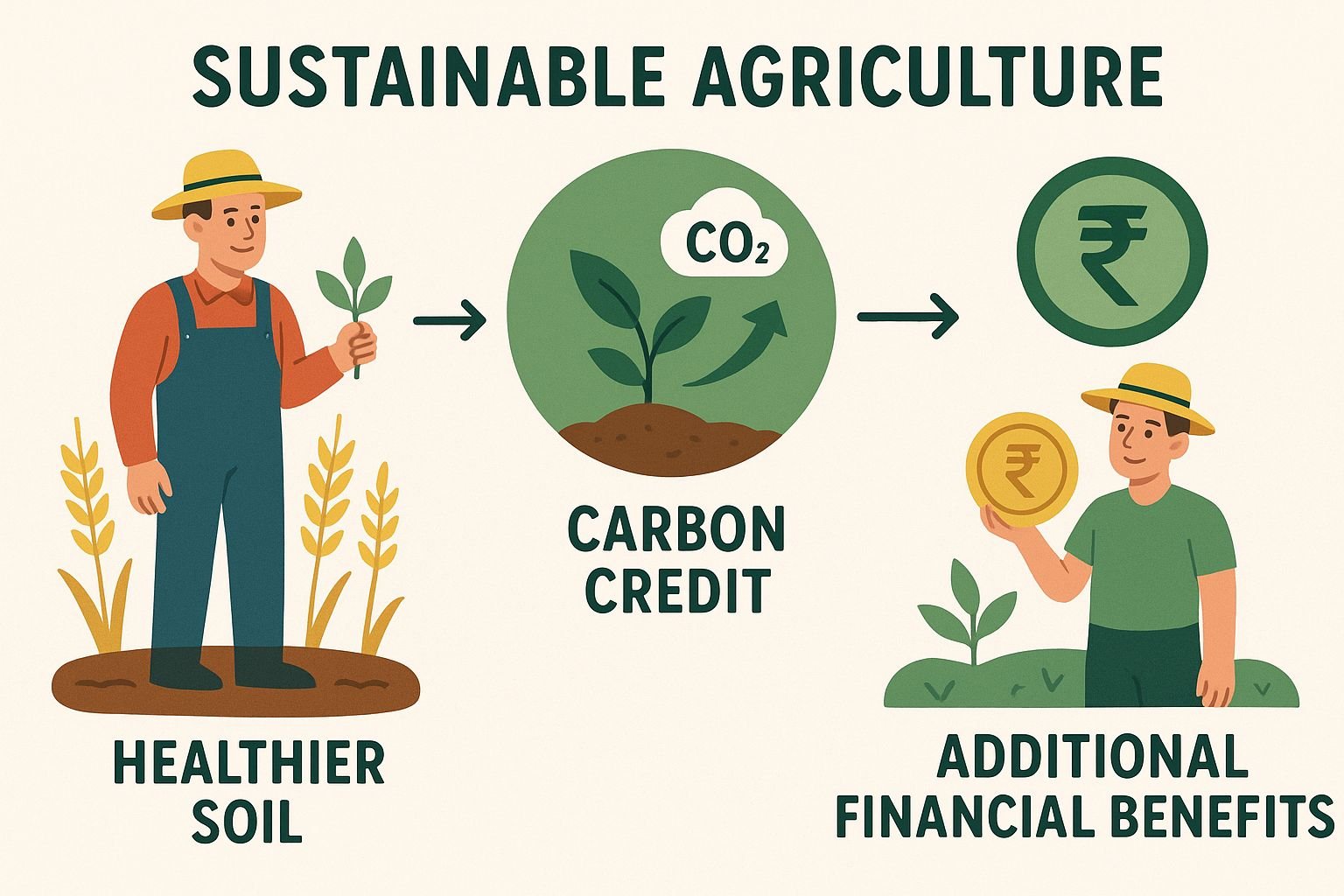
The farmer carbon credit model is designed to provide a financial incentive for farmers who adopt sustainable agricultural practices. By implementing methods such as minimum tillage, cover cropping, residue management, agroforestry, and improved bio-fertiliser use, farmers can increase soil carbon levels and reduce greenhouse gas emissions. These practices will be scientifically monitored and verified, allowing farmers to convert their efforts into carbon credits.
Digital Monitoring, Reporting, and Verification (DMRV)
The programme will utilize internationally aligned Digital Monitoring, Reporting, and Verification (DMRV) systems. This technology ensures that the increases in soil carbon and reductions in emissions are accurately measured. The revenue generated from the sale of these carbon credits will be directly transferred to the farmers’ bank accounts, providing them with a new source of income.
Implementation in Saharanpur Division
The initiative will initially roll out in the Saharanpur Division of Uttar Pradesh, an area identified for its potential to generate substantial volumes of carbon credits annually. This region’s agricultural practices and environmental conditions make it an ideal candidate for the programme.
Connecting Farmers with Carbon Markets
IIT Roorkee will facilitate connections between farmers, carbon markets, and global buyers. This connection is crucial for ensuring that farmers can access markets where they can sell their carbon credits. By doing so, the programme not only supports farmers but also helps industries meet their Net Zero commitments through the purchase of high-quality carbon credits.
Statements from Key Stakeholders
Prof. K.K. Pant, the Director of IIT Roorkee, emphasized the importance of this initiative by stating, “This initiative gives farmers a meaningful stake in climate action by ensuring that their sustainable practices translate into real and measurable income. By combining scientific rigour with practical, ground-level implementation, IIT Roorkee aims to empower farming communities, enhance their resilience, and create new economic opportunities through agriculture-based carbon credits.”
Prof. A.S. Maurya, the Principal Investigator at IIT Roorkee, added, “Our scientific framework ensures that every tonne of carbon stored in the soil is measured, verified, and monetized. This programme is not just about carbon credits, but about restoring soil health, reducing farm input costs, and creating new income streams for millions of farmers.”
Ravinder, the Principal Secretary of Agriculture for the Government of Uttar Pradesh, expressed support for the initiative, stating, “The state government welcomes IIT Roorkee’s leadership in this transformative programme. This partnership will allow farmers to benefit directly from sustainable practices while contributing to India’s climate commitments.”
Benefits of the Programme
The farmer carbon credit model offers several benefits, including:
- Financial Incentives: Farmers can earn additional income through the sale of carbon credits.
- Sustainable Practices: Encourages the adoption of environmentally friendly farming methods.
- Soil Health Improvement: Focuses on restoring and maintaining soil health, which is crucial for long-term agricultural productivity.
- Climate Action: Contributes to India’s efforts in combating climate change by reducing greenhouse gas emissions.
- Community Empowerment: Empowers local farming communities by providing them with new economic opportunities.
Future Prospects
The large-scale implementation of sustainable practices under this programme is scheduled to launch soon. As the initiative progresses, it is expected to serve as a model for similar programmes across India and potentially other countries, demonstrating the viability of integrating sustainable agriculture with carbon credit systems.
Conclusion
The collaboration between IIT Roorkee and the Government of Uttar Pradesh represents a significant step forward in the realm of corporate social responsibility and sustainable agriculture. By creating a framework that allows farmers to benefit financially from their environmentally friendly practices, this initiative not only supports rural livelihoods but also contributes to global climate goals.
Note: The information provided in this article is based on the latest available data as of December 2025.