Dell Says AI Demand For RAM Will Increase Dramatically In Future
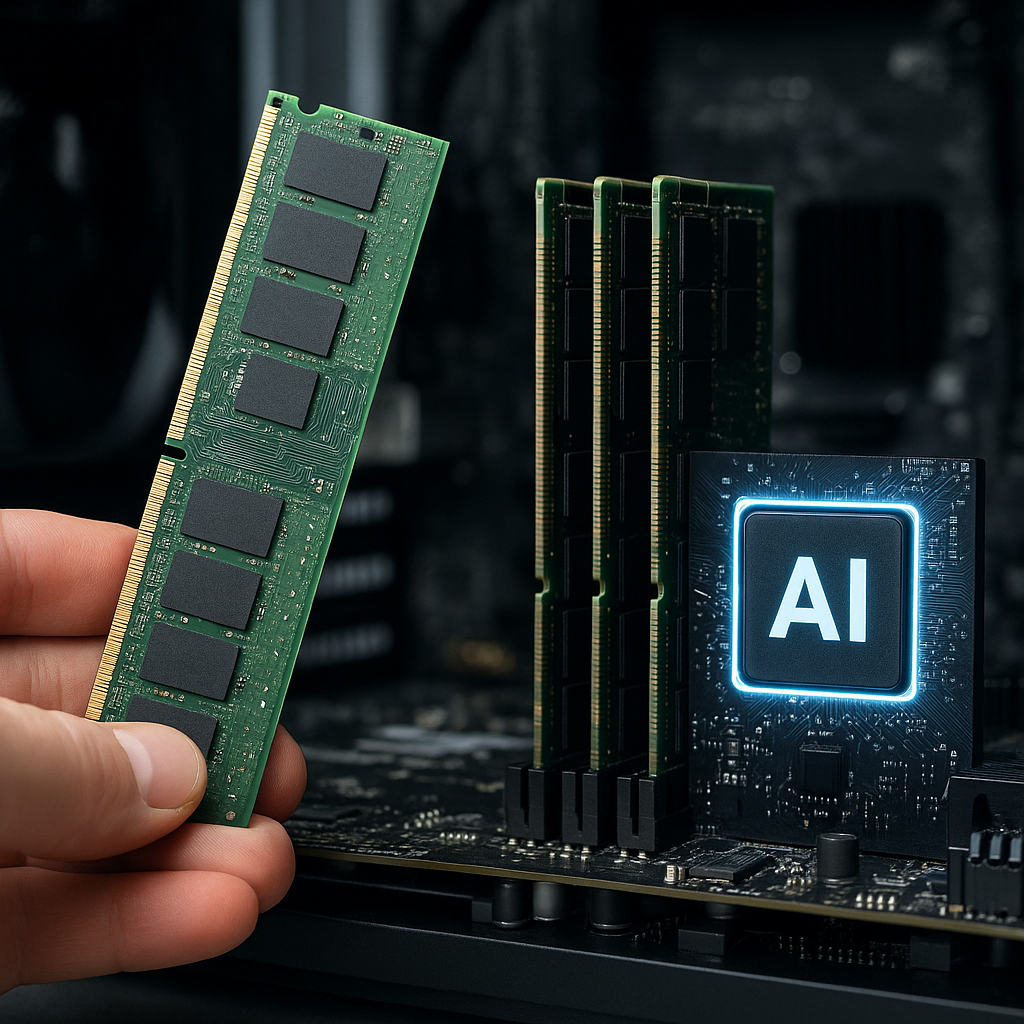
As artificial intelligence (AI) continues to evolve and integrate into various sectors, the demand for hardware components, particularly Random Access Memory (RAM), is expected to surge significantly. Dell Technologies, a leading global technology company, has recently highlighted this trend, indicating that the growth of AI applications will drive a substantial increase in RAM requirements.
The Role of RAM in AI Applications
RAM is a crucial component in computing systems, serving as the short-term memory that allows devices to store and access data quickly. In the context of AI, RAM plays a vital role in processing large datasets, executing complex algorithms, and facilitating real-time data analysis. As AI models grow in size and complexity, the need for higher RAM capacities becomes increasingly important.
Why AI Demands More RAM
Several factors contribute to the increasing RAM requirements for AI applications:
- Data Volume: AI systems often require processing vast amounts of data, which necessitates significant memory resources to ensure efficient performance.
- Model Complexity: Advanced AI models, such as deep learning networks, involve numerous parameters and layers, demanding more memory for effective training and inference.
- Real-Time Processing: Many AI applications, including autonomous vehicles and real-time analytics, require immediate data processing, necessitating higher RAM capacities to handle concurrent tasks.
Current Trends in AI and RAM Usage
The demand for RAM in AI applications is not just a future prediction; it is already observable in current trends. As organizations increasingly adopt AI technologies, the need for enhanced computing power has led to a surge in RAM usage across various industries.
Industry Adoption of AI
Industries such as healthcare, finance, automotive, and manufacturing are rapidly integrating AI into their operations. For example:
- Healthcare: AI is being utilized for predictive analytics, patient diagnosis, and personalized medicine, all of which require substantial RAM to process large datasets efficiently.
- Finance: Financial institutions are leveraging AI for risk assessment, fraud detection, and algorithmic trading, necessitating high-performance computing systems with ample RAM.
- Automotive: The development of autonomous vehicles relies heavily on AI for navigation and decision-making, which requires significant RAM for real-time data processing.
- Manufacturing: Smart factories are employing AI for predictive maintenance and supply chain optimization, driving the need for advanced computing resources.
Dell’s Insights on Future RAM Demand
Dell Technologies has been at the forefront of the technological revolution, providing innovative solutions to meet the growing demands of AI. According to Dell’s recent reports, the company anticipates a dramatic increase in RAM demand as AI technologies become more prevalent.
Forecasting the Future
Dell’s forecasts suggest that the demand for RAM will not only increase in volume but also in the complexity of applications. The company emphasizes the importance of investing in high-performance memory solutions to support the next generation of AI applications. Key insights from Dell include:
- Increased Investment: Organizations are expected to invest more in high-capacity RAM solutions to support AI workloads.
- Technological Advancements: Innovations in memory technology, such as DDR5 and beyond, will play a crucial role in meeting the rising demands.
- Cloud Computing: The shift towards cloud-based AI solutions will further drive the need for scalable RAM resources, as cloud providers enhance their infrastructure to support AI workloads.
The Importance of High-Performance RAM
As AI applications become more sophisticated, the importance of high-performance RAM cannot be overstated. Organizations must consider the following factors when selecting RAM for AI workloads:
Key Considerations for RAM Selection
- Capacity: Higher RAM capacity allows for better multitasking and the ability to handle larger datasets.
- Speed: Faster RAM speeds can significantly improve the performance of AI applications, reducing latency and enhancing processing times.
- Scalability: The ability to scale RAM resources as demand grows is essential for organizations looking to future-proof their AI infrastructure.
- Compatibility: Ensuring that RAM is compatible with existing hardware and software is crucial for seamless integration.
Conclusion
In conclusion, the demand for RAM is poised to increase dramatically as AI technologies continue to advance and permeate various industries. Dell Technologies’ insights highlight the critical role of RAM in supporting the growing complexity and volume of AI applications. Organizations must prioritize investing in high-performance RAM solutions to remain competitive in the evolving technological landscape.
Note: The information presented in this article is based on current trends and forecasts as of October 2023. Organizations should stay informed about developments in AI and RAM technology to make strategic decisions for their infrastructure.