From IIT-BHU to Bell Labs Prize — This Indian-origin scientist’s firm is building memory chips that could outlast AI’s biggest hardware bottleneck
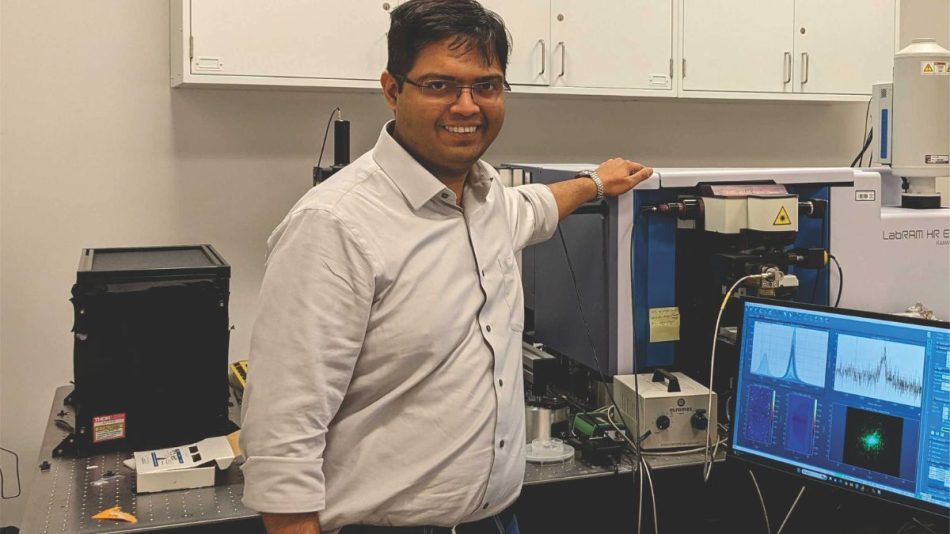
Deep Jariwala, an Indian-origin scientist, has made remarkable strides in the field of quantum materials and microelectronics. His journey from the bustling suburbs of Mumbai to the forefront of US science is a testament to curiosity, persistence, and a willingness to embrace unconventional paths. Recently appointed as the Governor’s Chair for Quantum Devices at the University of Tennessee, Knoxville, and the Oak Ridge National Laboratory (ORNL), Jariwala’s work promises to revolutionize memory chips essential for AI hardware.
Early Life and Education
Born into a family from Valsad, Gujarat, and raised in suburban Mumbai, Jariwala’s fascination with science began at a young age. He recalls, “I developed a strong interest in science around the time I was in fifth grade.” His academic journey took a significant turn when he decided to pursue engineering, motivated by a desire to explore the intricacies of materials and electronics.
In 2006, Jariwala cracked the IIT-JEE entrance exam, gaining admission to the prestigious Indian Institute of Technology (IIT) BHU to study metallurgical engineering. “Nobody on my dad’s side of the family had pursued science or engineering, so they were unsure about potential career paths. But I persisted and surrounded myself with like-minded friends who studied together for the IIT-JEE,” he explained.
Influence of IIT-BHU
Jariwala credits IIT-BHU for shaping his mindset and instilling the values of persistence and independent thinking. Influential professors like GVS Sastry and NK Mukhopadhyay emphasized the importance of strong fundamentals and encouraged students to engage in self-initiated research. “That taught me the value of persistence and self-initiated research,” he recalled, “and also that research capable of moving the needle on any front is inherently challenging.”
A Transformative Summer Internship
In 2008, Jariwala’s life took a transformative turn when he secured a summer internship at Rice University, thanks to the support of one of his IIT mentors. This opportunity allowed him to work with renowned nanomaterials expert Pulickel Ajayan. Until then, Jariwala had primarily focused on computational simulations, but this experience pushed him into hands-on experimental work using chemical vapor deposition.
His work at Rice culminated in co-authoring a cover paper in Nature Materials on hybridized boron nitride and graphene domains, which garnered significant attention and opened new doors for his academic career. “It convinced me that a PhD was the next step,” he said.
Academic Pursuits in the United States
Following his internship, Jariwala pursued a PhD in materials science and engineering at Northwestern University. Arriving in the United States on a standard F-1 student visa, he faced the challenge of adjusting to a different academic culture. “The transition was fairly standard for an Indian student coming to the US for graduate studies,” he noted. “The bigger adjustment was cultural, coming from the relatively sheltered environment of IIT-BHU to the fast-paced academic world of Northwestern.”
After completing his doctorate, Jariwala received an EB-1 green card through premium processing, which significantly impacted his career. “Having permanent residency early on was a significant advantage,” he stated. It allowed him to apply for defense-related grants, travel internationally, and take entrepreneurial risks without the constraints of visa sponsorship.
Co-founding Agni Semiconductor
After becoming a US citizen, Jariwala co-founded Agni Semiconductor with colleagues Eric Stach and Troy Olsson. The firm focuses on developing semiconductor products for AI hardware, edge computing, and electronics designed for extreme environments. “I co-founded Agni Semiconductor to translate our ferroelectric memory research into scalable, commercial semiconductor products,” he explained.
One of Jariwala’s notable achievements is the development of a ferroelectric diode memory device based on aluminum scandium nitride (AlScN). This device is compatible with CMOS technology and can operate at temperatures up to 600°C, a significant advancement over traditional memory systems. His groundbreaking work in this area earned him the prestigious 2022 Bell Labs Prize.
Challenges During the Pandemic
In 2018, Jariwala joined the University of Pennsylvania as an associate professor and Peter and Susanne Armstrong Distinguished Scholar in electrical and systems engineering and materials science and engineering. However, the onset of the COVID-19 pandemic posed significant challenges for his research group. “Just as my research group was gaining momentum, labs were shut down,” he recalled. Keeping students and postdoctoral researchers motivated during such uncertain times was difficult, but it reinforced the importance of resilience. “It reminded me of one simple lesson: never give up and always keep motivation high.”
Despite the challenges, Jariwala’s team eventually bounced back, producing major publications and winning awards.
Looking Ahead
As Jariwala prepares to take on his new role at the University of Tennessee and ORNL, he is excited about the future of quantum devices and their potential to overcome the hardware bottlenecks faced by AI technologies. His journey from IIT-BHU to becoming a leader in quantum research is an inspiring story of perseverance, innovation, and the pursuit of knowledge.
Deep Jariwala’s work exemplifies the impact of education and research in shaping the future of technology, particularly in the realm of AI and quantum computing. His contributions to the field promise to pave the way for advancements that could redefine data storage and computing technologies.
Note: This article highlights the inspiring journey of Deep Jariwala, showcasing his achievements and the challenges he overcame in his pursuit of scientific excellence.