From Snow to Storm: Western disturbances no longer just a winter story
A new study conducted by researchers at the Indian Institute of Technology (IIT) Roorkee reveals significant changes in the behavior of western disturbances, a crucial weather system impacting northern India. Traditionally associated with the winter season, these disturbances are now showing increased activity during the pre-monsoon months, raising concerns about climate resilience, disaster preparedness, and water security in the Himalayan region.
Understanding Western Disturbances
Western disturbances are low-pressure systems that originate in the Mediterranean region and travel eastward towards the Indian subcontinent. They are known for bringing winter rain to northern India and snowfall to the Himalayas. For many years, these weather systems have been primarily linked to the winter months, playing a vital role in replenishing glaciers and supporting agricultural activities.
Shifting Patterns: A New Study
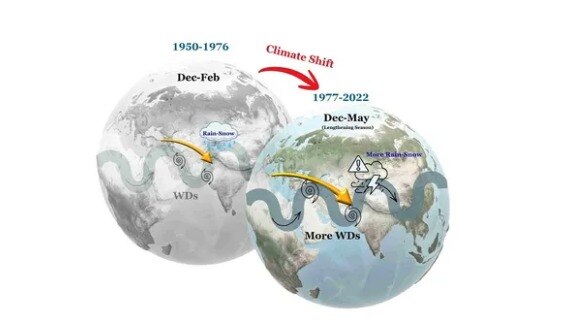
The research, published in the International Journal of Climatology, indicates that western disturbances are becoming more active beyond the winter season, particularly during the pre-monsoon months of March to May. This shift is attributed to climate warming, which is not only increasing the frequency of extreme weather events but also altering the structure and seasonal role of large atmospheric systems.
Key Findings
- Western disturbances are now traveling longer distances and absorbing more moisture before reaching India.
- Upper-level winds associated with these systems have strengthened, leading to heavier rainfall outside the traditional winter period.
- Over a span of 70 years, researchers analyzed atmospheric and rainfall data, revealing significant changes in the timing and intensity of these disturbances.
Impact on Weather Patterns
Spandita Mitra, a PhD scholar in the Department of Hydrology and a contributor to the study, emphasized the importance of long-term climate data to track these shifts. She noted that the erratic rainfall and sudden extreme weather events observed in recent years reflect broader atmospheric changes. Events such as the 2023 floods in Himachal Pradesh and the 2025 floods in Uttarakhand exemplify the growing influence of western disturbances during seasons that were previously less affected.
Consequences for Water Resources
The increased rainfall during the pre-monsoon period can disrupt the seasonal balance of precipitation in the Himalayas, which in turn affects river flows and groundwater recharge. Professor Ankit Agarwal, the Principal Investigator of the study, highlighted that the changing behavior of western disturbances poses significant implications for water resources and disaster risk in mountainous regions.
Risks Associated with Changes
Shifts in rainfall timing can heighten the risk of landslides and flash floods, particularly in areas with fragile terrain. The changing climate dynamics necessitate a reassessment of climate planning in sensitive regions like the Himalayas. IIT Director Professor KK Pant stressed that scientific evidence should inform policies related to infrastructure, water management, and disaster response.
A Broader Trend
The findings from this study point to a more extensive trend where climate change is not only intensifying weather events but also altering the timing and operational patterns of key atmospheric systems. For northern India, this means that rainfall patterns may no longer adhere to familiar seasonal cycles, necessitating a shift in how communities prepare for and respond to weather-related challenges.
Conclusion
The implications of these findings are profound, as they suggest a future where western disturbances play a more dynamic role in the Indian climate system. As researchers continue to study these changes, it is crucial for policymakers, disaster management agencies, and local communities to adapt to the new realities posed by climate change. The need for enhanced climate resilience and preparedness has never been more urgent.
Note: The information presented in this article is based on research findings and aims to raise awareness about the changing dynamics of weather systems in northern India.