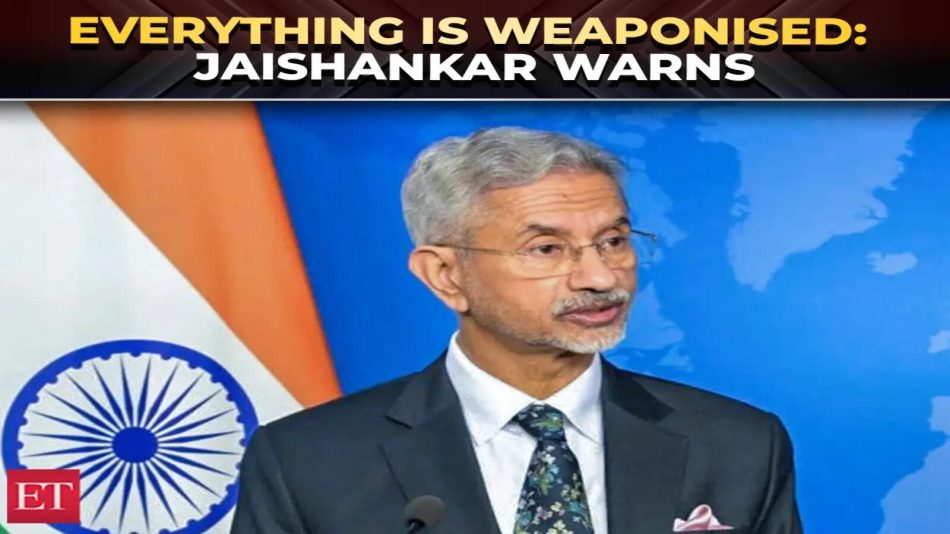
Global shocks tested resilience; India held firm: EAM Jaishankar at IIM Raipur
On a recent visit to the Indian Institute of Management (IIM) Raipur, External Affairs Minister (EAM) S. Jaishankar addressed students and faculty, discussing the resilience of India in the face of global challenges. His remarks highlighted the impact of various global shocks and the measures taken by India to maintain stability and growth.
Context of Global Shocks
In recent years, the world has faced numerous shocks, including economic downturns, geopolitical tensions, and the ongoing effects of the COVID-19 pandemic. These challenges have tested the resilience of nations, forcing them to adapt and respond effectively to maintain their economic and social fabric.
India’s Response to Global Challenges
During his address, Jaishankar emphasized that India has not only weathered these storms but has also emerged stronger. He outlined several key areas where India has demonstrated resilience:
- Economic Growth: Despite global economic slowdowns, India has maintained a robust growth trajectory, driven by strong domestic demand and a focus on self-reliance.
- Healthcare Initiatives: The Indian government’s proactive measures during the pandemic, including vaccination drives and healthcare infrastructure improvements, have played a crucial role in safeguarding public health.
- Digital Transformation: The rapid adoption of digital technologies has enabled businesses to adapt to changing circumstances, enhancing productivity and innovation across sectors.
- Geopolitical Stability: India’s strategic partnerships and diplomatic efforts have helped navigate complex international relations, ensuring national security and economic cooperation.
Significance of Resilience
Jaishankar pointed out that resilience is not merely about surviving crises but also about leveraging them as opportunities for growth. He noted that India’s ability to bounce back from setbacks is a testament to its robust institutional framework and the spirit of its people.
Building a Resilient Future
Looking ahead, Jaishankar stressed the importance of continuing to build resilience through:
- Innovation: Encouraging research and development to foster new ideas and technologies that can address future challenges.
- Education: Investing in education to equip the younger generation with skills necessary for a rapidly changing world.
- Sustainability: Focusing on sustainable practices that not only benefit the economy but also protect the environment for future generations.
Role of Educational Institutions
The EAM highlighted the critical role of educational institutions like IIM Raipur in shaping future leaders who can navigate complex global landscapes. He encouraged students to embrace challenges and think critically about solutions that can contribute to national and global resilience.
Engagement with Students
During the event, Jaishankar interacted with students, addressing their queries and sharing insights on various topics, including international relations, economic policies, and the importance of leadership in times of crisis. His engagement underscored the need for young leaders to be informed and proactive in their approach to global issues.
Conclusion
Jaishankar’s visit to IIM Raipur served as a reminder of the importance of resilience in the face of adversity. As India continues to navigate a complex global landscape, the lessons learned from recent challenges will be invaluable in shaping a brighter future. The commitment to innovation, education, and sustainability will be crucial in ensuring that India not only withstands future shocks but thrives in a rapidly changing world.
Note: The insights shared by EAM Jaishankar reflect the broader narrative of India’s resilience and adaptability in an uncertain global environment, emphasizing the role of education and leadership in fostering a sustainable future.