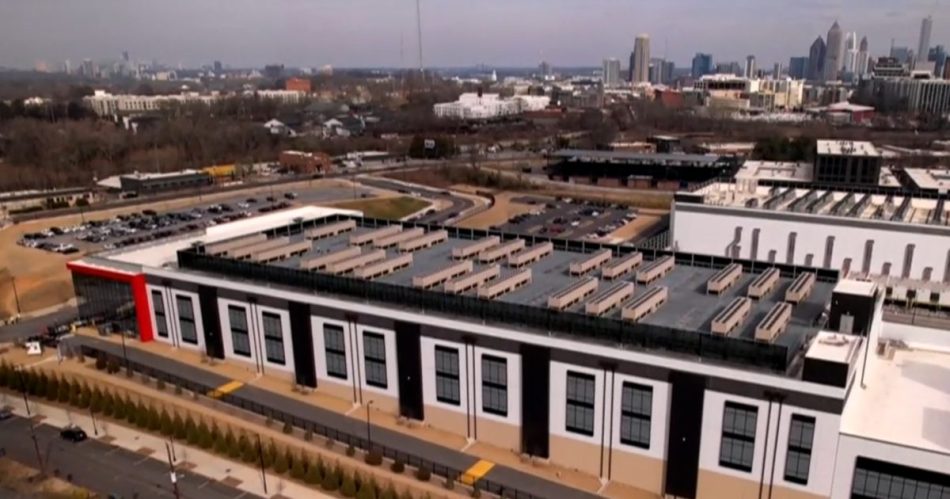
How the AI-driven data center boom is leading to skyrocketing energy bills for many Americans
By Shanelle Kaul
April 25, 2026
The Rising Energy Costs in America
Across the United States, many Americans are feeling the pinch of rising energy bills, a trend that has been exacerbated by the rapid expansion of data centers driven by artificial intelligence (AI). In particular, residents in states like Georgia are experiencing significant increases in their monthly electric bills, with some households reporting bills that have nearly doubled in just two years.
Personal Stories of Struggle
In Atlanta, Georgia, Carolyn Kayne is one such resident. Living in a 3,000-square-foot home, she has resorted to extreme measures to cope with her soaring electric bills. “I’m walking around in a ski suit trying to stay warm in the winter,” Kayne shared. Her monthly electric bill has skyrocketed, forcing her to turn off her heat and water, making her home increasingly difficult to live in.
Kayne’s situation is not an isolated case. Patty Durand, founder of the nonprofit advocacy group Georgians for Affordable Energy, notes that the average monthly bill for consumers has surged from about $150 to $225. This increase is largely attributed to several rate hikes imposed by Georgia Power, the state’s largest energy provider, which has raised rates six times over the past three years.
The Role of Data Centers
The surge in energy costs can be linked to the booming demand for data centers, which have flocked to Georgia in search of discounted power. These facilities are essential for supporting the growing needs of AI technologies, which require substantial amounts of energy to operate. According to the Institute for Energy Economics and Financial Analysis, the proliferation of data centers is driving up utility bills in at least 13 states across the country.
A 2025 analysis by Bloomberg revealed that Americans living near data centers are facing energy bills that are as much as 267% higher than they were five years ago. This dramatic increase raises concerns about the sustainability of energy costs for average households.
State Responses and Legislative Actions
In response to these rising costs, some states are beginning to take action. Recently, Maine Governor Janet Mills vetoed a bill that would have made her state the first to ban the construction of new data centers. In her statement, Mills emphasized the need to examine and plan for the potential impacts of large-scale data centers as the use of AI continues to expand.
“Data centers will add billions of dollars to costs to electricity rates in Georgia if we don’t get better protection than we have right now,” Durand warned. The implications of this growth are significant, and many residents are concerned about the long-term effects on their energy bills.
Utility Companies and Rate Hikes
In an effort to address the rising costs, Georgia Power has announced a rate freeze and has committed to using revenue generated from large customers, including data centers, to help lower costs for residential customers. However, the company has denied that the costs associated with data centers are being passed on to residential consumers.
“There is no risk that residential customers will end up paying for the costs of this large growth, including data centers,” stated Aaron Mitchell, senior vice president for strategic growth at Georgia Power. Despite these assurances, many residents remain skeptical, especially those like Kayne who are already struggling to make ends meet.
Impact on Daily Life
The impact of rising energy costs on daily life cannot be overstated. For many families, the choice between keeping the lights on and affording basic necessities has become increasingly difficult. Kayne, for instance, has expressed feelings of despair as she contemplates giving up her home due to the financial strain.
This situation reflects a broader trend affecting numerous households across the nation. As energy bills continue to climb, the question arises: how can communities balance the need for technological advancement with the financial realities faced by everyday citizens?
Looking Ahead
The future of energy costs in relation to the growth of data centers and AI technologies remains uncertain. While the demand for data centers is unlikely to diminish, it is crucial for policymakers and utility companies to find solutions that protect consumers from excessive rate hikes. This may involve reevaluating energy pricing structures, investing in renewable energy sources, and implementing regulations that ensure fair pricing for all customers.
As the landscape of energy consumption evolves, it is essential for residents to remain informed and engaged in discussions about energy policies that affect their lives. Advocacy groups like Georgians for Affordable Energy play a vital role in raising awareness and pushing for necessary changes to protect consumers.
Conclusion
The AI-driven data center boom is reshaping the energy landscape in America, leading to skyrocketing bills for many households. As communities grapple with these challenges, it is imperative to find a balance between technological progress and the financial well-being of residents. The ongoing dialogue between utility companies, policymakers, and consumers will be crucial in navigating this complex issue.
Note: The information presented in this article is based on reports and analyses available as of April 2026.