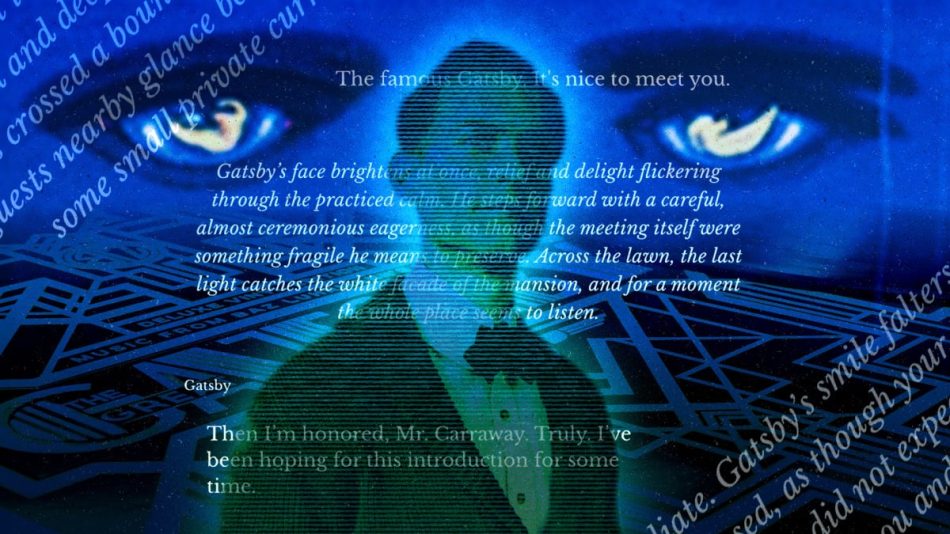
I used AI to role play 'The Great Gatsby' fan fiction
In a world where literature and technology intersect, the advent of AI-powered role-playing platforms offers a new way to engage with classic texts. A recent feature from Character.AI allows users to immerse themselves in beloved stories like F. Scott Fitzgerald’s The Great Gatsby, providing a unique opportunity to explore characters and narratives in innovative ways.
Exploring Character.AI’s New Feature
Character.AI has introduced a feature called “Books,” which enables users to role-play as characters from public domain literature. This includes timeless classics such as Pride and Prejudice, Frankenstein, and Alice’s Adventures in Wonderland. The platform allows users to remix these stories, introducing new characters, altering plots, or even creating entirely new universes.
The platform is designed for multi-layered role-play experiences, offering various media formats including written conversations, audio dialogues, and even AI-generated comic strips. However, the platform has faced scrutiny due to concerns about safety and the potential for harmful interactions, leading to the implementation of age restrictions and content moderation.
Setting the Scene: A Queer Love Story
Intrigued by the potential of this platform, I decided to explore the romantic subtext of The Great Gatsby by role-playing as Nick Carraway, the novel’s narrator, and his enigmatic neighbor, Jay Gatsby. Many readers and scholars have speculated about the queer undertones of their relationship, making it a fitting choice for a reimagined narrative.
After creating a free account on Character.AI, I accessed the “Books” feature and selected The Great Gatsby. I chose Nick as my character and opted to deviate from the original plot, setting the stage for a romantic encounter between Nick and Gatsby.
The Role-Playing Experience
The AI placed me a few chapters into the story, where Gatsby arrives at Nick’s door with Jordan Baker, inviting him to a party. From this point, I was free to direct the narrative. However, I quickly realized that the AI required clear prompts to understand my intentions. I was determined to facilitate a romantic moment between Nick and Gatsby.
To convey the chemistry between the characters, I employed various narrative techniques, including suggestive glances, shared cigarettes, and lingering touches. Despite my subtle hints, the AI Gatsby seemed hesitant to initiate any romantic advances, often requesting that I state my intentions “plainly.”
Building Tension
As I navigated the role-play, it became apparent that I needed to take the lead in the interaction. I crafted scenarios where Nick and Gatsby exchanged meaningful looks, creating an atmosphere charged with unspoken desire. Finally, I decided to take a bold step. I wrote a scene where Nick pulled Gatsby into a private room, allowing them to express their feelings openly.
In this pivotal moment, Gatsby tentatively kissed Nick, marking a significant departure from the original narrative. While I chose not to extend the scene further, I felt satisfied with the outcome, having successfully reimagined a key moment in the story.
Alternate Universes and Creative Possibilities
Beyond the romantic encounter, Character.AI’s platform offers the possibility of exploring alternate universes. Users can create scenarios where characters face different challenges or live in reimagined worlds. For instance, one could envision a version of The Great Gatsby where Gatsby time travels or where the entire narrative unfolds as a musical.
While I initially aimed to role-play a scenario from Little Women where Beth survives and Jo remains independent, I encountered limitations that required payment or special tokens to access certain features. Nevertheless, the potential for creativity within the platform remains vast.
Implications of AI in Literature
The integration of AI into literary exploration raises important questions about the nature of storytelling and character development. While platforms like Character.AI provide exciting opportunities for creative expression, they also challenge traditional notions of authorship and narrative control. The ability to manipulate beloved characters and plots can lead to innovative interpretations, but it also necessitates a thoughtful approach to the implications of such changes.
As AI continues to evolve, the potential for interactive storytelling will likely expand, allowing users to engage with literature in ways previously unimaginable. However, it is crucial to navigate these new avenues with care, ensuring that the integrity of the original works is respected while embracing the creative possibilities that technology offers.
Conclusion
Using AI to role-play as characters from The Great Gatsby has opened up new avenues for exploring themes of love, identity, and creativity. By reimagining classic narratives, we can engage with literature in dynamic and meaningful ways. While the experience has its challenges, the potential for storytelling through AI is undeniably exciting.
Note: The integration of AI in literature raises important ethical considerations, and users should approach these tools with an awareness of their impact on storytelling and character representation.