IIM Bodh Gaya Hosts Global Conference On Emerging Market Economies
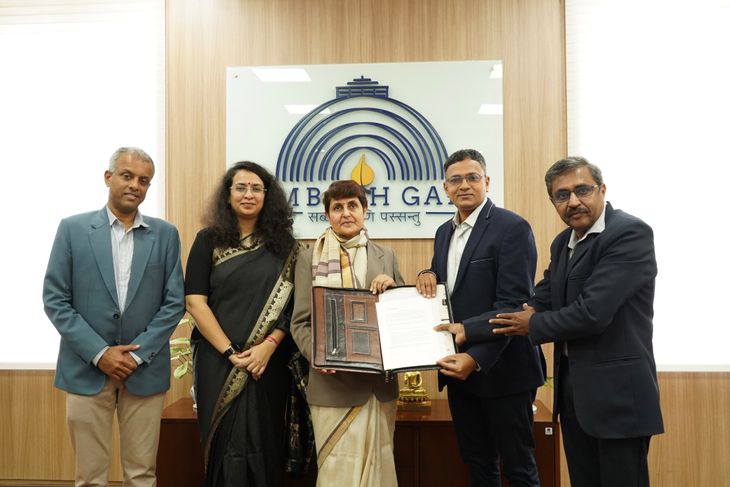
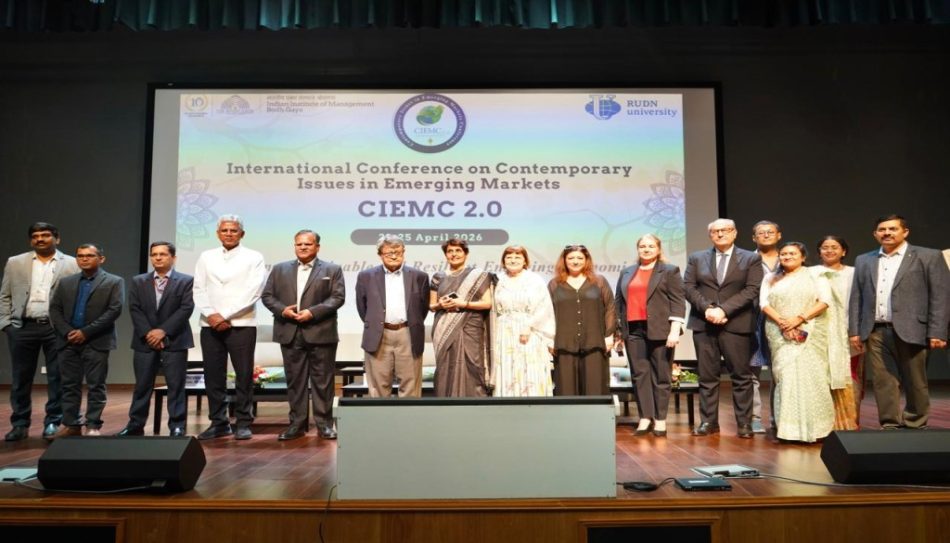
Bodh Gaya: The Indian Institute of Management (IIM) Bodh Gaya, in collaboration with Peoples’ Friendship University of Russia, inaugurated the second edition of the Contemporary Issues in Emerging Market Conference (CIEMC 2.0). This significant event brought together policymakers, academicians, and global experts to deliberate on the crucial role of emerging economies in the global landscape.
Conference Overview
Organised under the theme “Reimagining Emerging Market Economies: Growth with Stability and Sustainability,” the conference attracted substantial participation, with over 470 paper submissions. After a rigorous review process, 342 papers were selected, and 307 authors presented their findings across 44 parallel sessions. Participants hailed from more than 25 Indian states and included international contributors from countries such as the United States, the United Kingdom, Italy, Russia, Malaysia, and Bangladesh.
Focus On Emerging Economies
Delivering the inaugural address, Suman K. Bery, Vice-Chairperson of NITI Aayog, emphasized the transformation of economies once labeled as “third world” into significant players in global trade and growth. He stated, “These economies are increasingly contributing to global demand, production, and value chains.” Bery highlighted that India’s vision of ‘Viksit Bharat’ would be driven by the youth, innovation, and enterprise. He also noted the importance of collaborations between institutions like IIM Bodh Gaya and RUDN University in strengthening global academic engagement.
Policy And Growth Perspectives
Manoj Kumar Singh, CEO of the State Transformation Commission, Government of Uttar Pradesh, discussed India’s demographic advantage and the robust agricultural and services sectors as key drivers of growth. He asserted that the next phase of growth would rely on leveraging artificial intelligence, strengthening institutions, and adopting data-driven governance as emerging economies transition to consumption-led growth models.
On the second day of the conference, Chief Economic Advisor to the Government of India, V. Anantha Nageswaran, stressed the need to simplify regulatory frameworks, particularly for micro, small, and medium enterprises (MSMEs). He remarked, “Regulation often impacts MSMEs more than large firms. Simplifying these frameworks must remain a key policy priority.” Nageswaran also mentioned that domestic reforms could be pursued independently of global conditions to foster long-term economic progress.
Discussions On Global Uncertainty
A panel discussion titled “Navigating Geopolitical Uncertainties in Emerging Markets” examined how economies can respond to global disruptions. This session featured insights from Abhishek Anand of Insignia Policy Research and Himanshu Joshi of Atal Innovation Mission, moderated by columnist Tamal Bandyopadhyay. The discussion explored strategies for resilience, emphasizing the need for balance and adaptability in policymaking.
Academic And Global Insights
International speakers also contributed valuable perspectives on key economic themes. Bruno S. Sergi of the University of Messina addressed the green economy, cautioning against greenwashing and underscoring the necessity for transparency. Marina Khramova of RUDN University discussed the implications of demographic shifts and ageing populations on labor markets and economic growth. Additionally, Rashmi Singh, Secretary of the Department of Women and Child Development, Government of NCT of Delhi, highlighted issues of gender equality and the importance of policy focus on women’s development.
Platform For Policy And Research
The conference commenced with a welcome address by Vinita S. Sahay, Director of IIM Bodh Gaya, who articulated the institute’s commitment to developing responsible and mindful business leaders. CIEMC 2.0 concluded with discussions that reinforced the growing significance of emerging economies in shaping global economic dynamics. Organizers stated that the conference continues to serve as a vital platform connecting academic research, policy discourse, and international collaboration aimed at sustainable and inclusive growth.
Conclusion
The CIEMC 2.0 at IIM Bodh Gaya has successfully highlighted the importance of emerging markets in the global economy. By fostering dialogue among policymakers, scholars, and industry leaders, the conference has paved the way for innovative solutions and collaborative efforts towards sustainable growth.
Note: The information presented in this article is based on the events and discussions that took place during the CIEMC 2.0 held at IIM Bodh Gaya.