
IIT Bombay Team Develops Method to Retrieve T-Cells for Cancer Therapy
New Delhi, Feb 5: Researchers at the Indian Institute of Technology (IIT) Bombay have made significant advancements in the field of cancer therapy by developing a simpler and more efficient method to recover immune cells, specifically T-cells, that are grown in laboratory settings for T-cell-based cancer therapies.
Understanding T-Cell Therapy
Immunotherapy, particularly CAR T-cell therapy, is a revolutionary approach in cancer treatment. In this process, T-cells, which are a type of immune cell, are extracted from a patient’s blood. These cells are then modified and multiplied in a laboratory environment before being infused back into the patient’s bloodstream to combat cancer more effectively.
The Challenge of Cell Recovery
While the concept of cell recovery may seem straightforward, it presents considerable challenges in practice. According to Professor Prakriti Tayalia from the Department of Biosciences and Bioengineering at IIT Bombay, “Cell recovery sounds simple on paper, but in practice it turns out to be one of the biggest challenges.”
She further emphasized that without a sufficient number of healthy cells, it is impossible to conduct proper tests or utilize them effectively in therapy. Thus, finding safe and efficient methods to grow and retrieve T-cells is crucial for the success of these therapies.
Innovative Scaffold Design
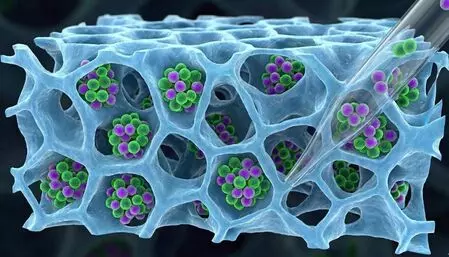
To better replicate the natural environment of the body, Tayalia and her team utilized a specific type of scaffold created through a process known as electrospinning. These electrospun scaffolds resemble thin mats made of extremely fine fibers, akin to a dense fishing net.
The researchers cultivated Jurkat T-cells, a human cell line commonly used in laboratory studies to explore T-cell biology, cancer, and HIV, within these electrospun scaffolds made from a biodegradable material called polycaprolactone.
Observations under a microscope revealed that the Jurkat T-cells actively migrated into the scaffold and became tightly embedded between the fibers, indicating a successful integration into the scaffold structure.
Cell Recovery Techniques
One of the critical aspects of the research was the method of cell recovery. The team discovered that using trypsin, a commonly used enzyme for cell detachment, resulted in a higher rate of cell death. In contrast, when they employed accutase, a milder enzyme, the survival rate of the cells significantly improved.
“Harsh treatments to cells, using enzymes such as trypsin, can damage key surface proteins needed for immune signaling and activation, reducing the cell’s therapeutic usefulness. Accutase appears mild enough to avoid this problem,” Tayalia explained.
The findings from this research, published in the journal Biomaterials Science, suggest that utilizing such scaffolds and gentler recovery methods can enhance the effectiveness of preparing cells for therapies like CAR T-cell treatment.
Implications for Cancer Treatment
The implications of this research are significant. As Tayalia noted, “If we want these advanced therapies to reach patients, every step matters. How we grow cells, and how we retrieve them, can make a real difference.” This research not only paves the way for improved T-cell therapies but also highlights the importance of optimizing laboratory processes to ensure the best outcomes for patients.
Future Directions
Moving forward, the IIT Bombay team aims to further refine their methods and explore additional applications of their scaffold technology in various immunotherapy approaches. By continuing to innovate in the field of cell therapy, they hope to contribute to the development of more effective treatments for cancer and other diseases.
Conclusion
The advancements made by the IIT Bombay team represent a critical step forward in the field of cancer immunotherapy. By addressing the challenges associated with T-cell recovery and enhancing the methods used to cultivate and retrieve these vital immune cells, they are setting the stage for more effective cancer treatments. As research continues to evolve, the potential for improved patient outcomes in cancer therapy becomes increasingly promising.
Note: The information provided in this article is based on research findings and should not be considered medical advice. Always consult healthcare professionals for medical concerns.


