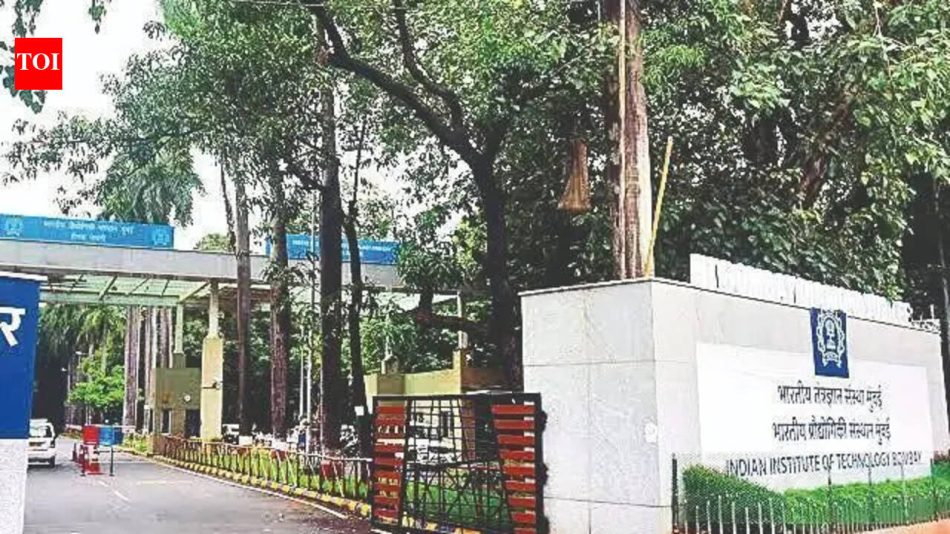
IIT-Bombay To Inspect Veer Savarkar Flyover In Goregaon For Monopile Alternative To Demolition
The Indian Institute of Technology (IIT) Bombay is set to conduct an inspection of the Veer Savarkar Flyover located in Goregaon on Thursday. This inspection aims to evaluate whether monopile technology can be a feasible alternative to demolishing the existing structure. The flyover was initially scheduled for demolition to facilitate the construction of the proposed Versova–Dahisar Link Road (VDLR) double-decker corridor. However, this plan has been temporarily halted due to significant opposition from local residents and various political parties.
Background of the Veer Savarkar Flyover
The Veer Savarkar Flyover, also known as the MTNL Flyover, was constructed in 2018 at a cost of ₹27 crore. This vital infrastructure serves as a key east-west connector in the city, linking the Western Express Highway near the Radisson Hotel to Rustomjee Ozone. The flyover plays a crucial role in easing traffic congestion for commuters traveling from Goregaon, Malad, Marve, Madh, Aksa, and Charkop, allowing them to bypass the heavily congested S.V. Road.
Initial Plans for Demolition
Initially, the flyover was slated for demolition to accommodate the ambitious Versova–Dahisar Link Road project. This project aims to create a double-decker corridor that would significantly enhance connectivity in the region. However, the proposal faced strong resistance from local residents who expressed concerns over the potential disruption and loss of infrastructure. Additionally, various political parties joined the opposition, further complicating the project’s progression.
Monopile Method Considered as an Alternative
In light of the opposition to the demolition, civic officials have begun exploring alternative solutions. One such solution is the monopile method, which has previously been utilized in projects such as the Mumbai Coastal Road (South) and is proposed for the Coastal Road (North) to the Goregaon–Mulund Link Road (GMLR) connector. The monopile method involves driving a single, large-diameter reinforced-concrete pile deep into the ground, which creates a robust and space-efficient foundation.
Benefits of the Monopile Method
- Structural Integrity: The monopile method provides a strong foundation that can support significant loads, making it suitable for various types of infrastructure.
- Space Efficiency: This method requires less surface area than traditional foundation methods, which can be beneficial in urban environments where space is limited.
- Reduced Disruption: Utilizing the monopile method may minimize the need for extensive demolition and reconstruction, thereby reducing disruption to local traffic and communities.
- Cost-Effectiveness: In some cases, the monopile method can prove to be more cost-effective in the long run, as it may reduce the need for additional materials and labor associated with traditional foundations.
Upcoming Inspection by IIT Bombay
A senior civic official has confirmed that an expert team from IIT Bombay will visit the site on December 4 to conduct a detailed examination of the flyover. The team has been tasked with assessing the suitability of the monopile method for the existing structure and will submit a report based on their findings. This inspection is a crucial step in determining whether the flyover can be preserved while still allowing for the necessary infrastructure improvements in the area.
Community Response and Political Involvement
The community’s response to the proposed demolition has been overwhelmingly negative, with many residents voicing their concerns about the potential loss of an essential transportation link. Local political leaders have also rallied against the demolition, emphasizing the importance of preserving existing infrastructure that serves the community. Their involvement has played a significant role in delaying the demolition plans and prompting a reevaluation of the project.
Future Implications
The outcome of the IIT Bombay inspection and the subsequent report will be pivotal in shaping the future of the Veer Savarkar Flyover. If the monopile method is deemed feasible, it could set a precedent for similar projects in urban areas where existing structures face the threat of demolition. The decision will also reflect the growing trend of prioritizing community concerns and sustainable practices in urban planning.
Conclusion
The inspection of the Veer Savarkar Flyover by IIT Bombay represents a significant moment in the ongoing dialogue between urban development and community preservation. As cities continue to grow and evolve, finding innovative solutions that respect existing infrastructure while accommodating new projects will be vital for sustainable urban living.
Note: The situation regarding the Veer Savarkar Flyover is evolving, and updates will be provided as new information becomes available.