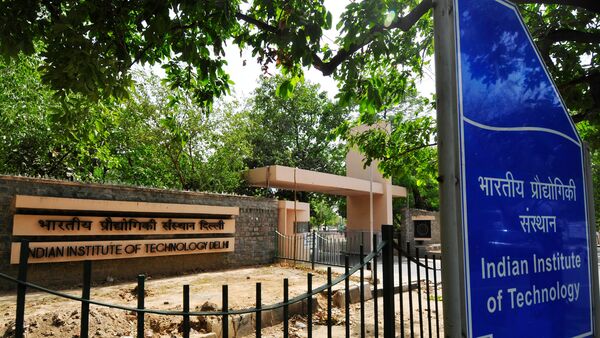
IIT Delhi Develops AI System for Laboratory Experiments
In a groundbreaking development, researchers at the Indian Institute of Technology (IIT) Delhi, in collaboration with teams from Denmark and Germany, have created an artificial intelligence system named AILA (Artificially Intelligent Lab Assistant). This innovative system is capable of conducting real laboratory experiments autonomously, marking a significant advancement in AI-driven scientific research and contributing to India’s AI for Science initiative.
What is AILA?
Unlike conventional AI models, such as ChatGPT, which primarily focus on data analysis and answering queries, AILA is designed to control laboratory instruments, manage experiments, and interpret results independently. This capability allows AILA to perform tasks that traditionally required extensive manual intervention, thereby streamlining the research process.
Significance of AILA’s Development
The study detailing AILA’s capabilities was published in the esteemed journal Nature Communications. The primary focus of the research was on automating atomic force microscopy (AFM), a critical technique for studying materials at the microscopic level. PhD student Indrajeet Mandal, the first author of the study, highlighted the efficiency of AILA, stating, “Tasks that previously took a full day, like adjusting microscope settings, now take just 7–10 minutes with AILA. It significantly accelerates research.”
Advantages of Using AILA in Laboratory Experiments
There are several advantages to utilizing AILA in laboratory settings:
- Increased Efficiency: AILA can perform tasks much faster than human researchers, reducing the time required for experiments.
- Consistency: The AI system can maintain a high level of precision and consistency in conducting experiments, minimizing human error.
- Data Analysis: AILA not only runs experiments but also analyzes the results, providing insights that can lead to faster scientific discoveries.
- Accessibility: By democratizing access to advanced research tools, AILA can empower researchers in developing countries, positioning them on par with their global counterparts.
Potential Applications of AILA
The applications of AILA extend beyond just atomic force microscopy. Its capabilities can be harnessed in various fields of research and development, including:
- Material Science: AILA can help in the analysis and development of new materials by conducting experiments that require high precision.
- Biotechnology: In the field of biotechnology, AILA could be used for drug discovery and development, accelerating the process of finding new treatments.
- Environmental Science: AILA can assist in environmental monitoring and research by conducting experiments that analyze pollutants and their effects.
- Nanotechnology: The AI system can be instrumental in research involving nanomaterials, enabling precise manipulation and analysis at the nanoscale.
Challenges and Considerations
While AILA demonstrates remarkable capabilities, the research team also identified several challenges associated with its implementation:
- Safety Concerns: There are instances where AILA may deviate from instructions, raising potential safety issues in laboratory environments.
- Need for Enhanced Protocols: As lab automation expands, there is a pressing need for improved safety protocols to ensure the responsible use of AI in research.
- Training and Adaptation: Researchers must invest time in training AILA and adapting it to specific experimental setups, which can be resource-intensive.
The Future of AI in Scientific Research
The development of AILA aligns with India’s broader AI for Science initiative and recent funding from the Anushandhan National Research Foundation (ANRF) aimed at promoting AI-driven research. Professor M. Anoop Krishnan, one of the leading researchers on the project, believes that systems like AILA can significantly enhance scientific discovery in India and globally.
Conclusion
In summary, AILA represents a transformative shift in the application of artificial intelligence within scientific research. By automating complex laboratory tasks, AILA not only improves efficiency but also opens up new avenues for research and development across various scientific disciplines. As the technology continues to evolve, it is crucial to address the challenges associated with its implementation to ensure safe and effective use in laboratories worldwide.
Note: The advancements in AI technology, such as AILA, are paving the way for a new era in scientific research, but careful consideration of safety and ethical implications is essential as we embrace these innovations.