IIT Delhi Researchers developing a High-Efficiency AC capable of reducing electricity use by one- third
In a significant advancement for energy efficiency, researchers from the Department of Mechanical Engineering at the Indian Institute of Technology (IIT) Delhi are developing a revolutionary air conditioning system that has the potential to reduce electricity consumption by approximately one-third. This innovation comes at a critical time, as rising temperatures and increased reliance on air conditioning in homes and offices are projected to triple electricity consumption for cooling purposes by the year 2037-38, according to the India Cooling Action Plan released by the Ministry of Environment, Forest and Climate Change.
The Need for High-Efficiency Cooling Solutions
As global temperatures continue to rise, the health risks associated with heat stress are becoming increasingly alarming. Prolonged exposure to high temperatures can lead to various health issues and a decline in productivity. The growing demand for cooling systems exacerbates the strain on natural resources and leads to higher electricity bills for consumers. In light of these challenges, the need for innovative and energy-efficient cooling solutions has never been more urgent.
Overview of the Research Project
The research team, led by Professor Anurag Goyal and including PhD scholar Ananthakrishnan K, is currently testing a laboratory-scale prototype of the proposed high-efficiency air conditioning system. The new design aims to address the inefficiencies of traditional vapor-compression air conditioning systems, which typically remove humidity by overcooling the air until moisture condenses. This process is highly energy-intensive and often results in unnecessary energy consumption.
Innovative Design Features
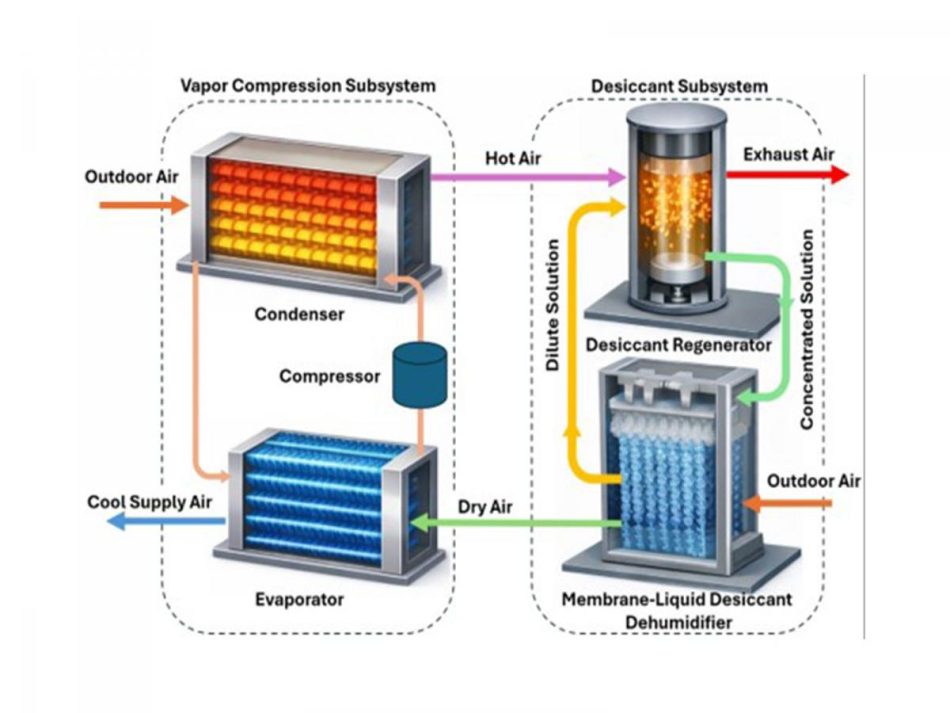
To improve efficiency, the IIT Delhi research team has developed a novel concept that incorporates a compact add-on module specifically designed to tackle moisture directly. This module utilizes a liquid desiccant—a salt solution that absorbs water vapor from incoming outdoor air. A thin, selective polymer membrane is placed between the air and the salt solution, effectively preventing the salt from contaminating the indoor air, which is a common concern with existing liquid-desiccant systems.
Continuous Reuse of the Salt Solution
One of the key innovations of this system is its ability to continuously revive and recirculate the same salt solution. Instead of relying on a burner or electric heater to dry the solution after it has absorbed moisture, the design cleverly utilizes heat that the air conditioner already expels through its condenser (the outdoor unit). This heat is redirected to a regenerator module, allowing the salt solution to dry and be reused efficiently.
Energy Efficiency and Performance
The hybrid air conditioning system is designed to precisely match the energy transfer rates between the vapor compression and desiccant modules, regardless of varying outdoor conditions. This integration results in an estimated energy consumption reduction of around 33% while still meeting indoor comfort targets. According to Professor Goyal, predicted energy savings across different Indian climates range from 28% in very humid areas to as much as 41.5% in dry and arid regions.
Wider Implications for Sustainable Cooling Technology
The research team anticipates that this innovative cooling technology will see wider adoption in Indian buildings, contributing to a more sustainable approach to air conditioning. As urbanization continues and temperatures rise, the demand for efficient cooling solutions will only increase. This new system not only addresses immediate energy consumption concerns but also aligns with broader environmental goals.
Publication and Future Directions
A study titled “Model-based analysis of a novel hybrid membrane-liquid desiccant air conditioner for high-efficiency space cooling” detailing their work has been published in the Journal of Building Engineering. The findings underscore the potential for such technologies to transform the air conditioning landscape, particularly in regions facing extreme heat.
Conclusion
The development of a high-efficiency air conditioning system by researchers at IIT Delhi represents a promising step towards reducing electricity consumption and addressing the challenges posed by rising temperatures. By integrating innovative technologies and sustainable practices, this research not only aims to enhance comfort but also to promote energy conservation and environmental sustainability.
Note: This article is based on information provided by the researchers and is intended for informational purposes only.