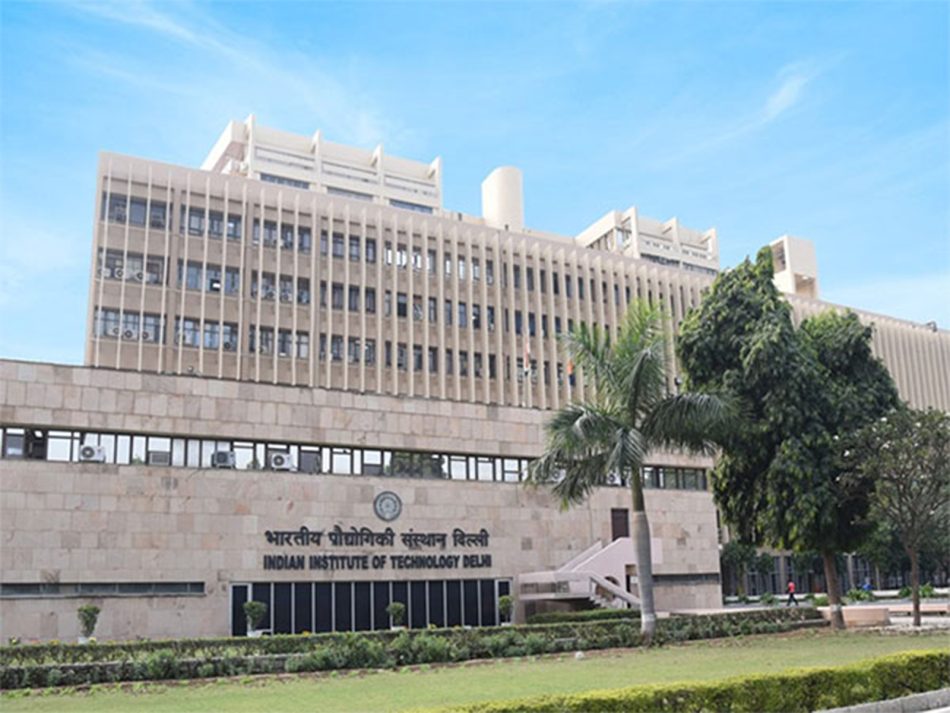
IIT Delhi's 'Wind Tunnel': Where architecture proves Bernoulli's Principle
The Indian Institute of Technology (IIT) Delhi is renowned for its academic excellence, consistently producing innovators, engineers, and scientists who contribute to leading organizations worldwide. Frequently appearing in global rankings, such as the QS World University Rankings, IIT Delhi is one of India’s most sought-after engineering institutes. However, beyond its classrooms and laboratories, the campus holds a unique architectural feature that illustrates a fundamental principle of physics: Bernoulli’s Principle.
The Campus ‘Wind Tunnel’
Students often refer to a specific corridor on campus as the “wind tunnel.” This space is not a laboratory or mechanical device used for aerodynamics; rather, it is a corridor between buildings where wind flows strongly, creating a refreshing rush of cool air. For generations of students enduring Delhi’s sweltering summer heat, traversing this corridor has become a cherished ritual.
Many students are unaware that this experience is directly linked to Bernoulli’s Principle, a concept they typically encounter in their physics textbooks.
Understanding Bernoulli’s Principle
Bernoulli’s Principle, named after Swiss mathematician and physicist Daniel Bernoulli, is a fundamental concept in fluid dynamics. In simple terms, the principle states that as a fluid, such as air, moves through a narrower space, its speed increases while its pressure decreases. This principle explains various everyday phenomena, from the lift generated by an aircraft wing to the airflow in narrow spaces within buildings.
The Architecture Behind the Wind Tunnel
The story of IIT Delhi’s wind tunnel begins in the early 1960s when the campus was designed. Constructed between 1961 and 1968 on a 311-acre site in Hauz Khas, New Delhi, the project was led by architect J.K. Chowdhury and structural engineer Gulzar Singh. Chowdhury’s architectural vision was influenced by his association with renowned modernist architects such as Le Corbusier and Pierre Jeanneret.
The campus showcases the Brutalist style of architecture, characterized by the use of exposed concrete and bold geometric forms. Most buildings in the academic complex feature exposed concrete surfaces, contributing to the institute’s distinctive visual identity. During the planning phase, the designers aimed to preserve the natural topography of the land rather than flatten it. This careful positioning of buildings, open spaces, and corridors created natural air channels across parts of the campus, which students now experience as the famous wind tunnel.
Experiencing Physics in Everyday Life
For students preparing for engineering exams, Bernoulli’s Principle often appears as a formula in textbooks. However, at IIT Delhi, this concept becomes a tangible experience as students walk through the campus. The corridor’s design allows for a noticeable gust of wind, providing a refreshing escape from the heat.
Students often gather in this corridor during hot afternoons to enjoy the breeze. Over time, this spot has become part of campus folklore, with many freshers considering their first experience of the “wind tunnel” as memorable as attending their first lecture. The phenomenon gained renewed attention when Dhariya Sandhyana, who achieved an All India Rank of 29 in the JEE Advanced 2014, mentioned it during a podcast conversation. Her description of daily life on campus, including the famous wind corridor, sparked curiosity among aspirants preparing for the Joint Entrance Examination Advanced.
Conclusion
The wind tunnel at IIT Delhi serves as a remarkable intersection of architecture and physics. It exemplifies how thoughtful design can create spaces that not only enhance the aesthetic appeal of a campus but also embody fundamental scientific principles. For students, the experience of walking through this corridor is a reminder that physics is not confined to classrooms or laboratories; it is a part of their everyday lives, flowing through the spaces between buildings, carried by the wind.
Note: The information presented in this article is based on facts available as of October 2023 and aims to highlight the unique features of IIT Delhi’s campus.