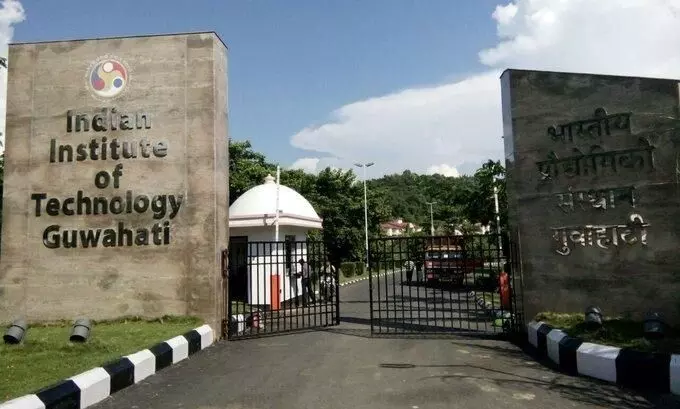
IIT Guwahati Develops Corrosion-Resistant Epoxy Coating to Protect Steel
Researchers at the Indian Institute of Technology (IIT) Guwahati have made significant strides in the field of materials science by developing a novel corrosion-resistant epoxy coating. This innovative coating is designed specifically to protect steel structures that are frequently exposed to seawater and high-salinity environments.
Understanding Corrosion and Its Impacts
Corrosion is a natural and gradual process that leads to the deterioration of metal surfaces, significantly weakening them over time. This degradation is particularly concerning for essential structures such as:
- Offshore platforms
- Coastal bridges
- Port infrastructure
- Marine pipelines
Corrosion not only shortens the lifespan of these structures but has also been implicated in major industrial incidents, including the 1984 Bhopal gas tragedy and the 1992 Guadalajara explosion. Furthermore, corrosion contributes to environmental degradation, adversely affecting both human and aquatic life.
The Limitations of Current Coating Technologies
Barrier coatings are commonly used to protect against corrosion; however, they have inherent limitations. Over time, these coatings can develop microscopic defects that allow moisture and salts to penetrate, ultimately damaging the underlying metal. This has led researchers worldwide to explore more effective solutions.
Innovative Research at IIT Guwahati
The research team at IIT Guwahati, led by Professor Chandan Das from the Department of Chemical Engineering, along with research scholar Dr. Anil Kumar, has taken a unique approach to enhance epoxy coatings. They have experimented with incorporating various types of nanomaterials to strengthen the protective capabilities of these coatings.
The Role of Nanomaterials
Nanomaterials are ultra-small particles that are thousands of times smaller than the width of a human hair. These materials have the potential to significantly improve the strength, durability, and protective performance of coatings. While previous studies have focused on individual materials or simple combinations, the IIT Guwahati team has pioneered a novel approach by integrating three different nanomaterials into a single epoxy coating.
The Composition of the New Coating
The innovative epoxy coating developed by the IIT Guwahati team consists of:
- Reduced Graphene Oxide (RGO)
- Zinc Oxide (ZnO)
- Polyaniline (PANI)
This unique combination was achieved by attaching zinc oxide nanorods to reduced graphene oxide, which was then wrapped in polyaniline. The resulting composite was blended into an epoxy coating and subjected to various characterization methods to evaluate its performance.
Performance Evaluation
The newly developed epoxy coating has demonstrated superior performance compared to standard epoxy coatings. Key improvements include:
- Formation of a denser and more uniform barrier
- Stronger adhesion to the steel surface
- Enhanced ability to slow the movement of corrosive elements
These characteristics make the coating particularly suitable for applications in marine infrastructure, offshore platforms, shipbuilding, coastal pipelines, and other steel structures that must endure continuous exposure to saltwater.
Future Directions
Professor Das emphasized the potential of the RGO-ZnO-PANI nanocomposite epoxy coating, stating, “The incorporation of RGO-ZnO-PANI nanocomposite into epoxy coating offers a promising strategy for achieving long-term corrosion resistance in harsh marine environments.”
As a next step, the research team is focused on assessing the long-term durability, real-world performance, and life-cycle impact of this innovative coating. This ongoing research aims to ensure that the coating not only meets immediate protective needs but also contributes to sustainable practices in marine infrastructure development.
Conclusion
The development of a corrosion-resistant epoxy coating by IIT Guwahati represents a significant advancement in protective materials for steel structures. By leveraging the unique properties of nanomaterials, this innovative approach addresses the critical challenges posed by corrosion, particularly in marine environments. As the research progresses, it holds the potential to enhance the longevity and safety of vital infrastructure, ultimately benefiting both the economy and the environment.
Note: The findings of this research have been published in the Advanced Engineering Materials journal, showcasing the collaborative efforts of IIT Guwahati in addressing pressing industrial challenges.