IIT Jodhpur Breakthrough Offers Insights into Treating Cancer and Genetic Disorders
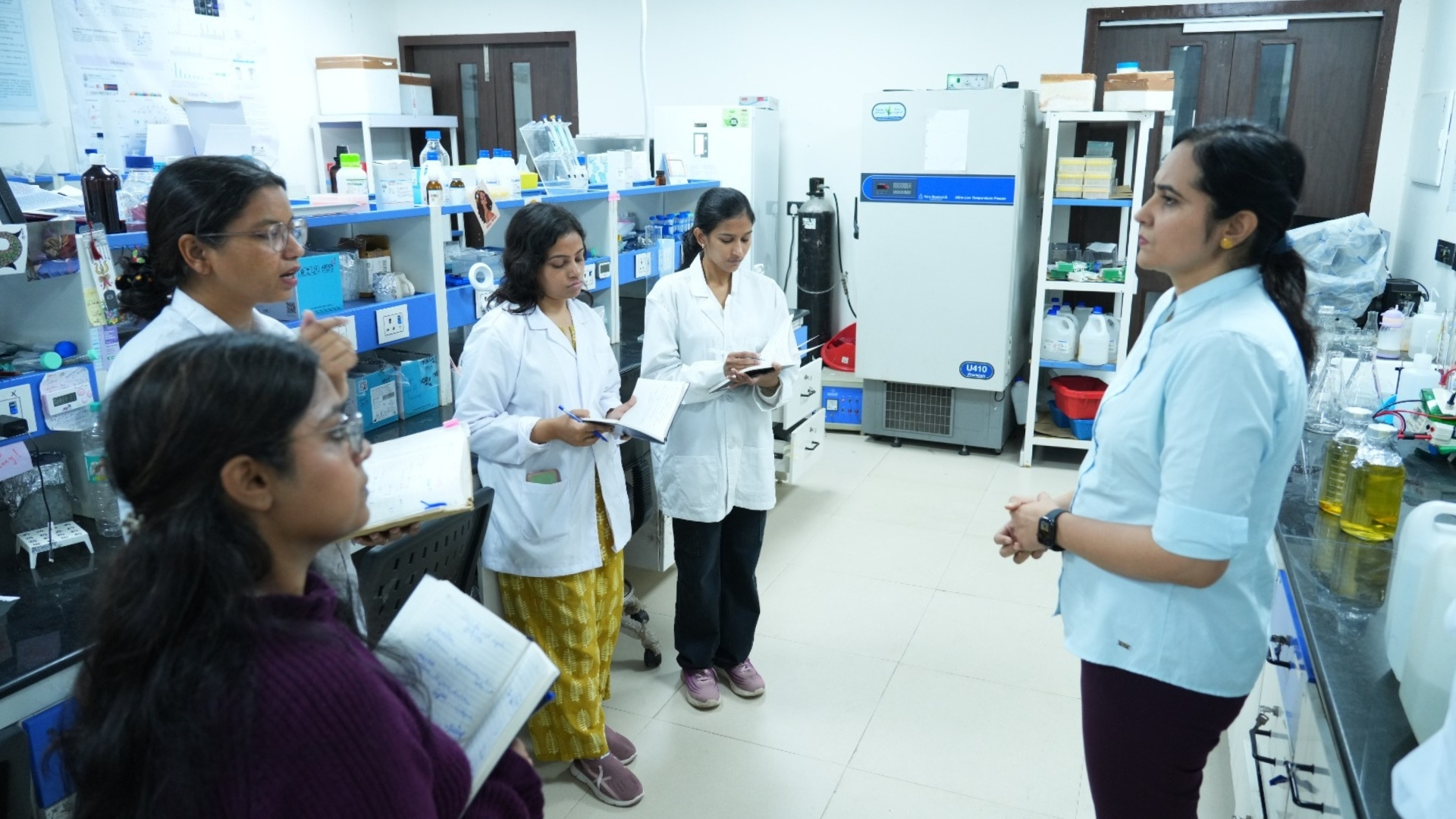
Scientists at the Indian Institute of Technology (IIT) Jodhpur have made significant strides in understanding the mechanisms of cell division, a discovery that holds promise for new treatments for cancer and rare genetic disorders. This research, led by Dr. Priyanka Singh, an Associate Professor in the Department of Bioscience and Bioengineering, focuses on centrosomes, which are small cellular structures that act as the cell’s command center, directing growth and division.
The Role of Centrosomes in Cell Division
Centrosomes play a crucial role in maintaining cellular balance. When their function is disrupted, it can lead to serious health conditions, including cancer and developmental disorders such as microcephaly. Dr. Singh emphasized the importance of mapping the precise mechanisms that regulate cell division. “Our goal is to learn the cell’s exact wiring diagram, knowledge that can help us stop cancer while keeping healthy cells untouched,” she stated.
Key Findings of the Research
The research team discovered that a protein known as PLK4 acts as a molecular switch, facilitating the correct duplication and separation of chromosomes during cell division. Additionally, they identified a previously unknown interaction between STIL, a centrosome protein, and BRCA1, a well-known tumor suppressor associated with breast cancer. This interaction suggests that the internal machinery of the cell is directly involved in preventing uncontrolled cellular growth.
Implications for Cancer Treatment
Beyond cancer research, Dr. Singh’s team has also investigated how mutations in centrosome proteins can lead to developmental disorders. In particular, they studied primary microcephaly, a rare neurological condition, and found that two mutations in the CPAP protein can produce opposite effects: one mutation results in oversized centrosomes, while the other leads to an excess number of centrosomes.
The researchers have also uncovered mechanisms by which certain cancers evade normal cellular controls. They found that cancer cells can cluster excess centrosomes to divide normally, a process that could be targeted with new drugs. “We’ve identified mutations that help cancer cells do this,” Dr. Singh explained. “The exciting part is that we can now disrupt these clusters with specific compounds, opening up possibilities for new anticancer treatments.”
Development of New Therapeutics
To further their research, the team is collaborating with clinicians and researchers to enhance early diagnosis of rare centrosome-related diseases in India. Working alongside Dr. Sandip Murarka’s chemistry group, they are developing new chemical compounds that interfere with microtubules, which are essential for cell division. Initial tests have shown that some of these compounds can slow cancer cell growth at very low doses, indicating their potential as future therapies.
Dr. Singh’s lab is also exploring the possibility of repurposing existing drugs to target centrosomes more effectively, potentially leading to cost-effective and less toxic treatments for cancer. This innovative approach highlights how fundamental biological research can translate into practical medical applications.
Conclusion
The work being conducted at IIT Jodhpur underscores the critical link between basic scientific research and medical innovation. “Centrosomes are the cell’s command centers,” Dr. Singh remarked. “If we can understand how they make decisions, we can rewrite the rules of disease, from cancer to developmental disorders.” This research not only paves the way for novel therapeutic strategies but also enhances our understanding of the intricate processes governing cell behavior.
Note: The findings of this research have the potential to revolutionize treatment approaches for cancer and genetic disorders, emphasizing the importance of continued investment in scientific research.