
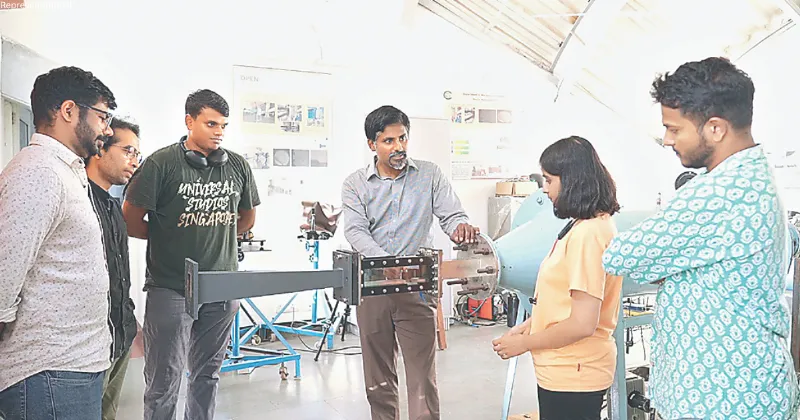
IIT Jodhpur Drives Tech Innovation
Jodhpur, India – The Indian Institute of Technology (IIT) Jodhpur is at the forefront of technological advancements, working on innovative solutions that could revolutionize various sectors, including transportation, aerospace, safety, and environmental sustainability. Under the leadership of Dr. Arun Kumar, an Associate Professor in the Department of Mechanical Engineering and a member of the Space Science and Technology Interdisciplinary Research Division, researchers are making significant strides in several high-impact areas.
Breakthrough Technologies in Development
At IIT Jodhpur, scientists are focusing on a range of pioneering technologies that promise to enhance the way we live and interact with our environment. The key areas of research include:
- Hypersonic Scramjet Engines: These engines are designed for faster, lighter, and more efficient flight. By utilizing scramjet technology, researchers aim to develop propulsion systems that can operate at hypersonic speeds, significantly reducing travel time.
- Retro-Propulsion Systems: This technology is crucial for enabling the safe return of rockets to Earth. By implementing advanced retro-propulsion techniques, IIT Jodhpur is contributing to the development of reusable rocket systems, which can dramatically lower the costs associated with space exploration.
- Blast Protection Materials: In an effort to enhance safety, researchers are working on materials that can withstand and mitigate the impacts of explosions. These materials could be vital in protecting both military and civilian infrastructures from potential threats.
- Solar-Based Desalination and Refrigeration Systems: Addressing the critical need for clean water and cooling in energy-deficient regions, this innovative system harnesses solar energy to provide sustainable solutions for water purification and refrigeration.
Collaboration and Support
The ambitious research initiatives at IIT Jodhpur are supported by various esteemed organizations, including the Defence Research and Development Organisation (DRDO), the Aeronautics Research and Development Board (ARDB), and the Advanced National Research Facility (ANRF). These collaborations not only enhance the research capabilities of IIT Jodhpur but also strengthen India’s position in advanced propulsion, sustainable technology, and national safety.
Impact on Society and Environment
The innovations being developed at IIT Jodhpur have the potential to create a significant impact on society and the environment. For instance, the advancements in hypersonic travel could lead to reduced travel times across the globe, making international travel more accessible. The development of reusable rocket technology could pave the way for more frequent and cost-effective space missions, fostering a new era of exploration and scientific discovery.
Moreover, the blast protection materials being researched could enhance safety measures in urban areas and conflict zones, potentially saving lives and reducing damage during explosive incidents. The solar-based desalination and refrigeration systems address critical issues related to water scarcity and energy consumption, providing sustainable solutions for communities in need.
Future Prospects
As IIT Jodhpur continues to push the boundaries of innovation, the future looks promising. The institute is not only preparing its students to become leaders in technology and engineering but is also contributing to the global discourse on sustainable development and safety. The ongoing research efforts are expected to yield practical applications that can be implemented in various sectors, including aerospace, defense, and environmental management.
Conclusion
IIT Jodhpur stands as a beacon of technological innovation in India’s heartland. The groundbreaking research being conducted under the guidance of Dr. Arun Kumar and his team exemplifies the institute’s commitment to addressing some of the most pressing challenges facing humanity today. With continued support and collaboration, IIT Jodhpur is poised to make a lasting impact on both national and global scales.
Note: The information presented in this article is based on the latest updates from IIT Jodhpur as of October 2025.


