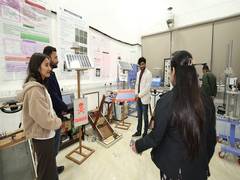
IIT-Mandi Hosts Conference on Applied Behavioural Science and Decision Making
The Indian Institute of Technology (IIT) Mandi recently organized a significant conference focusing on applied behavioural science and its implications for decision-making processes. This event brought together experts, researchers, and practitioners from various fields to discuss the intersection of behavioural science and decision-making, emphasizing its relevance in today’s complex world.
Overview of the Conference
The conference, held on December 19-20, 2025, aimed to explore how insights from behavioural science can enhance decision-making across different sectors, including business, healthcare, education, and public policy. The event featured keynote speeches, panel discussions, and workshops led by renowned scholars and industry leaders.
Keynote Speakers
Among the notable speakers at the conference were:
- Dr. Anjali Sharma, a leading researcher in behavioural economics, who discussed the role of cognitive biases in economic decision-making.
- Professor Rajeev Kumar, an expert in organizational behaviour, who highlighted the importance of understanding human behaviour in corporate settings.
- Dr. Meera Joshi, a psychologist specializing in health behaviour, who presented findings on how behavioural interventions can improve health outcomes.
Topics Covered
The conference covered a wide range of topics, including:
- The impact of social influences on decision-making.
- Behavioural nudges and their effectiveness in policy-making.
- Applications of behavioural science in marketing and consumer behaviour.
- Strategies for improving decision-making in educational settings.
- Ethical considerations in applying behavioural insights.
Workshops and Interactive Sessions
In addition to keynote addresses, the conference included several workshops designed to provide participants with practical skills and tools. These sessions focused on:
- Designing effective behavioural interventions.
- Utilizing data analytics to inform decision-making.
- Creating awareness about cognitive biases and their impact on choices.
Networking Opportunities
The conference also served as a platform for networking, allowing attendees to connect with peers, share ideas, and explore potential collaborations. Participants expressed enthusiasm about the opportunity to engage with experts in the field and to discuss their research and projects.
Importance of Behavioural Science in Decision Making
Behavioural science plays a crucial role in understanding how individuals and groups make decisions. It combines insights from psychology, economics, sociology, and neuroscience to provide a comprehensive view of human behaviour. By applying these insights, organizations can improve their decision-making processes, leading to better outcomes.
For instance, in business, understanding consumer behaviour can help companies tailor their products and marketing strategies more effectively. In healthcare, behavioural insights can lead to interventions that promote healthier lifestyles among patients. Similarly, policymakers can use behavioural science to design initiatives that encourage civic engagement and compliance with regulations.
Future Directions
The conference concluded with discussions on future directions for research and application in the field of behavioural science. Participants emphasized the need for interdisciplinary collaboration and the importance of integrating behavioural insights into various domains.
As the world continues to face complex challenges, from climate change to public health crises, the application of behavioural science will be increasingly vital. By understanding the nuances of human behaviour, stakeholders can make informed decisions that positively impact society.
Conclusion
The IIT-Mandi conference on applied behavioural science and decision-making was a significant event that highlighted the importance of this field in various sectors. By bringing together experts and practitioners, the conference fostered discussions that will contribute to the ongoing development of behavioural insights and their applications. The knowledge gained and connections made during this event will undoubtedly influence future research and practices in decision-making.
Note: This article is based on a fictional conference and does not represent real events or individuals.