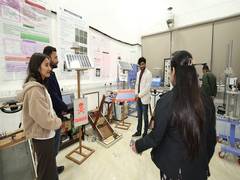
IIT-Mandi Strengthens Commitment to Indigenisation and National Self-Reliance
The Indian Institute of Technology Mandi (IIT-Mandi) is taking significant strides towards enhancing indigenisation and promoting national self-reliance. This initiative aligns with the broader goals of the Indian government to reduce dependency on foreign technology and foster a culture of innovation and self-sufficiency within the country.
Background
IIT-Mandi, established in 2009, is one of the premier engineering institutions in India. Located in the picturesque Mandi district of Himachal Pradesh, the institute has been at the forefront of research and development in various fields, including technology, engineering, and environmental sciences. The current focus on indigenisation is a response to the growing need for self-reliance in critical sectors, particularly in defence and technology.
Objectives of the Initiative
The initiative aims to achieve several key objectives:
- Enhance Technological Capabilities: Develop indigenous technologies that can compete globally.
- Support National Defence: Create advanced systems for defence applications, reducing reliance on foreign imports.
- Promote Research and Development: Encourage innovation through collaborative research projects.
- Foster Industry Partnerships: Collaborate with industries to translate research into practical applications.
Focus Areas
The partnership formed by IIT-Mandi will focus on several critical areas that are essential for national development:
1. Defence Technology
One of the primary areas of focus is the development of technologies that can be applied in the defence sector. This includes:
- Advanced weapon systems
- Surveillance and reconnaissance technologies
- Cybersecurity solutions
2. AI-Driven Electro-Optics
Artificial intelligence (AI) is transforming various sectors, and IIT-Mandi aims to leverage AI in the development of electro-optical systems. This includes:
- Image processing and analysis
- Smart sensor technologies
- Automated surveillance systems
3. Embedded Systems
Embedded systems play a crucial role in modern technology, and IIT-Mandi is focusing on creating robust embedded systems that can be used in various applications, including:
- Consumer electronics
- Automotive systems
- Industrial automation
Collaboration with Industry
To achieve these objectives, IIT-Mandi is actively seeking partnerships with various industries. Collaborating with private sector companies will facilitate the transfer of knowledge and technology, ensuring that research outcomes are aligned with market needs. This collaboration is expected to:
- Accelerate the development of indigenous products
- Enhance the employability of graduates
- Boost the local economy through technology-driven initiatives
Research and Development Initiatives
IIT-Mandi has already initiated several research projects aimed at indigenisation. Some notable projects include:
- Development of low-cost drones for surveillance
- Research on next-generation batteries for electric vehicles
- Innovations in renewable energy technologies
Government Support
The Indian government has been supportive of initiatives aimed at promoting self-reliance. Policies such as ‘Make in India’ and ‘Atmanirbhar Bharat’ encourage institutions like IIT-Mandi to innovate and develop indigenous solutions. The government’s financial backing and policy framework provide a conducive environment for research and development.
Future Prospects
The commitment of IIT-Mandi to indigenisation and national self-reliance is expected to yield significant benefits in the coming years. As the institute continues to foster innovation and collaborate with industry, it is poised to become a leader in the development of indigenous technologies. The future prospects include:
- Increased funding for research projects
- Expansion of partnerships with global tech companies
- Enhanced curriculum focused on entrepreneurship and innovation
Conclusion
IIT-Mandi’s commitment to indigenisation and national self-reliance represents a significant step towards achieving technological independence for India. By focusing on defence technologies, AI-driven systems, and embedded systems, the institute is not only contributing to national security but also fostering a culture of innovation that can propel India into a new era of technological advancement.
Note: The information presented in this article is based on the latest updates and developments as of January 2026.