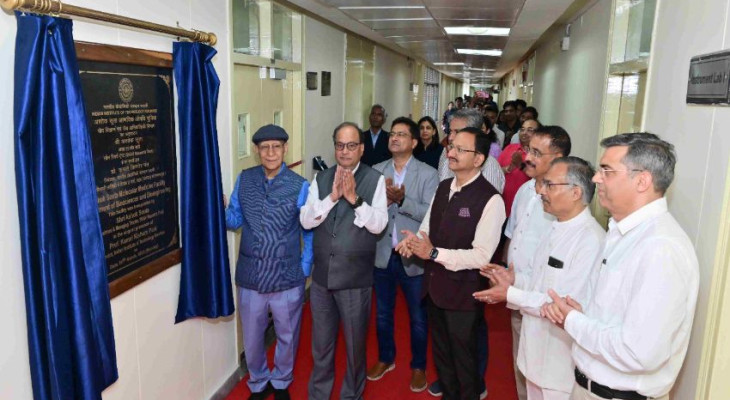
IIT-Roorkee to Help Chhattisgarh Government Map 5000 sq km Maoist Area
In a significant development, the Chhattisgarh government has partnered with the Indian Institute of Technology (IIT) Roorkee to undertake the first-ever mapping of the Abujhmad region, which has been largely uncharted due to its history of Maoist influence. This initiative is set to cover an area of over 5,000 square kilometers and aims to enhance administrative services and infrastructure in a region that has remained off official records for decades.
Background of the Abujhmad Region
Abujhmad, located in the heart of Chhattisgarh, is characterized by its dense forests and has long been a stronghold for Maoist activities. The area has been notorious for its difficult terrain and lack of accessibility, which has hindered development efforts and basic surveys. The presence of Naxalites has made it risky for government officials and survey teams to operate in the region.
Agreement with IIT-Roorkee
The memorandum of understanding (MoU) signed between the Chhattisgarh government and IIT-Roorkee marks a pivotal shift in the approach towards the Abujhmad region. Chief Minister Vishnu Deo Sai stated that the mapping project would facilitate the delivery of essential administrative services and infrastructure development to remote villages that have been neglected for years.
“Now a survey will be conducted, and all administrative facilities will also reach the area. The exercise is likely to be completed by 2030, but we would prefer that it happens earlier,” said Chief Minister Sai.
Impact of Diminishing Naxal Influence
With the decline of Naxal activities in the region, there are new opportunities for economic and infrastructural development in Abujhmad. The government has noted that previously, even basic surveys were too dangerous due to the presence of rebels. As security improves, the potential for development is becoming increasingly apparent.
Chief Minister Sai emphasized, “Eliminating Naxalism is not enough. We will have to take development in the areas freed from the Naxals. There are areas which hardly anyone visited earlier because of the rebels.”
Security Measures in Remote Areas
The Chhattisgarh government has ramped up security measures in remote areas, establishing security camps that cover a five-kilometer radius. This initiative has led to many Naxal groups vacating these regions. With the support of the central government, the security radius has been doubled, now encompassing 400 villages.
These efforts are part of a broader strategy to meet the March 31 deadline set by Union Home Minister Amit Shah for the complete elimination of Naxalism from the country. The government is committed to ensuring that the region is safe for development initiatives.
Support for Surrendered Naxals and Families
The Chhattisgarh government is also taking steps to support surrendered Naxals and the families of those who have been killed in encounters with security forces. Surrendered individuals are offered financial assistance, vocational training, and land to help them reintegrate into society.
“With a double-engine government now in place, security forces are fighting the Naxals with much vigor. We will meet the deadline of eliminating Naxals by March 31,” Chief Minister Sai stated. Families of Naxals killed in encounters have also been provided benefits under various development schemes.
Investment and Development Prospects
Chhattisgarh has recently received investment proposals worth Rs 8 lakh crore, with several projects already underway. The state is also rich in lithium reserves, which presents significant opportunities for growth in the battery and semiconductor industries. This economic potential is expected to further enhance the development of the Abujhmad region as mapping and infrastructure projects progress.
Conclusion
The collaboration between IIT-Roorkee and the Chhattisgarh government to map the Abujhmad region represents a crucial step towards integrating this previously isolated area into the broader framework of governance and development. As security improves and mapping initiatives take shape, the potential for economic growth and improved living standards for the residents of Abujhmad is becoming increasingly viable.
Note: This article is based on information available as of January 2026 and may be subject to updates as new developments occur.