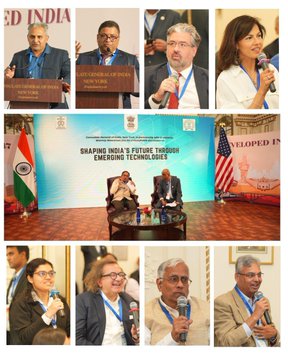
Indian Consulate In New York, IIT Bombay Hold Dialogue On US-India Partnership
On April 19, 2026, the Indian Consulate in New York, led by Consul General Binaya Srikanta Pradhan, hosted an exclusive roundtable discussion in collaboration with the Indian Institute of Technology (IIT) Bombay Heritage Foundation. The event focused on the theme “Shaping India’s Future through Emerging Technologies.”
Overview of the Event
The roundtable brought together key figures from academia and diplomacy to discuss the critical role of technology in shaping India’s future. The session featured a presentation by Dr. Shireesh Kedare, the Director of IIT Bombay, who emphasized the importance of technology sovereignty and shared his vision for a Viksit Bharat, or Developed India.
Key Speakers and Their Contributions
- Dr. Shireesh Kedare: As the Director of IIT Bombay, Dr. Kedare presented insights on technology sovereignty, highlighting how emerging technologies can empower India to achieve self-reliance and drive economic growth.
- Consul General Binaya Srikanta Pradhan: In his address, Pradhan discussed the significance of the technology partnership between the United States and India, underscoring the collaborative efforts that can lead to mutual benefits in various sectors.
- Dr. Shih-Fu Chang: The Dean of Columbia Engineering, Dr. Chang provided special remarks that enriched the dialogue, focusing on the intersection of engineering, technology, and international collaboration.
- Professor Upendra Bhandarkar: The Dean of IIT Bombay delivered the vote of thanks, expressing gratitude to all participants and highlighting the importance of such dialogues in fostering international cooperation.
Importance of Technology Sovereignty
During the discussion, Dr. Kedare elaborated on the concept of technology sovereignty, which refers to a nation’s ability to develop and control its own technological capabilities. This is particularly relevant for India as it seeks to enhance its position in the global technology landscape. Key points discussed included:
- The need for India to invest in research and development to create indigenous technologies.
- The role of educational institutions like IIT Bombay in nurturing talent and innovation.
- Strategies for fostering public-private partnerships to accelerate technological advancements.
US-India Technology Partnership
The dialogue also explored the existing technology partnership between the US and India, which has been pivotal in various sectors, including information technology, healthcare, and clean energy. Some highlights included:
- The collaborative efforts in artificial intelligence and machine learning, which have the potential to drive economic growth and improve quality of life.
- Joint initiatives aimed at addressing global challenges such as climate change and public health crises.
- The importance of nurturing a skilled workforce that can thrive in a technology-driven economy.
Future Directions
The discussions at the roundtable underscored the need for continued dialogue and collaboration between the US and India in the technology sector. Participants expressed optimism about the future, emphasizing the following:
- The potential for innovation to address pressing global issues.
- The importance of creating a supportive ecosystem for startups and entrepreneurs.
- The necessity of enhancing bilateral cooperation through academic exchanges and research collaborations.
Conclusion
The roundtable at the Indian Consulate in New York served as a significant platform for discussing the future of US-India relations in the realm of technology. By bringing together leaders from academia and diplomacy, the event highlighted the critical role that emerging technologies will play in shaping a prosperous future for both nations. As India continues to strive for technological self-reliance, partnerships with institutions like IIT Bombay and engagement with US counterparts will be essential in navigating the complexities of the global technology landscape.
Note: The information presented in this article is based on the event held on April 19, 2026, and reflects the discussions and insights shared by the speakers during the roundtable.