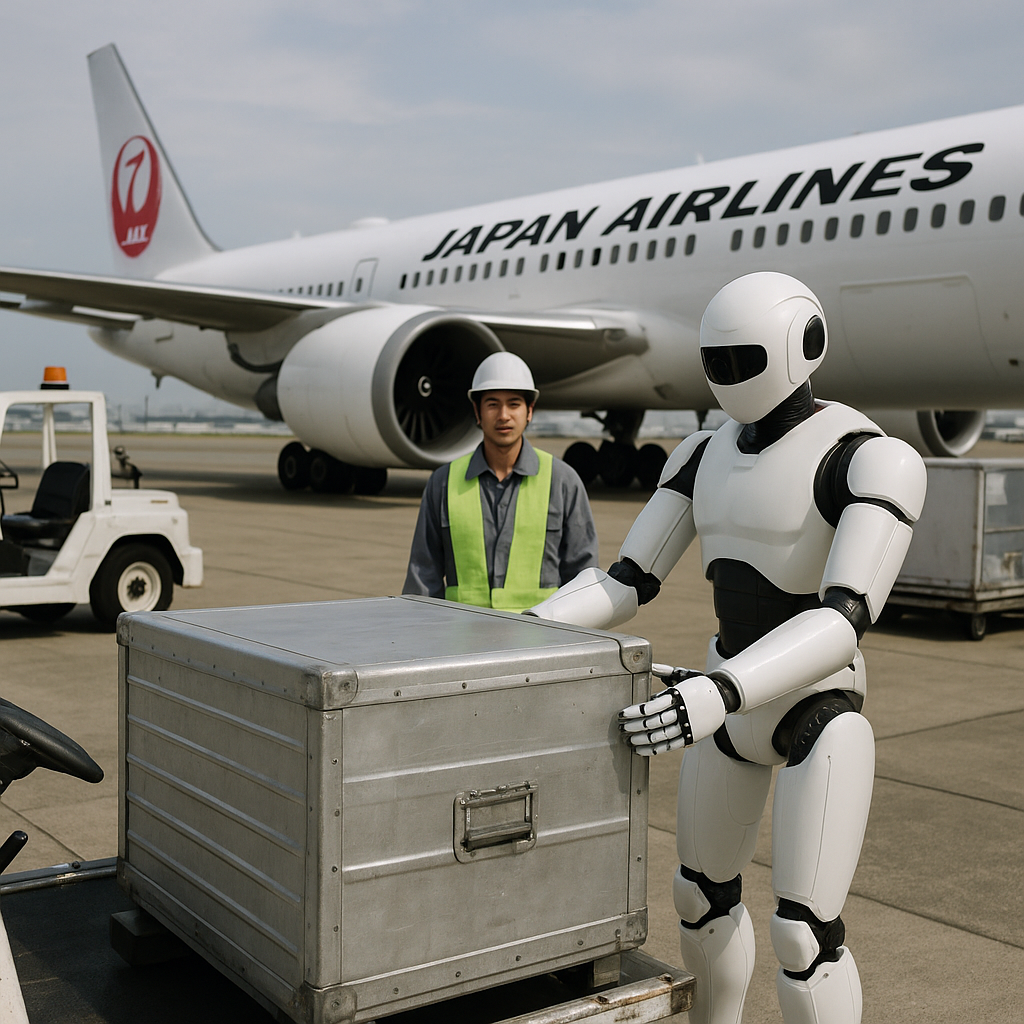
Japan Airlines trials humanoid robots as ground handlers
Japan Airlines (JAL) is set to embark on an innovative two-year trial involving the use of humanoid robots for ground handling tasks at Tokyo’s Haneda Airport, beginning in May 2026. This initiative aims to alleviate the workload of ground staff amidst a growing labor shortage in Japan’s aviation industry.
The Need for Automation
Japan’s aviation sector is currently facing significant challenges due to an increase in inbound tourism and a declining working-age population. JAL, which employs approximately 4,000 ground handling staff, recognizes the pressing need to adapt to these changes. The introduction of humanoid robots is seen as a potential solution to address labor shortages and enhance operational efficiency.
Details of the Robot Deployment
In collaboration with GMO AI & Robotics, JAL will initially deploy Chinese-made humanoid robots to assist in loading and unloading cargo containers. This decision follows a demonstration held for the media, showcasing the robots’ capabilities in handling ground operations.
According to Tomohiro Uchida, president of GMO AI & Robotics, while airports may appear highly automated, many back-end operations still heavily rely on human labor. The integration of robots into these tasks is expected to significantly benefit employees by relieving them of physically demanding duties.
Future Applications of Humanoid Robots
Beyond cargo handling, JAL has plans to expand the use of humanoid robots to other areas of ground handling. Future applications may include:
- Cleaning aircraft cabins
- Operating ground support equipment
- Assisting with passenger services
These advancements could lead to a more efficient airport environment, allowing human staff to focus on more complex and safety-critical tasks that robots cannot perform.
The Impact of Tourism on Labor Demand
The need for automation has been underscored by the recent surge in tourism. In the first two months of 2026, Japan welcomed over seven million foreign visitors, according to statistics from JTB Group, the country’s largest travel agency. This influx of tourists has intensified the demand for ground handling services, further exacerbating the existing labor shortages.
As Yoshiteru Suzuki, president of JAL’s Ground Service, noted, while the use of robots can provide substantial benefits to employees, certain responsibilities, particularly those related to safety management, must remain in human hands. This balance between automation and human oversight is crucial for maintaining safety and service quality in airport operations.
Current Use of Robots in Airports
Japan is not new to the integration of robotics in airport operations. Several airports across the country have already begun employing robots for various functions, including:
- Security patrols
- Retail assistance
- Information services
These implementations highlight Japan’s commitment to leveraging technology to enhance the efficiency and safety of its aviation sector.
Conclusion
The trial of humanoid robots by Japan Airlines marks a significant step towards addressing labor shortages in the aviation industry while improving operational efficiency. As the project unfolds, it will be essential to monitor the robots’ impact on both employee workload and overall service quality. The balance between automation and human involvement will be critical in shaping the future of ground handling operations at airports.
Note: This article reflects the current state of Japan Airlines’ initiatives as of April 2026 and may be subject to change as the trial progresses.