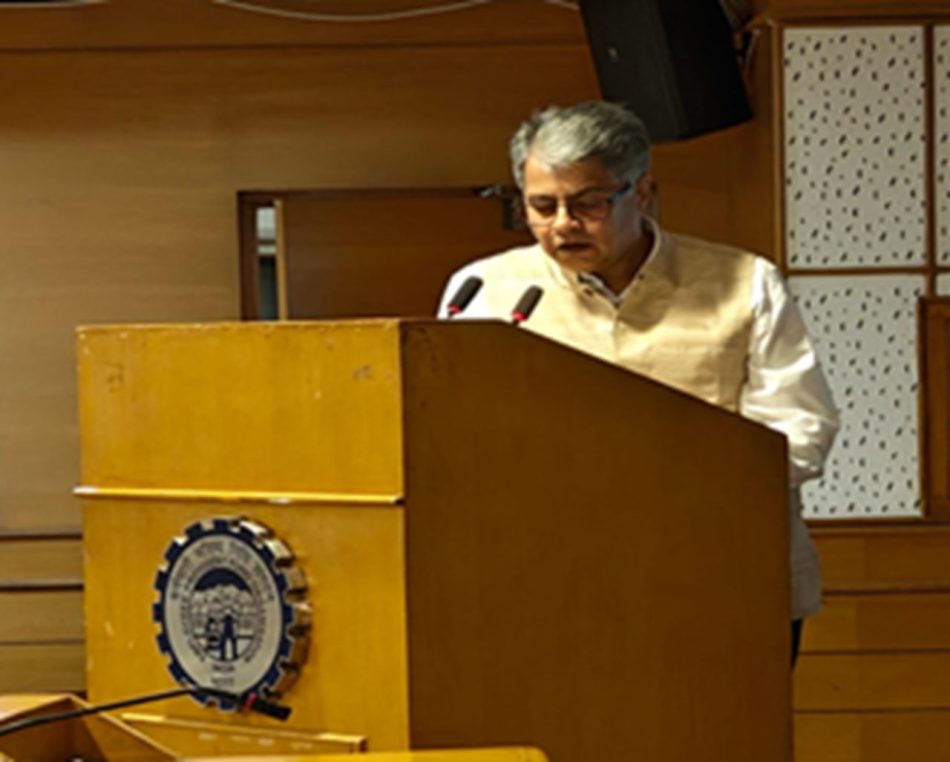
Kailash Satyarthi Advocates for Compassionate AI and Ethical Technology at IIT-Dhanbad
On March 21, 2026, Nobel Peace Prize winner Kailash Satyarthi delivered a powerful address to students at the Indian Institute of Technology (Indian School of Mines) Dhanbad, emphasizing the critical need for integrating knowledge with empathy in today’s technological landscape. Satyarthi, who was awarded the Nobel Prize in 2014 for his relentless fight against child labor and for children’s rights, highlighted the transformative power of what he termed the ‘compassion quotient.’
The Concept of Compassion Quotient
Satyarthi introduced the idea of the ‘compassion quotient’ as a vital measure of an individual’s ability to empathize and act with kindness. He urged the students to not only excel in their academic pursuits but also to cultivate a sense of empathy that can drive positive change in society. He stated, “Compassion is not just a feeling; it is an action that can transform lives and societies.”
Advocating for Compassionate AI
During his centenary lecture, Satyarthi called for the development of ‘compassionate AI,’ which he defined as the integration of ethical considerations into technological innovations. He expressed concern over the rapid advancement of artificial intelligence and its potential implications for society if not guided by ethical frameworks. “The future of technology should not only be about efficiency and profitability but also about humanity and responsibility,” he asserted.
Key Principles of Compassionate AI
- Human-Centric Design: Technology should prioritize human welfare and societal benefit.
- Ethical Considerations: Developers must embed ethical guidelines into AI systems to prevent misuse and ensure accountability.
- Empathy in Innovation: Innovations should be driven by the needs and emotions of people, fostering a sense of community and support.
- Interdisciplinary Collaboration: Collaboration across various fields is essential to create holistic solutions that address complex societal challenges.
The Role of Students as Change-Makers
Satyarthi emphasized the role of students as future leaders and change-makers, urging them to take responsibility for their actions and the impact they have on society. He encouraged them to use their skills and knowledge to advocate for ethical practices in technology and governance. “You have the power to shape the future,” he said. “Let your decisions be guided by empathy and a commitment to the greater good.”
Empathy in Governance and Business
In his lecture, Satyarthi also addressed the importance of empathy in governance and business. He argued that leaders in these sectors must prioritize the welfare of the people they serve. “Indifference can lead to societal decay,” he warned, highlighting the risks of neglecting ethical considerations in decision-making processes. He called for a new generation of leaders who are not only skilled but also compassionate, ensuring that policies and business practices reflect the needs of society.
Addressing Societal Indifference
Satyarthi pointed out that societal indifference poses a significant threat to progress. He urged the audience to be vigilant against apathy and to take action when they witness injustice or inequality. “Compassion should inform our decisions in every aspect of life, from technology to governance,” he stated. His message resonated with the students, many of whom expressed a desire to engage more deeply with social issues and contribute positively to their communities.
Interdisciplinary Discourse
The event was hosted by the director of IIT (ISM) Dhanbad, Sukumar Mishra, as part of a lecture series aimed at promoting interdisciplinary dialogue among students and faculty. This initiative seeks to bridge the gap between technology and the humanities, encouraging students to think critically about the implications of their work. Satyarthi’s address was a fitting contribution to this ongoing conversation, inspiring students to consider the ethical dimensions of their studies.
Conclusion
Kailash Satyarthi’s visit to IIT (ISM) Dhanbad served as a poignant reminder of the importance of compassion in the face of rapid technological advancement. His call for compassionate AI and ethical technology resonates deeply in an era where technology increasingly influences every facet of life. By merging knowledge with empathy, students can become the change-makers needed to create a more just and humane society.
Note: This article is based on a recent event featuring Kailash Satyarthi and reflects his views on the integration of compassion in technology and governance.