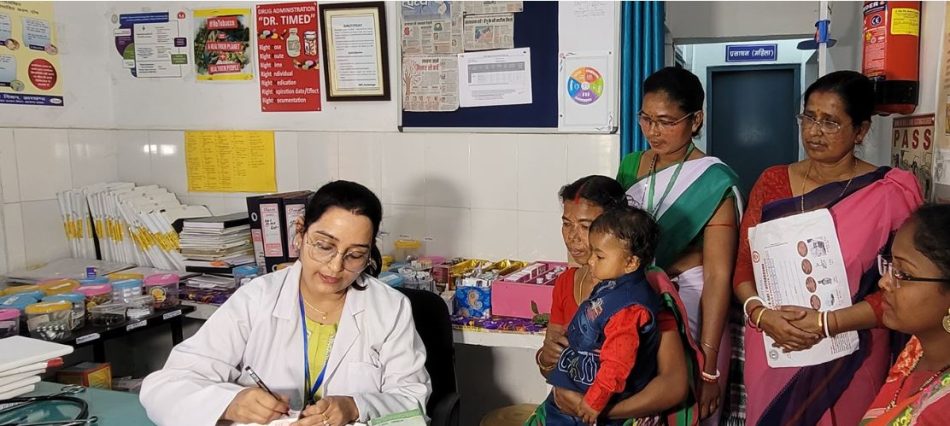
Local leadership key to improving infant, maternal health: IIM Lucknow study
In a significant finding, a study conducted by researchers at the Indian Institute of Management (IIM) Lucknow has revealed that affirmative action in local government leadership can greatly enhance health outcomes, particularly concerning infant survival and maternal prenatal care in India. This study, published in the Proceedings of the National Academy of Sciences (PNAS) journal, sheds light on the impact of structural interventions in addressing long-standing social and health inequities.
Key Findings of the Study
The research indicates that village clusters with affirmative action in local leadership have recorded markedly better health outcomes. Key findings include:
- Significantly lower infant mortality rates in villages led by local representatives from historically disadvantaged groups.
- Improved maternal health indicators, including:
- Higher likelihood of receiving at least two prenatal visits.
- Increased rates of tetanus vaccinations.
- Greater access to prenatal supplements by the second trimester.
The Role of Local Leaders
Professor K. G. Sahadevan, one of the leading researchers, stated, “Our study found that local leaders from historically disadvantaged groups made decisions on health and education spending that appear to address some structural inequalities in local communities.” This emphasizes the crucial role that local leadership plays in improving health outcomes in their respective areas.
Research Methodology
The research utilized a quasi-experimental design to analyze the impact of leadership reservation for Scheduled Castes (SC) in India’s local governments. These local governments are the smallest units of governance responsible for delivering essential public services, including health and education.
The study compared 60 village clusters with SC-reserved leadership to 60 village clusters without such reservations in 2021. To ensure comprehensive results, the research team employed a rich mix of data sources, including:
- Administrative health records.
- Primary data collected in schools.
- In-depth interviews with local leaders.
Impact on Education Sector
While the study recorded significant improvements in health outcomes in villages with affirmative action in local leadership, it did not observe a corresponding improvement in the education sector. The research team found no statistically significant difference in the test scores between the two groups of villages. Furthermore, Scheduled Caste leaders faced challenges in collaborating with teachers, suggesting that persistent social inequalities may hinder the effectiveness of improved education outcomes.
Implications for Policymakers
The findings of this study provide crucial insights for policymakers, especially in low- and middle-income countries looking to advance human development outcomes. The research highlights the importance of local leadership in addressing health disparities and suggests that empowering leaders from disadvantaged backgrounds can lead to better health indicators in communities.
Conclusion
In conclusion, the IIM Lucknow study underscores the significance of local leadership in improving infant and maternal health outcomes in India. By focusing on affirmative action and empowering local leaders from historically marginalized groups, communities can address structural inequalities and enhance health services. However, the challenges faced in the education sector indicate that further efforts are needed to ensure comprehensive development in all areas.
Note: The findings of this study are crucial for understanding the dynamics of local governance and its impact on public health, particularly in the context of social inequalities in India.