
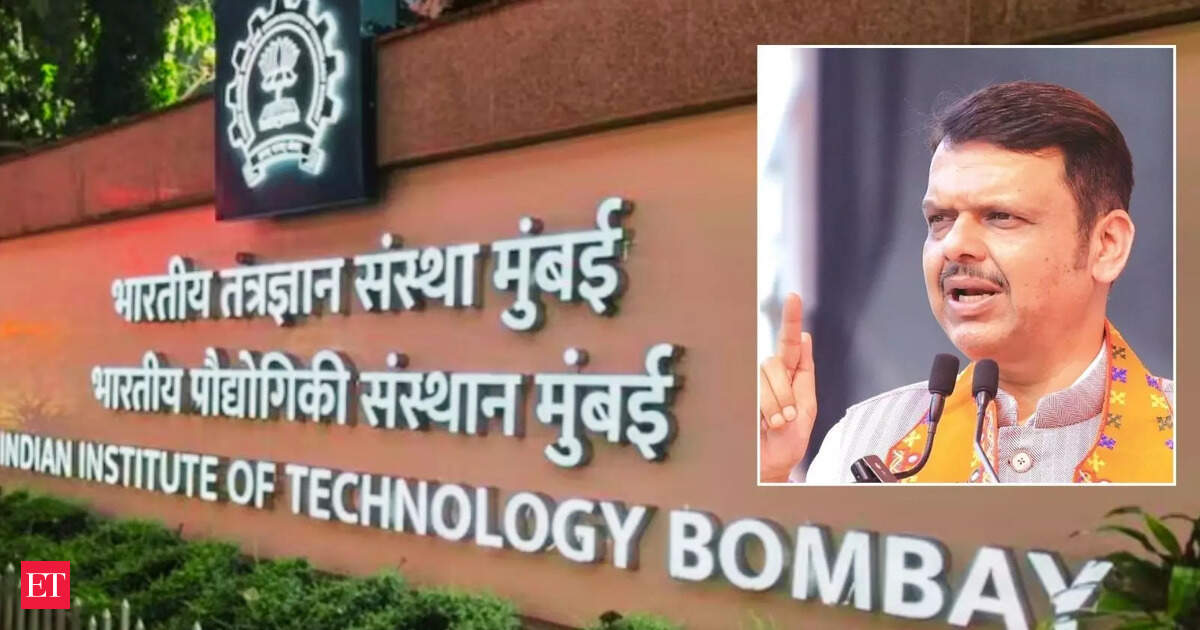
Maharashtra Government Seeks to Rename IIT Bombay to IIT Mumbai
The Maharashtra government, led by Chief Minister Devendra Fadnavis, has announced plans to formally request the renaming of the Indian Institute of Technology (IIT) Bombay to IIT Mumbai. This decision comes in response to recent comments made by Union Minister Jitendra Singh regarding the institute’s name, which has sparked a political controversy.
Background of the Controversy
During a function at IIT Bombay, Union Minister Jitendra Singh remarked, “As far as IIT Bombay is concerned, thank God it still is this name. You have not changed it to Mumbai.” His comments were perceived as dismissive of the local identity associated with the city of Mumbai, leading to a backlash from political leaders, particularly from the Maharashtra Navnirman Sena (MNS).
Political Reactions
Raj Thackeray, the chief of the MNS, responded strongly to Singh’s remarks, stating that they reflect a broader governmental mindset that is not in tune with the sentiments of the Marathi people. Thackeray emphasized the importance of the name “Mumbai,” which is derived from the local goddess Mumbadevi, and criticized any perceived attempts to undermine the city’s identity.
Thackeray’s Statements
Thackeray expressed concern over what he described as a “plot” to separate Mumbai from Maharashtra, drawing parallels with past attempts to wrest control of Chandigarh from Punjab. He urged the people of Mumbai and the Marathi community to remain vigilant against any such moves, asserting, “Our Marathi Mumbai remained in Maharashtra. Now, the bitterness that’s been festering in their bellies for decades is starting to spill out once again.”
Fadnavis’s Commitment
In response to the controversy, Chief Minister Devendra Fadnavis announced that he would write to Prime Minister Narendra Modi and the Minister of Education, seeking the official renaming of IIT Bombay to IIT Mumbai. Fadnavis highlighted that the renaming aligns with the state’s long-standing effort to replace the colonial-era name “Bombay” with “Mumbai.”
Historical Context of the Name Change
The city of Bombay was officially renamed Mumbai in 1995 to honor the local goddess Mumbadevi and to shed the remnants of British colonial rule. This name change has been a point of pride for many residents who identify with the local culture and heritage.
Broader Implications
The push for renaming IIT Bombay to IIT Mumbai is not just about the name itself; it reflects deeper issues of identity, culture, and regional pride. The MNS and other local political parties view the name change as a way to assert the significance of Marathi identity in the face of perceived central government overreach.
Public Sentiment
Public sentiment in Mumbai is mixed, with some residents supporting the name change as a matter of local pride, while others view it as a distraction from more pressing issues facing the city, such as infrastructure and governance. The debate has sparked discussions on social media platforms, with various opinions being shared.
Future Steps
As the Maharashtra government prepares to send its proposal to the central government, it remains to be seen how the request will be received. The outcome could set a precedent for other institutions in the state and beyond, potentially leading to more name changes that reflect local identities.
Other Renaming Proposals
In addition to IIT Bombay, former BJP MP Kirit Somaiya has called for the renaming of the Bombay High Court to the Mumbai High Court, further emphasizing the desire to align official names with local identity.
Conclusion
The decision to seek the renaming of IIT Bombay to IIT Mumbai is emblematic of the ongoing struggle between regional identity and national narratives in India. As the Maharashtra government moves forward with its proposal, the implications of this decision will resonate beyond the walls of the institute, touching on issues of cultural identity, pride, and the legacy of colonialism in the country.
Note: The developments surrounding the name change of IIT Bombay to IIT Mumbai reflect broader socio-political dynamics in India, where identity and heritage play crucial roles in shaping public discourse.


