Meet a professor fed up with AI slop who made her whole class use typewriters instead of computers
In a world increasingly dominated by technology and artificial intelligence, one professor is taking a stand against the over-reliance on digital tools in education. Grit Matthias Phelps, a German language instructor at Cornell University, has introduced a unique approach to her teaching by requiring her students to use manual typewriters instead of computers. This initiative, which began in the spring of 2023, aims to foster a deeper understanding of writing and critical thinking among her students.
The Inspiration Behind the Analog Assignment
Phelps’s decision to implement typewriters in her classroom stemmed from her frustration with students utilizing generative AI and online translation platforms to complete their assignments. She questioned the value of reading essays that were grammatically perfect but not authentically written by the students themselves. “What’s the point of me reading it if it’s already correct anyway, and you didn’t write it yourself?” Phelps asked. Her goal was to help students appreciate the writing process as it existed before the digital age.
Bringing Back the Typewriter
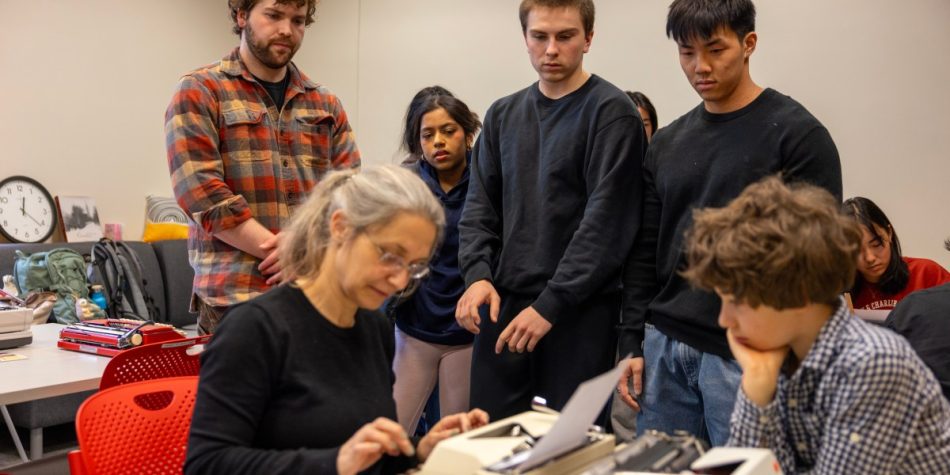
To facilitate this unique learning experience, Phelps scoured thrift shops and online marketplaces to find several dozen old manual typewriters. The syllabus for her course now includes what she calls an “analog” assignment, where students are required to produce their work using these vintage machines. The scene in her classroom resembles a throwback to the 1950s, with students diligently typing away, the sound of dings marking the end of each line.
Student Reactions
When students entered the classroom on a recent analog day, they were met with an unexpected sight: typewriters at their desks, some equipped with German keyboards and others with standard QWERTY layouts. Freshman Catherine Mong expressed her confusion, stating, “I had no idea what was happening. I’d seen typewriters in movies, but they don’t tell you how a typewriter works.” This sentiment was echoed by many students who found the manual typewriter both foreign and fascinating.
Learning the Mechanics
Phelps took the time to demonstrate the mechanics of using a typewriter, explaining how to feed the paper, the importance of striking the keys with the right amount of force, and the significance of the dinging bell that signals the end of a line. “Everything slows down. It’s like back in the old days when you really did one thing at a time,” Phelps remarked. She even brought her children to class to help monitor distractions, ensuring that students remained focused on their writing tasks.
Benefits of Using Typewriters
The assignment goes beyond merely teaching students how to use a typewriter; it encourages them to engage more deeply with their writing and with each other. Computer science major Ratchaphon Lertdamrongwong noted that the absence of screens eliminated distractions, allowing for more meaningful interactions among classmates. “While writing the essay, I had to talk a lot more, socialize a lot more, which I guess was normal back then,” he observed. This shift in dynamics highlighted the stark contrast between modern classroom interactions and those of previous generations.
Encouraging Thoughtful Writing
Without the luxury of a delete key or the ability to instantly correct mistakes, students were compelled to think more critically about their writing. Lertdamrongwong reflected on the experience, stating, “This might sound bad, but I was forced to actually think about the problem on my own instead of delegating to AI or Google search.” This intentionality in writing is a significant departure from the instant gratification offered by digital tools.
Challenges Faced by Students
Many students faced challenges when adapting to the typewriter. For instance, Mong struggled with a recently broken wrist, which limited her ability to type with both hands. She described her initial frustration with the messiness of her typed pages, which were filled with errors and irregular spacing. However, Phelps encouraged her to embrace the imperfections, reminding students that making mistakes is part of the learning process. “This thing I handed in had pencil marks all over it and definitely did not look clean or finished. But it’s part of the process of learning that you’re going to make mistakes,” Mong said.
Conclusion
Phelps’s innovative approach to teaching with typewriters has not only provided her students with a unique educational experience but has also sparked a broader conversation about the role of technology in learning. As more educators explore alternatives to digital tools, the revival of old-school methods like typewriting may serve as a reminder of the value of thoughtful engagement in the writing process.
Note: This article reflects the experiences and insights of students and educators as they navigate the challenges and benefits of integrating traditional methods into modern education.