
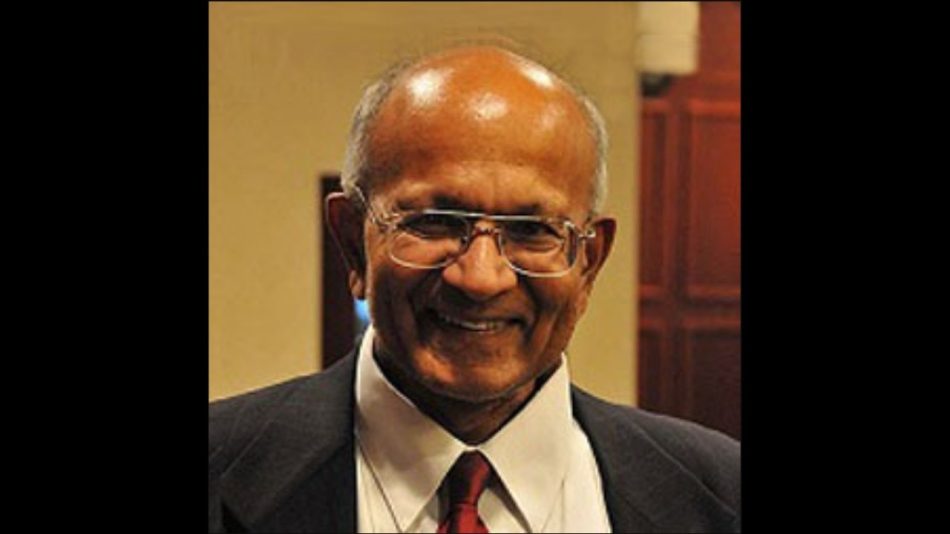
Meet Abhay Bhushan, the IIT Kanpur engineer who made digital file transfers possible
In the early days of computer networking, exchanging information between machines posed significant technical challenges. The solution emerged in the early 1970s through the work of Abhay Bhushan, whose contributions helped shape how computers share files across networks.
The Birth of File Transfer Protocol (FTP)
Have you ever wondered how files travel from one computer to another across the Internet? Every time you download a document, upload a photo, or transfer data between servers, a silent protocol works behind the scenes to make it possible. One of the earliest and most important technologies that enabled this was the File Transfer Protocol (FTP), designed in 1971 by Indian computer scientist Abhay Bhushan.
Challenges in Early Networking
Long before cloud storage or high-speed networks existed, Bhushan’s work addressed a fundamental problem: how could computers located miles apart reliably exchange files? In the late 1960s, when computer networking was still in its infancy, scientists faced this crucial question. The answer came from Bhushan while he was working at the Massachusetts Institute of Technology (MIT).
From IIT Kanpur to MIT
Abhay Bhushan’s journey into the world of advanced computing began in India. He studied electrical engineering at the Indian Institute of Technology, Kanpur, graduating in 1965. IIT Kanpur, which was then emerging as one of India’s leading engineering institutions, provided him with a strong academic foundation in electronics and computing.
After completing his undergraduate studies, Bhushan moved to the United States for higher education. He joined MIT, one of the world’s most prominent research institutions in science and technology. At MIT, he pursued graduate studies in electrical engineering and management, entering an environment where groundbreaking research in computer networking was beginning to take shape.
The Development of FTP
During the late 1960s and early 1970s, MIT researchers were heavily involved in the development of ARPANET, the experimental computer network funded by the US Department of Defense’s Advanced Research Projects Agency. One major challenge was enabling different computers on the network to exchange files. Computers at various research institutions used different systems, and there was no standardized method for transferring data between them.
In 1971, Abhay Bhushan proposed and documented the File Transfer Protocol (FTP), a standardized set of rules that allowed computers connected through a network to transfer files reliably. The protocol defined how files could be uploaded, downloaded, and managed between connected systems.
Impact of FTP on Networking
FTP quickly became one of the first widely used applications on ARPANET, enabling researchers to share software, research data, and documents across institutions. This capability proved crucial for collaborative scientific work and eventually for the development of global networking. Today, although modern technologies such as cloud services and secure transfer protocols have evolved from it, FTP remains one of the foundational innovations in the history of computer networking.
A Career in Technology and Entrepreneurship
After completing his work at MIT, Bhushan joined Xerox in 1974, where he contributed to the development of advanced networking systems. Xerox was a major hub of technological innovation during this period, and Bhushan’s expertise in networking protocols and systems helped advance enterprise communication technologies.
Over the years, he also became a successful entrepreneur and technology innovator in Silicon Valley. He co-founded several technology ventures and worked in areas ranging from Internet messaging software to semiconductor manufacturing technologies. Among his notable initiatives, he co-founded Portola Communications, an Internet messaging company that was later acquired by Netscape during the early growth phase of the commercial Internet. He also co-founded YieldUP International Corporation, a company focused on semiconductor processing technologies.
According to profiles published by the IIT Bay Area Alumni Association, Bhushan holds multiple US patents in semiconductor manufacturing and technology processes.
Contribution to Education and Social Initiatives
Beyond technology and entrepreneurship, Bhushan has also been actively involved in academic and social initiatives. As an alumnus of IIT Kanpur, he has contributed to various alumni and development efforts supporting education and research. He has served in leadership roles within global IIT alumni organizations and has supported initiatives aimed at expanding educational opportunities. At one point in his career, he even took time away from industry to explore rural development efforts in India, reflecting his broader interest in social impact.
Recognition and Global Legacy
For his pioneering work in the early development of Internet technologies, Abhay Bhushan has received international recognition. He was inducted into the Internet Hall of Fame, an honor reserved for individuals whose work has significantly shaped the evolution and global impact of the Internet. His career reflects the journey of a scientist who helped solve one of the earliest problems in computer networking: how to move information from one machine to another, and in doing so, contributed to the technological foundations of the digital age.
Why His Work Still Matters
Today, billions of files move across networks every day through cloud storage, research networks, and various digital platforms. The principles established by Bhushan’s FTP continue to underpin many of these processes, highlighting the enduring relevance of his contributions to technology.
Note: Abhay Bhushan’s work exemplifies how a single innovation can have far-reaching impacts on technology and society, paving the way for future advancements in digital communication.


