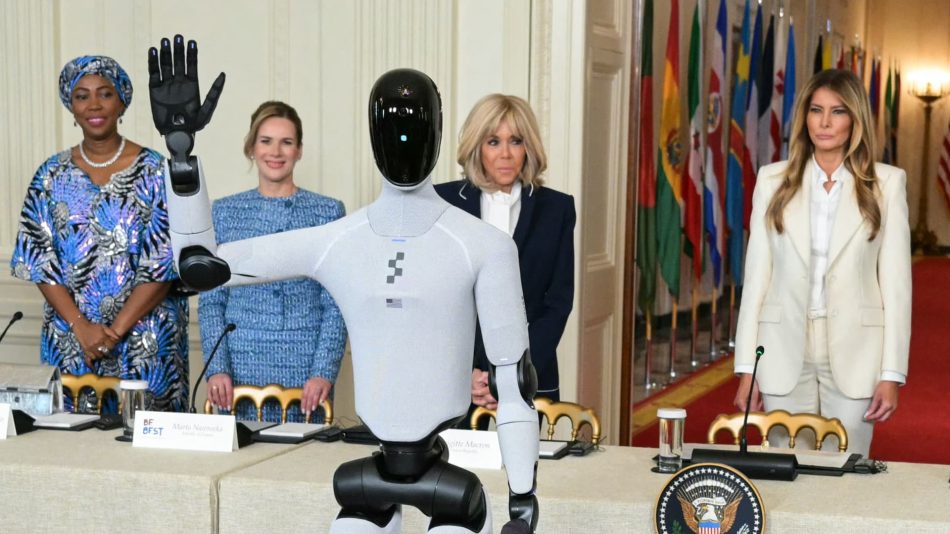
Meet Figure AI: The company behind the humanoid robot hosted by Melania Trump
On March 25, 2026, the White House made headlines by hosting its first humanoid robot, Figure 3, during the Fostering the Future Together Global Coalition Summit. The event featured Melania Trump, the First Lady of the United States, who used the occasion to advocate for the integration of artificial intelligence in children’s education.
Introduction to Figure AI
Figure AI, a robotics company founded in 2022 by Brett Adcock, has quickly garnered attention for its innovative humanoid robots. Adcock, a tech entrepreneur and billionaire, previously co-founded Archer Aviation, a drone company, and Vettery, a digital hiring marketplace. The company’s mission extends beyond education, aiming to deploy humanoid robots for various applications, including commercial and household tasks.
The Humanoid Robot at the White House Event
During the summit, Figure 3 greeted attendees in multiple languages and introduced itself as “a humanoid built in the United States of America.” This event marked a significant showcase of humanoid robotics in the U.S., emphasizing the growing importance of this technology in a competitive global landscape.
Melania Trump’s Advocacy for AI in Education
Melania Trump highlighted the potential of humanoid robots like Figure 3 to serve as interactive educators in homes. She emphasized the importance of integrating artificial intelligence into children’s education, suggesting that such robots could enhance learning experiences.
Figure AI’s Technological Advancements
Figure AI’s robots are powered by an in-house Helix AI system, which is a vision-language-action model enabling the robots to learn through observation and verbal commands. This technology positions Figure AI as a notable player in the robotics field, alongside more established companies like Tesla and Boston Dynamics.
Funding and Growth
In September 2025, Figure AI raised over $1 billion in a Series C funding round led by Parkway Venture Capital, with participation from major investors such as Nvidia, Intel Capital, Qualcomm Ventures, and Salesforce. This funding round valued the company at approximately $39 billion, reflecting the growing investor interest in physical AI technologies.
Commercial Applications
Figure AI is already making strides in the commercial sector, having begun work with BMW. The company’s robots are being utilized for tasks such as handling sheet metal parts in manufacturing facilities. This collaboration signifies the practical applications of humanoid robots in various industries.
Ongoing Legal Challenges
Despite its rapid growth, Figure AI faces legal challenges. In November 2025, the company was sued by its former head of product safety, Robert Gruendel, who alleged wrongful termination after raising concerns about the safety of the robots. Gruendel claimed that the robots were capable of generating forces sufficient to cause serious injury, including the potential to fracture a human skull. Figure AI has countered these claims, asserting that Gruendel was terminated for poor performance and labeling the allegations as falsehoods.
Implications for Safety Standards
The lawsuit has raised broader questions about safety standards in the development of humanoid robotics. As the industry grows, ensuring the safe operation of these robots will be crucial for public acceptance and regulatory compliance.
A Broader Context
The White House event is not the first time a company associated with Brett Adcock has received attention from the Trump administration. Shares of Archer Aviation surged following an executive order aimed at promoting the safe integration of electric air taxis in U.S. cities. This connection highlights the intersection of technology and national priorities.
Future Prospects for Figure AI
With the backing of significant investors and a high-profile endorsement from the White House, Figure AI is poised for substantial growth. The company aims to deploy thousands of robots in homes and logistics, further integrating humanoid robotics into daily life.
Conclusion
Figure AI represents a promising development in the field of humanoid robotics, with aspirations that extend beyond mere technological innovation. As the company navigates its growth amidst legal challenges and public scrutiny, its commitment to advancing AI in education and commercial applications will be closely watched. The recent White House event underscores the increasing relevance of robotics in national discussions about technology and education.
Note: The information provided in this article is based on current events and developments as of March 2026. Future updates may alter the context and implications discussed herein.