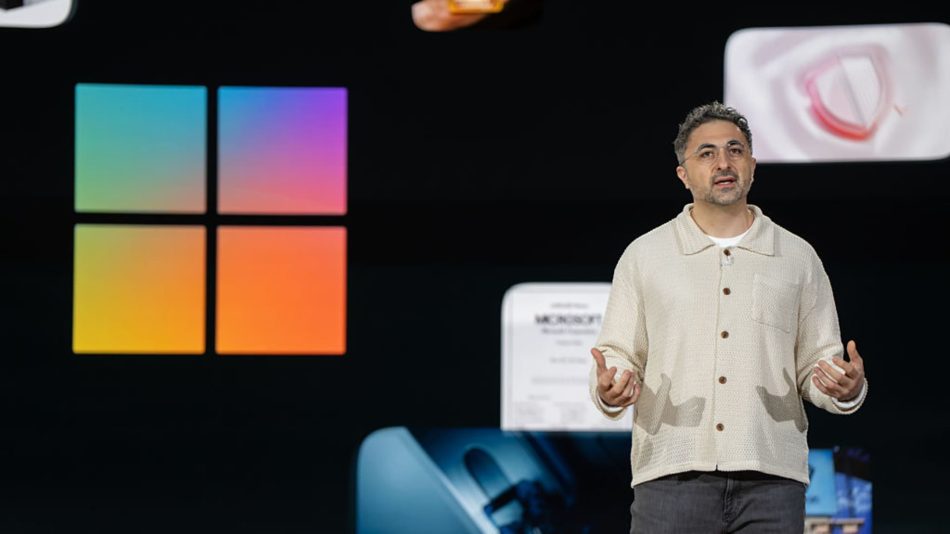
Microsoft shakes up Copilot AI leadership team, freeing up Suleyman
In a significant move to enhance its artificial intelligence capabilities, Microsoft has announced a reorganization within its Copilot AI leadership team. This shake-up aims to streamline operations and focus on developing advanced generative AI models, freeing up key executives to concentrate on their core responsibilities.
Leadership Changes
According to a memo from Microsoft CEO Satya Nadella, the company is merging its engineering teams responsible for the commercial and consumer versions of the Copilot AI assistants. Jacob Andreou, a former executive from Snap, has been appointed as the executive vice president overseeing the Copilot experience for both commercial and consumer clients. Andreou will report directly to Nadella.
Alongside Andreou, several other executives will play crucial roles in leading Microsoft 365 applications and the Copilot platform. These executives include Ryan Roslansky, Perry Clarke, and Charles Lamanna, all of whom will also report to Nadella.
Focus on Generative AI
Mustafa Suleyman, who has been heading the Microsoft AI group, will now have the opportunity to focus more on developing generative AI models. Suleyman, a co-founder of the AI lab DeepMind, emphasized the importance of model development in a recent interview. “The model is the product,” he stated, highlighting his commitment to creating advanced AI systems that can significantly impact Microsoft’s offerings.
Current State of Copilot
Microsoft’s Copilot application has seen limited adoption compared to its competitors. As of February 2026, the app had approximately 6 million daily active users. In contrast, OpenAI’s ChatGPT boasted 440 million daily users, while Google’s Gemini had around 82 million. This disparity underscores the challenges Microsoft faces in gaining traction in the competitive AI landscape.
Market Context
As Microsoft continues to develop its AI capabilities, the pressure is mounting for software companies to demonstrate a return on their AI investments. Investors are increasingly concerned that AI models could disrupt established software incumbents. The iShares Expanded Tech-Software Sector Exchange-Traded Fund has experienced a decline of about 19% in 2026, with Microsoft shares falling by 17% during the same period.
Strategic Goals
In his memo, Nadella outlined a clear vision for the future of Microsoft’s AI initiatives. He stated, “We are doubling down on our superintelligence mission with the talent and compute to build models that have real product impact.” This commitment includes developing models for generating source code, images, audio, and reasoning capabilities that can provide more thoughtful answers, albeit at a slower pace.
Collaboration with OpenAI and Anthropic
Microsoft plans to continue leveraging generative AI models from both Anthropic and OpenAI. The company has secured intellectual property rights for OpenAI models and products through 2032, allowing it to integrate these advanced AI capabilities into its offerings. Suleyman has expressed enthusiasm about this collaboration, stating, “Most of the future value is going to accrue to the model layer.” His focus will be on creating highly efficient enterprise-specific model lineages for Microsoft over the next three to five years.
Future Outlook
The restructuring of the Copilot AI leadership team marks a pivotal moment for Microsoft as it navigates the rapidly evolving AI landscape. The company’s commitment to enhancing its generative AI capabilities positions it to better compete with industry leaders like OpenAI and Google.
As Suleyman and his team work towards building advanced AI models, the focus will remain on meeting enterprise needs and achieving significant research breakthroughs. The success of these initiatives will be critical for Microsoft to solidify its position in the AI market.
Conclusion
Microsoft’s recent leadership changes within its Copilot AI team reflect a strategic shift towards prioritizing generative AI development. With key executives like Mustafa Suleyman focusing on building advanced models, the company aims to enhance its AI offerings and improve its competitive standing in the market. As AI technology continues to evolve, Microsoft’s ability to adapt and innovate will be crucial for its future success.
Note: This article is based on information available as of March 2026 and is subject to change as new developments occur in the technology sector.