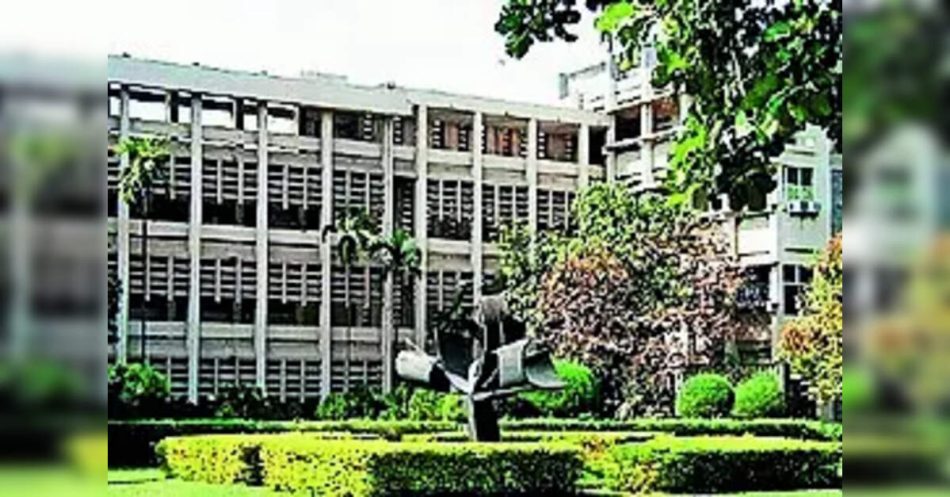
PARAM Rudra Supercomputer Inaugurated at IIT Bombay
Mumbai, January 9, 2026 – The PARAM Rudra supercomputing facility has been officially inaugurated at the Centre for Development of Advanced Computing (C-DAC) located at the Indian Institute of Technology (IIT) Bombay. This state-of-the-art supercomputer is a significant addition to India’s computing capabilities, showcasing the country’s advancements in high-performance computing (HPC).
Overview of PARAM Rudra
The PARAM Rudra supercomputer boasts an impressive computational capacity of 3 Peta FLOPS (Floating Point Operations Per Second). This high-performance system has been developed and deployed under the Build Approach of the National Supercomputing Mission (NSM), which aims to enhance India’s supercomputing infrastructure.
Indigenous Development
One of the standout features of the PARAM Rudra is its design and manufacturing, which are entirely indigenous. The supercomputer is based on the Rudra servers, which have been developed by C-DAC and manufactured in India. This initiative aligns with the government’s Make in India campaign, promoting domestic manufacturing and technological innovation.
Technological Innovations
The PARAM Rudra is powered by C-DAC’s indigenous software stack, ensuring that the system is optimized for performance and efficiency. Additionally, it incorporates advanced Direct Contact Liquid Cooling (DCLC) technology. This innovative cooling method enhances the system’s efficiency, allowing for better thermal management and improved performance.
Impact on Research and Education
During the inauguration, Prof. Abhay Karandikar, Secretary of the Department of Science & Technology (DST), emphasized the significance of the PARAM Rudra facility. He stated that it will greatly strengthen computational research capabilities, benefiting over 200 faculty members and 1,200 students at IIT Bombay. Furthermore, the facility is expected to support researchers across the nation, catalyzing innovation in various fields.
Areas of Innovation
The PARAM Rudra supercomputer is poised to make a substantial impact in several key areas, including:
- Artificial Intelligence: The computational power of PARAM Rudra will facilitate advanced AI research and applications.
- Biotechnology: Researchers can leverage the supercomputer for complex biological simulations and data analysis.
- Advanced Manufacturing: The facility will support innovations in manufacturing processes and materials science.
- Startups and Industry Research: The supercomputer will also aid startups and industry-driven research initiatives.
Significance in India’s Supercomputing Journey
Sunita Verma, Group Coordinator at the Ministry of Electronics and Information Technology (MeitY), remarked that the Rudra-based cluster represents a major milestone in India’s journey toward indigenous supercomputing. She highlighted the importance of sustained investments in HPC systems, software, microprocessors, and networking as essential steps toward achieving exascale computing capabilities.
National Supercomputing Mission
The National Supercomputing Mission, which oversees the establishment of supercomputing facilities across India, is jointly managed by MeitY and DST. C-DAC and the Indian Institute of Science (IISc) in Bengaluru serve as the implementing agencies. The mission aims to create a comprehensive indigenous supercomputing ecosystem through four key pillars:
- Supercomputing Infrastructure: Building and maintaining high-performance computing facilities.
- Applications Development: Developing software and applications that leverage supercomputing capabilities.
- Research and Development: Promoting R&D efforts in various scientific and engineering domains.
- Human Resource Development: Training and developing skilled professionals in the field of supercomputing.
Future Prospects
Dr. Hemant Darbari, NSM Mission Director, noted that with the inauguration of PARAM Rudra at IIT Bombay, a total of 38 supercomputers with a cumulative capacity of 44 Peta FLOPS have been commissioned across the country under the NSM. The PARAM Rudra facility is expected to enhance research prospects for several institutions in and around Mumbai, fostering collaboration and scientific outcomes.
Conclusion
The inauguration of the PARAM Rudra supercomputer at IIT Bombay marks a significant advancement in India’s technological landscape. By reinforcing the country’s capabilities in high-performance computing, it paves the way for groundbreaking research and innovation across various fields. The commitment to indigenous development and the focus on enhancing educational and research opportunities underscore the importance of this facility in shaping the future of science and technology in India.
Note: This article is based on information available as of January 9, 2026, and aims to provide an overview of the PARAM Rudra supercomputer and its implications for research and development in India.