Reform’s Richard Tice posts picture with telltale signs of AI manipulation, say experts
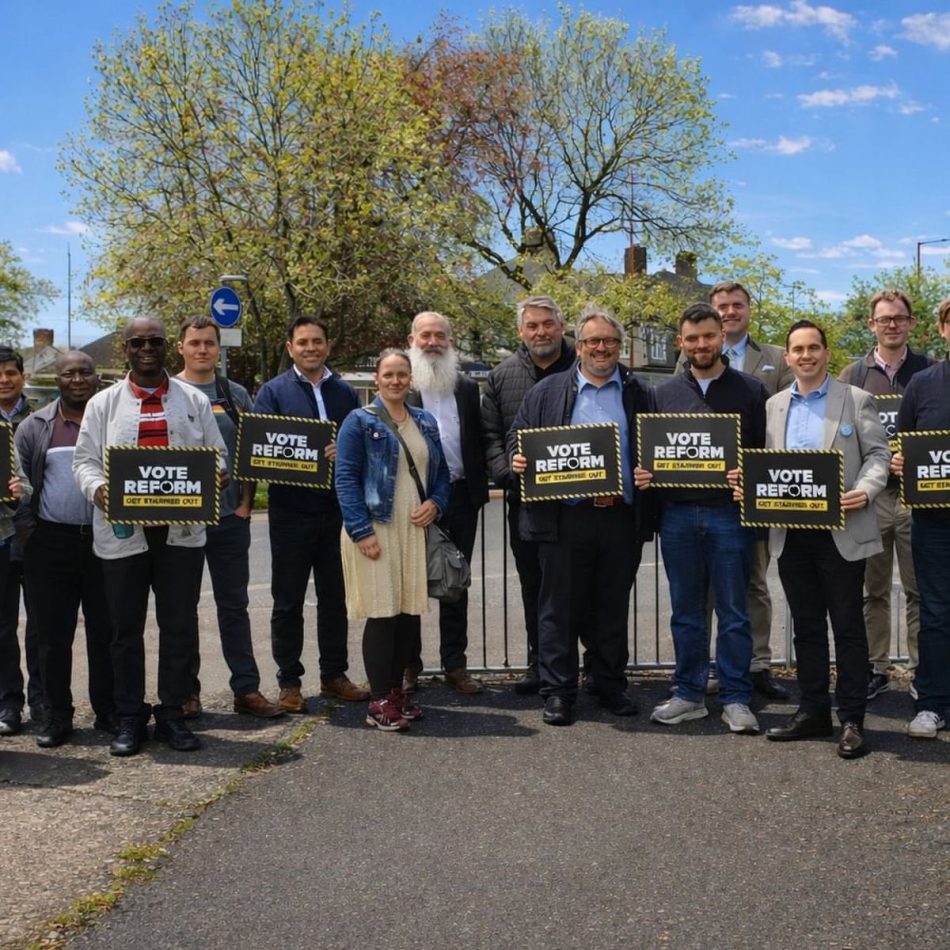
On a recent Sunday, Richard Tice, the deputy leader of Reform UK, shared a photograph on social media that has drawn significant scrutiny. The image, depicting a sunny day in Birmingham with a diverse group of Reform supporters holding placards, was intended to showcase the party’s grassroots activism. However, experts have raised concerns about the authenticity of the photograph, suggesting it may have been manipulated using artificial intelligence (AI).
Initial Reactions to the Image
Tice captioned the image, “That is what resilience looks like. This is what belief looks like.” While he aimed to highlight the dedication of the party’s activists, many observers on social media quickly questioned the legitimacy of the photo. Comments ranged from inquiries about its authenticity to outright claims that it was “pure AI slop.”
Claims of AI Manipulation
Following the post, Peryton Intelligence, a digital intelligence firm specializing in online manipulation, conducted an analysis of the image. Their findings indicated that the picture was almost certainly generated or altered using AI. Here are some of the specific issues they identified:
- Distorted Features: Observers noted that several figures in the image exhibited unnatural characteristics, such as a woman with six fingers on one hand and elongated fingers on the other.
- Inconsistent Signage: The placards held by the supporters contained slogans that appeared to be altered, with one sign reading “Vote Reform, Get Stuppence Out,” which raised eyebrows among viewers.
- Visual Anomalies: The analysis pointed out suspiciously straight lamp-posts and blurred backgrounds, which are often indicative of AI-generated images.
- Pixel Patterns: Experts noted the presence of pixel-perfect vertical lines and regular pixel patterns in the pavement, further suggesting manipulation.
Reform UK’s Response
In response to the allegations, a spokesperson for Reform UK defended the authenticity of the photograph. They stated, “The photograph is real; however, the version Richard Tice posted was slightly edited using AI, mainly to increase the brightness.” This admission of minimal editing did little to quell the skepticism surrounding the image.
Political Implications
The controversy surrounding the image has broader implications for Reform UK, particularly as they prepare for upcoming elections. Tice claimed that there has been a significant shift in public support for the party since their poor performance in a 2022 byelection, where they received only 293 votes. He expressed optimism about the party’s prospects in the upcoming elections, stating, “The support, the recognition and the mood was something I had never quite seen before.”
Previous Incidents of AI Controversy
This incident is not the first time Reform UK has faced scrutiny regarding the use of AI. Matt Goodwin, a candidate for Reform in a recent byelection, was nicknamed “MattGPT” after being accused of using AI to write his book. Historical figures were misquoted, and some footnotes contained URLs linked to ChatGPT. Goodwin acknowledged using AI for research but denied that the writing was generated by the technology.
Broader Context of AI Manipulation in Politics
The use of AI in political campaigns has become a contentious issue, with concerns about authenticity and misinformation. In a separate incident, Kate Middleton, the Princess of Wales, faced backlash for allegedly using AI to edit a Mother’s Day image that featured a misaligned hand of her daughter, Princess Charlotte. The royal family subsequently requested that the photo not be used, highlighting the sensitivity surrounding AI manipulation in public imagery.
Public Reactions and Concerns
The public’s reaction to Tice’s image has been mixed, with many expressing disbelief at the apparent manipulation. Zack Polanski, leader of the Green Party, commented on the situation, stating, “There’s nothing real about the Reform party. Their supposed policies for working people are fake, they spin stories that are fake, and now we know even their campaigners are fake.”
Conclusion
The controversy surrounding Richard Tice’s photo serves as a reminder of the growing intersection between technology and politics. As AI technology continues to advance, the potential for manipulation and misinformation in political contexts is a pressing concern. The implications of this incident may resonate beyond the immediate fallout, influencing public trust in political imagery and the authenticity of campaign narratives.
Note: This article is based on information available as of October 2023 and aims to provide an overview of the recent controversy involving Richard Tice and the use of AI in political imagery.