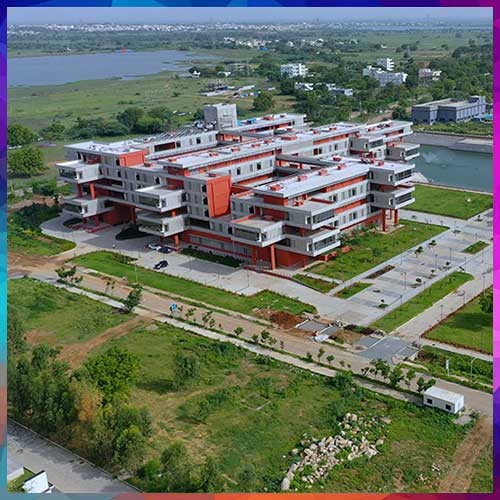
Salary obsession distorts engineering education: IIIT Hyderabad Director
The landscape of engineering education in India is undergoing significant changes, as highlighted by Professor Sandeep Kumar Shukla, the Director of IIIT Hyderabad. He emphasizes that the current obsession with high salaries is distorting the true essence of education and the long-term prospects for students and the nation.
The Salary Metric: A Double-Edged Sword
Every year, headlines celebrate graduates from prestigious engineering institutes landing lucrative job offers. Over time, these high salary packages have become the primary measure of success in the eyes of students and parents alike. Professor Shukla warns that this obsession with financial remuneration may have detrimental effects on the future of Indian technical education.
According to him, many of the brightest minds are increasingly drawn to multinational corporations (MNCs) that offer attractive salary packages, often at the expense of contributing to the local economy. This trend, he argues, is not just a career choice but a critical issue that could affect India’s economic resilience in the long run.
A Call for Systemic Reform
Professor Shukla believes that Indian technical education is at a pivotal moment, especially with the rapid advancements in artificial intelligence (AI) and shifting global dynamics. He advocates for a fundamental reset in the educational system, moving away from a service-oriented mindset that prioritizes high salaries over meaningful contributions to society.
To navigate this new era, he stresses the importance of addressing the changing values of students, reevaluating the gap between education and skill development, and reforming an academic ecosystem that has historically favored foreign publications over local problem-solving.
Resilience Through Mindset Change
One of the key challenges, according to Professor Shukla, is the crisis in student mindset. Many students equate success solely with high pay, leading to unrealistic expectations and discouragement when they do not meet these benchmarks. This phenomenon has contributed to rising mental health issues among students in top institutes.
He advocates for a return to a more service-oriented approach, where students focus on contributing to grassroots economies rather than merely seeking the highest salary. “Without strengthening the grassroots economy, India will not progress,” he asserts.
Broadening Perspectives in Education
IIIT Hyderabad has taken steps to address these issues by integrating practical experiences into its curriculum. The institute operates research centers that connect students with labs and interdisciplinary teams early in their academic journey. Initiatives include:
- A product lab that encourages innovation.
- A Centre for Innovation and Entrepreneurship to foster entrepreneurial skills.
- A compulsory two-semester value-education course aimed at broadening students’ perspectives beyond salary metrics.
Additionally, the institute plans to establish a dedicated career counseling vertical to guide students towards research, public service, and entrepreneurship, alongside traditional corporate placements.
The Skilling Divide: Beyond Trends
As generative AI continues to evolve, the distinction between narrow skilling and true education has become increasingly important. Professor Shukla warns against falling into the “AI-ML trap,” where students chase trendy software skills that may quickly become obsolete. While online programs can be effective for targeted technical skills, they cannot replace the foundational education that fosters critical thinking and teamwork.
“We need students with transferable and soft skills alongside a strong technological foundation,” he emphasizes. Preparing students for careers that may span decades requires teaching them how to learn and adapt rather than merely how to use specific tools or frameworks.
Long-Term Commitment to Education
Professor Shukla advocates for a sustained institutional commitment to core technology areas, such as VLSI (Very Large Scale Integration) and microprocessor systems, in collaboration with industry partners. He believes that long-term capability in hardware design necessitates a focus on education rather than short-term skilling cycles.
“Education is necessary, and skilling is also necessary, but they have their own places,” he states. Reducing education to mere skilling will not yield well-rounded employees or responsible citizens.
Reforming the Academic Ecosystem
To correct the current trajectory, Professor Shukla calls for structural reforms in the academic ecosystem. He critiques the existing faculty evaluation systems that often prioritize publications in foreign journals, which may not address local issues effectively. Instead, he advocates for a system that rewards entrepreneurship, industry collaboration, and real-world problem-solving.
He points to innovative practices in other countries, such as China, where some universities allow students to earn degrees by building startups instead of writing journal papers, provided their technology translates into real-world impact.
Conclusion
In summary, the obsession with salary packages in engineering education is misguiding students and educators alike. By shifting the focus from financial remuneration to holistic education and societal contribution, institutions like IIIT Hyderabad can pave the way for a more resilient and responsible future for graduates. The need for systemic reform is urgent, and the time to act is now.
Note: The insights presented in this article are based on an interview with Professor Sandeep Kumar Shukla, Director of IIIT Hyderabad, and reflect his views on the current state and future of engineering education in India.