Scientists At IIT Dhanbad Develop Low Cost And Effective Electrode Material For Producing Green Hydrogen
Dhanbad, India – In a significant advancement towards enhancing the country’s energy security, researchers from the Department of Physics at the Indian Institute of Technology (Indian School of Mines) in Dhanbad have successfully developed a low-cost and effective electrode material aimed at producing green hydrogen. This breakthrough could potentially reduce the cost of green hydrogen production, making it more accessible to both the public and various industries.
The Vision Behind the Research
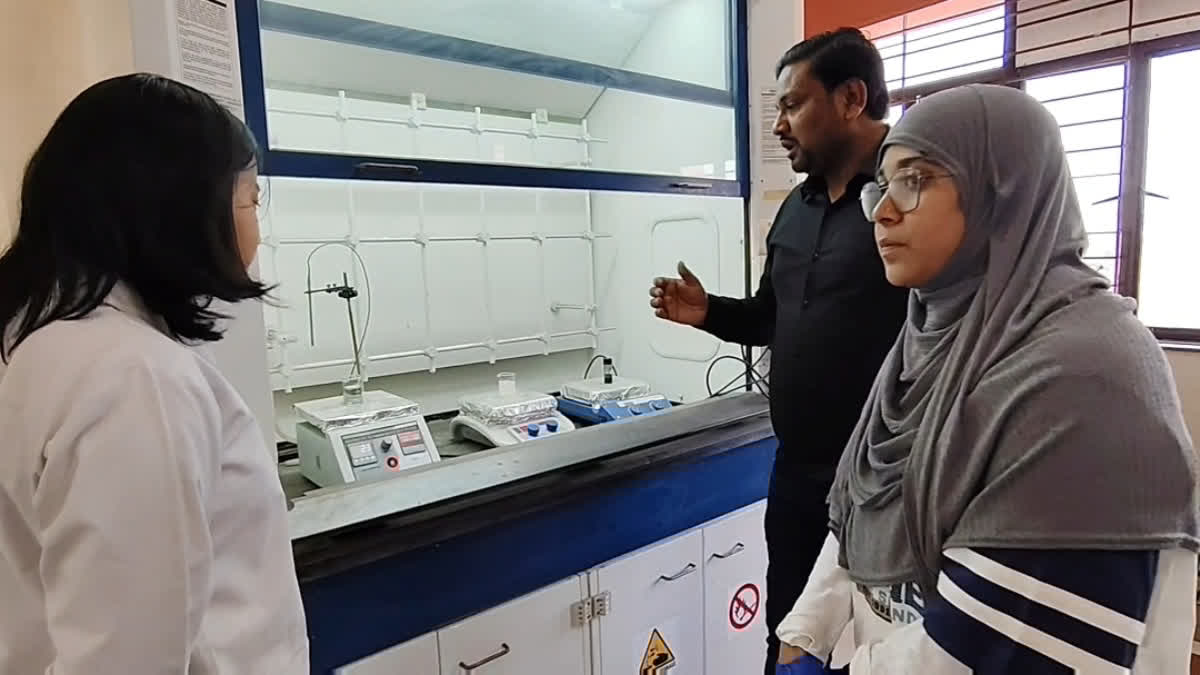
The research team, led by Sheikh Riazuddin, has been working diligently for over a year and a half to create a catalyst that utilizes low-cost and readily available elements. Riazuddin emphasized that the Indian government’s launch of the National Green Hydrogen Mission in 2023 was primarily focused on reducing production costs and fostering self-reliance in green hydrogen production.
Understanding Green Hydrogen
Green hydrogen is produced through the electrolysis of water, where electricity is used to split water into hydrogen and oxygen. Unlike traditional fuels, the combustion of hydrogen only emits water vapor, making it a clean energy source. The current production of green hydrogen is hampered by the high costs associated with the materials used in the process, particularly expensive metals like platinum, palladium, and ruthenium, which are often imported.
Innovative Catalyst Development
The research team has developed a new catalyst made from a combination of molybdenum, vanadium, sulfur, and carbon. Carbon, which includes forms like graphene and graphite, is relatively inexpensive, costing around Rs 60 per kilogram. The new material not only accelerates the process of water splitting but also requires less energy, making it a more efficient option for green hydrogen production.
Cost Implications
Currently, the price of green hydrogen is approximately Rs 500 per liter due to the reliance on costly metals. However, Riazuddin asserts that with the new material, the production cost could drop to less than Rs 50 per liter. “If this is possible, it would prove to be a major revolution in the energy sector,” he stated.
Government Support and Future Goals
The Government of India has set an ambitious target of producing 50 lakh tonnes of green hydrogen annually by 2030. The budget for 2026 includes specific funding provisions aimed at promoting the green hydrogen sector. This initiative is being implemented in collaboration with the Department of Science and Technology and the Innovation in Science Pursuit for Inspired Research (INSPIRE) programme.
Environmental Benefits
Green hydrogen is increasingly recognized as a clean fuel alternative. Unlike petrol and diesel, which emit harmful gases such as carbon dioxide and carbon monoxide, green hydrogen combustion produces only water vapor. This characteristic makes it a vital component in the fight against global warming and environmental degradation.
Future Applications and Industry Collaboration
Scientists believe that the use of green hydrogen will expand significantly in vehicles and machinery, offering better mileage and reduced emissions. The research findings have been published in the international journal Small (Wiley, 2026), and efforts are underway to collaborate with industrial partners for large-scale implementation of this technology.
A Vision for the Future
Riazuddin envisions a future where green hydrogen pumps are as commonplace as petrol and diesel pumps are today. If this technology is successfully scaled, India could achieve self-reliance in green hydrogen production, contributing to national energy security and sustainability.
Conclusion
The development of a low-cost and effective electrode material for producing green hydrogen by scientists at IIT Dhanbad represents a significant step toward a sustainable energy future. With continued research, government support, and industrial collaboration, the dream of affordable green hydrogen could soon become a reality.
Note: This article is based on the latest research and developments as of February 2026, highlighting the importance of green hydrogen in the global energy landscape.