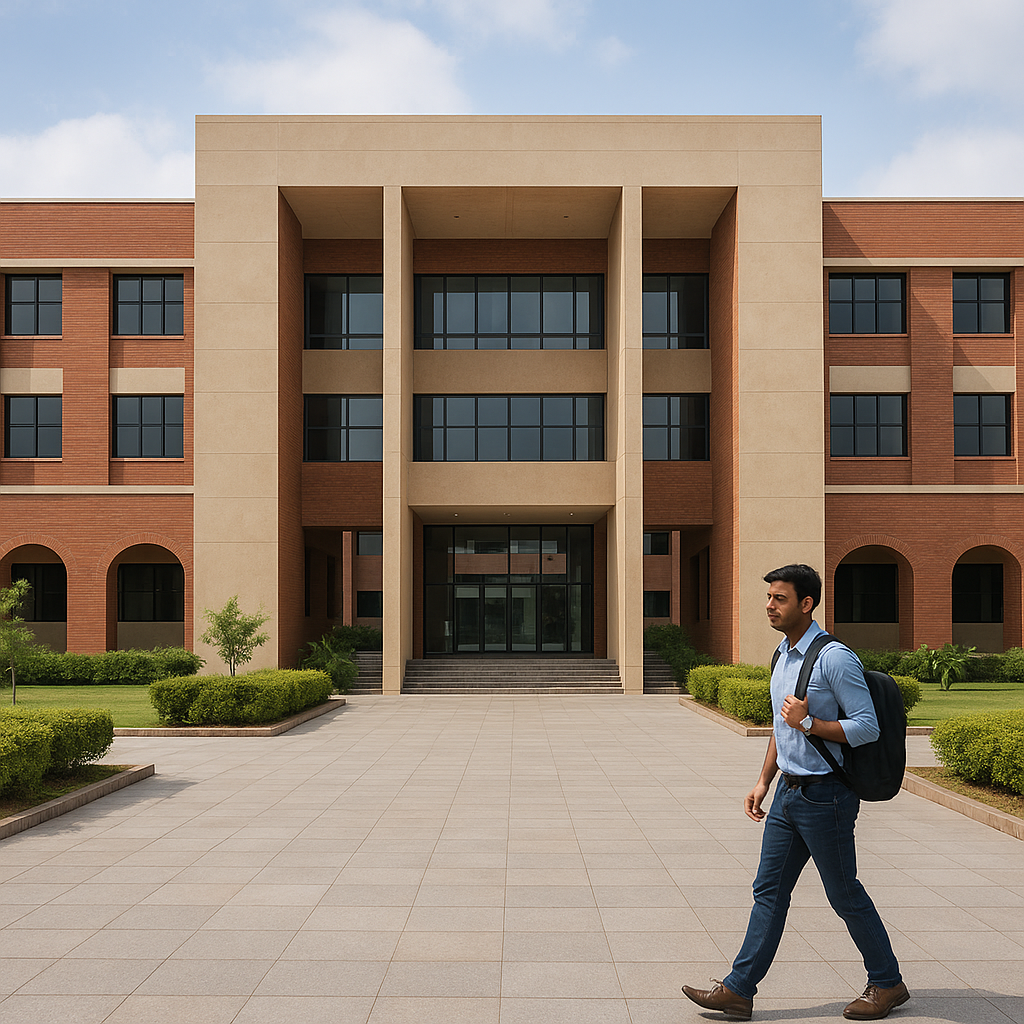
Tamil Nadu: Campus Mandir at IIM Tiruchirappalli loses electricity following an order by Director Godwin Tennyson
In a recent administrative decision that has sparked significant debate, the newly appointed director of the Indian Institute of Management (IIM) Tiruchirappalli, Godwin Tennyson, has reportedly ordered the discontinuation of electricity supply to a small Mandir located on campus. This action has raised questions regarding the interpretation of secularism within public institutions in India.
The Background of the Mandir
The Mandir at IIM Tiruchirappalli has served as a modest yet meaningful space for students, staff, and visitors to engage in spiritual practices and reflection. For years, it has been a place where individuals could offer prayers and find solace amidst their academic pursuits. The Mandir was equipped with basic lighting, which allowed devotees to visit during early morning and evening hours.
The Directive from Director Godwin Tennyson
Following his recent appointment, Director Tennyson issued a directive to discontinue the electricity supply to the Mandir. This decision has left the temple in darkness, prompting discussions about the implications of such an action on campus culture and religious expression.
Reactions and Concerns
The decision to cut off electricity to the Mandir has been met with mixed reactions. Many observers have expressed concern that this action reflects a selective interpretation of secularism, which traditionally promotes equal respect for all religions. Critics argue that the removal of basic facilities from the Mandir disregards the sentiments of those who hold it sacred.
Understanding Secularism in India
In the Indian context, secularism is often understood as a principle that ensures the equal treatment of all religions. However, the interpretation of this principle can vary significantly. The removal of electricity from the Mandir raises questions about whether secularism is being used to marginalize certain faiths, particularly Hinduism, in public spaces.
The Symbolism of Darkness
For many Hindus, a Mandir is more than just a physical structure; it is a sacred space where rituals and traditions are observed. The act of lighting a lamp, for instance, holds profound spiritual significance. Therefore, the absence of light in the Mandir is not merely a practical issue; it carries deep symbolic meaning. Darkness in a Mandir can be seen as a metaphor for neglect and exclusion of a faith that is integral to many people’s lives.
Broader Implications for Campus Culture
The situation at IIM Tiruchirappalli transcends the immediate issue of electricity supply. It reflects a broader conversation about the role of religion in educational institutions and the extent to which secularism should influence campus policies. Many argue that small places of worship, like the Mandir, contribute to the cultural diversity of educational environments and should be maintained as spaces of inclusivity.
Historical Context of Religious Spaces in Indian Campuses
Across India, it is not uncommon for educational institutions to have informal places of worship, reflecting the diverse cultural and spiritual backgrounds of the student body. These spaces often serve as vital components of campus life, allowing individuals to connect with their faith amidst the rigors of academic life. The existence of such spaces underscores the importance of recognizing and respecting the varied beliefs of all students.
Conclusion
The decision to cut off electricity to the Mandir at IIM Tiruchirappalli has ignited a significant discussion about the interpretation of secularism in modern institutions. For many, this incident is emblematic of a larger trend where the traditions and practices of certain faiths may be overlooked or marginalized in the name of secularism. As educational institutions navigate these complex issues, it is crucial to find a balance that respects all religious beliefs while fostering an inclusive environment for all students.
Note: The ongoing discourse surrounding this issue highlights the need for a nuanced understanding of secularism and its implications for religious expression in public spaces.