ThinkEdu 2026: India at the forefront of brain research, says IIT Madras professor
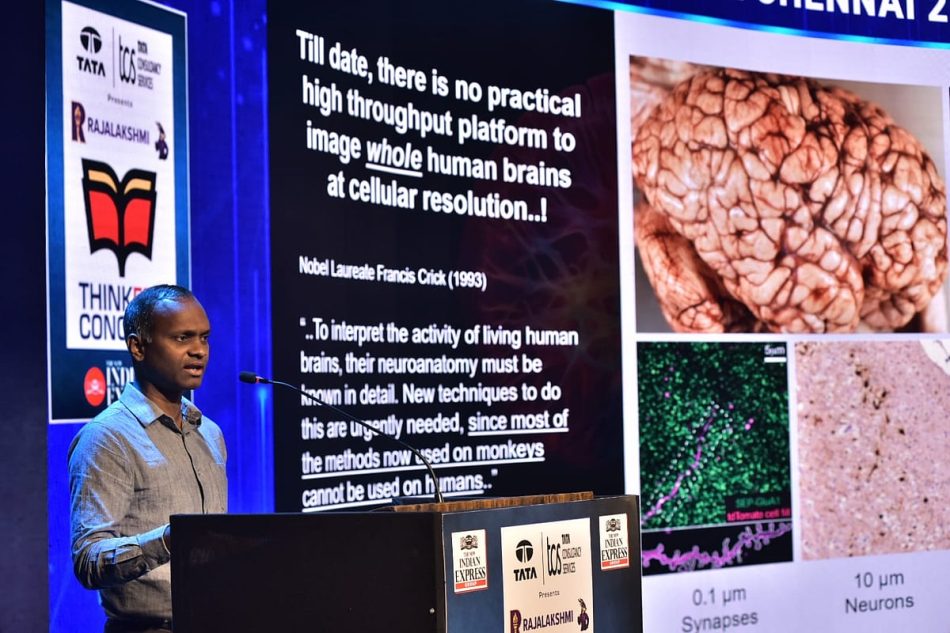
Chennai, March 2, 2026 – At the ThinkEdu Conclave 2026, organized by The New Indian Express, Dr. Mohanasankar Sivaprakasam, a professor at IIT Madras and head of the Healthcare Technology Innovation Centre (HTIC), emphasized the significance of advanced brain research in India. His insights during the session titled ‘Mapping the Human Brain: Understanding Intelligence’ highlighted the intersection of neuroscience, artificial intelligence, and biomedical engineering.
The Importance of Neuroanatomy
Dr. Sivaprakasam quoted Nobel laureate Francis Crick, stressing that a profound understanding of neuroanatomy is essential for interpreting human brain activity. He pointed out that methodologies used in animal studies cannot be directly applied to humans due to fundamental differences in brain structure and function.
Challenges in Brain Mapping
One of the key challenges in brain research is the complexity of the human brain, which contains approximately 100 billion neurons and 20 to 40 trillion connections. Dr. Sivaprakasam noted that existing microscopy methods are inadequate for capturing large volumes of brain tissue in detail. He emphasized the need for new imaging and sectioning techniques to address these limitations.
Advancements at IIT Madras
Dr. Sivaprakasam discussed the groundbreaking work being done at IIT Madras in the field of neurotechnology. The institute has successfully sourced over 70 post-mortem human brains from international donors, which are preserved at minus 80 degrees Celsius. This preservation is crucial for subsequent research and analysis.
Engineering Challenges
The process of mapping the human brain involves significant engineering challenges, including the sectioning and imaging of large brain samples. Dr. Sivaprakasam explained how IIT Madras has developed specialized systems and microscopes designed to handle these tasks effectively.
Creating a 3D Human Brain Atlas
One of the notable outputs of this research initiative is DHARANI, a 3D cell-resolution human brain atlas. This atlas aims to provide a comprehensive reference for brain structure and function. Dr. Sivaprakasam mentioned that work is ongoing to enhance this project further.
Support from the Scientific Community
Despite initial skepticism regarding the scale of the brain mapping effort, Dr. Vijay Raghavan, the former Principal Scientific Adviser to the Government of India, recognized its potential and supported funding for the ambitious project. This backing has been instrumental in advancing the research.
Global Implications of Brain Mapping
The larger objective of this initiative is to produce detailed human brain maps that can serve as a global reference for researchers and clinicians. Currently, more than 100 human brains are being mapped as part of this extensive effort, which holds promise for advancing our understanding of human cognition and neurological health.
The Future of Brain Research in India
As India positions itself at the forefront of brain research, the collaboration between various disciplines—neuroscience, artificial intelligence, and biomedical engineering—will play a crucial role in unlocking the mysteries of the human brain. The work being done at IIT Madras exemplifies the potential for interdisciplinary research to yield significant insights into brain function and intelligence.
Conclusion
In summary, the ThinkEdu Conclave 2026 highlighted India’s commitment to advancing brain research through innovative technologies and collaborative efforts. Dr. Mohanasankar Sivaprakasam’s presentation underscored the importance of understanding neuroanatomy and the challenges that lie ahead in mapping the human brain. As research progresses, the implications for neuroscience, mental health, and artificial intelligence are vast and promising.
Note: The information presented in this article is based on the insights shared during the ThinkEdu Conclave 2026 and aims to highlight the advancements in brain research being undertaken in India.