This monkey selfie will protect you from AI slop
What happens when something that isn’t human creates art? This question has sparked a series of bizarre court battles, particularly centered around a famous image taken by a monkey. The implications of these legal disputes extend far beyond the realm of copyright and touch upon the very essence of creativity and ownership in the age of artificial intelligence (AI).
The Origin of the Monkey Selfie
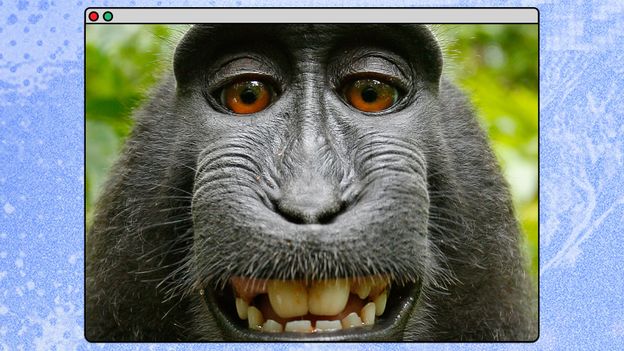
In 2011, photographer David Slater ventured into the humid jungles of Indonesia to capture images of crested black macaques, a critically endangered and photogenic species. To entice the monkeys to interact with his camera, Slater set it up on a tripod with autofocus and a flash. As he hoped, the curious macaques began to play with the equipment. One monkey, either named Naruto or Ella, pressed the shutter button, resulting in a now-famous selfie.
The Legal Battle Begins
Initially, Slater enjoyed the fame that came with the monkey’s selfie. However, his troubles began when someone uploaded the photo to Wikipedia, allowing it to be downloaded and used for free. Slater requested the Wikimedia Foundation to take it down, claiming he lost approximately £10,000 (around $13,400 today) in sales due to the unauthorized use of the image. The Wikimedia Foundation refused, arguing that the photo was in the public domain because it was not taken by a human.
This dispute prompted the U.S. Copyright Office to issue a statement declaring that it would not register works created by non-human authors, with “a photograph taken by a monkey” as one of the examples. Slater’s case became a focal point in discussions about copyright and ownership in the context of non-human creativity.
PETA’s Involvement
The situation took another turn when the advocacy group People for the Ethical Treatment of Animals (PETA) sued Slater on behalf of the monkey. The lawsuit argued that all proceeds from the photo should belong to the macaque that took it. However, after four years of legal battles, a San Francisco judge dismissed the case, reasoning that monkeys cannot file lawsuits.
Ryan Abbott, an intellectual property lawyer, noted that the case sparked significant public discourse, initially framed around animal rights but ultimately touching on the implications of AI and creativity.
The Rise of AI and Copyright Challenges
Fast forward to the present, and similar questions are arising in the context of AI-generated content. Stephen Thaler, a technologist, created an AI system named Dabus (Device for the Autonomous Bootstrapping of Unified Sentience), which he claims can independently generate creative works. Thaler attempted to register an image created by Dabus, titled “A Recent Entrance to Paradise,” but the U.S. Copyright Office denied his application, citing the same reasoning used in the monkey selfie case: works created by non-humans cannot be copyrighted.
The Implications for Creative Ownership
The legal landscape surrounding copyright has evolved since the Copyright Act of 1790. Initially, it addressed traditional forms of expression like writing and drawing. However, the advent of photography introduced new challenges regarding authorship. The Supreme Court has interpreted copyright law to protect the expression of tangible ideas, which could extend to AI-generated content.
As Abbott points out, the distinction between a human issuing instructions to a machine and a person using AI to create content is increasingly blurred. This raises critical questions about ownership: if a machine creates a work, who owns it? The implications of this question are profound, especially as AI technology continues to advance and produce an increasing amount of content.
AI’s Impact on the Creative Industry
The rise of AI threatens to disrupt traditional creative industries. In a world where machines can generate music, movies, and literature, the question of ownership becomes paramount. If no one can own AI-generated content, how will creators, studios, and companies profit from their work? This uncertainty could lead to a future where human creativity is undervalued or overshadowed by the sheer volume of AI-generated output.
Abbott and Thaler took their legal fight all the way to the Supreme Court, which ultimately declined to hear the case, thereby preserving the lower court’s ruling in favor of the Copyright Office. The decision reinforces the idea that if AI creates something, no one can claim ownership—not the AI itself, the company operating it, nor the individual who utilized it.
Conclusion
The story of the monkey selfie and its legal ramifications serves as a critical case study in the evolving landscape of copyright and creativity. As AI technology continues to develop, the challenges surrounding authorship, ownership, and the definition of creativity will only become more complex. The ongoing discussions and legal battles will shape the future of how we understand and interact with art, creativity, and technology.
Note: This article highlights the intricate relationship between technology, creativity, and the law, emphasizing the need for ongoing dialogue as we navigate the implications of AI in our lives.