This simulation startup wants to be the Cursor for physical AI
In the rapidly evolving world of artificial intelligence, the concept of physical AI is gaining traction. This technology promises to allow engineers to program physical agents in a manner similar to how they program digital ones. However, the industry is still grappling with significant challenges, primarily due to a lack of data from real-world environments. To address these challenges, a startup named Antioch is emerging as a key player by developing advanced simulation tools for robot developers.
The Challenge of Physical AI
Robotics has long been hindered by the need for extensive data collection from physical spaces. To train their machines effectively, companies often resort to constructing mock-up warehouses or employing surveillance techniques on factory lines and gig workers. This process is not only time-consuming but also costly. A promising alternative lies in simulation technology, which creates detailed virtual replicas of real-world environments. Such simulations can provide the necessary data and workspaces that roboticists require to develop and test their machines in a scalable manner.
Antioch: Closing the Sim-to-Real Gap
Antioch aims to tackle the “sim-to-real gap,” which refers to the challenge of ensuring that virtual environments are realistic enough for robots trained within them to operate reliably in the physical world. Co-founder Harry Mellsop emphasizes the importance of reducing this gap: “How can we do the best possible job reducing that gap, to make simulation feel just like the real world from the perspective of your autonomous system?”
Funding and Founders
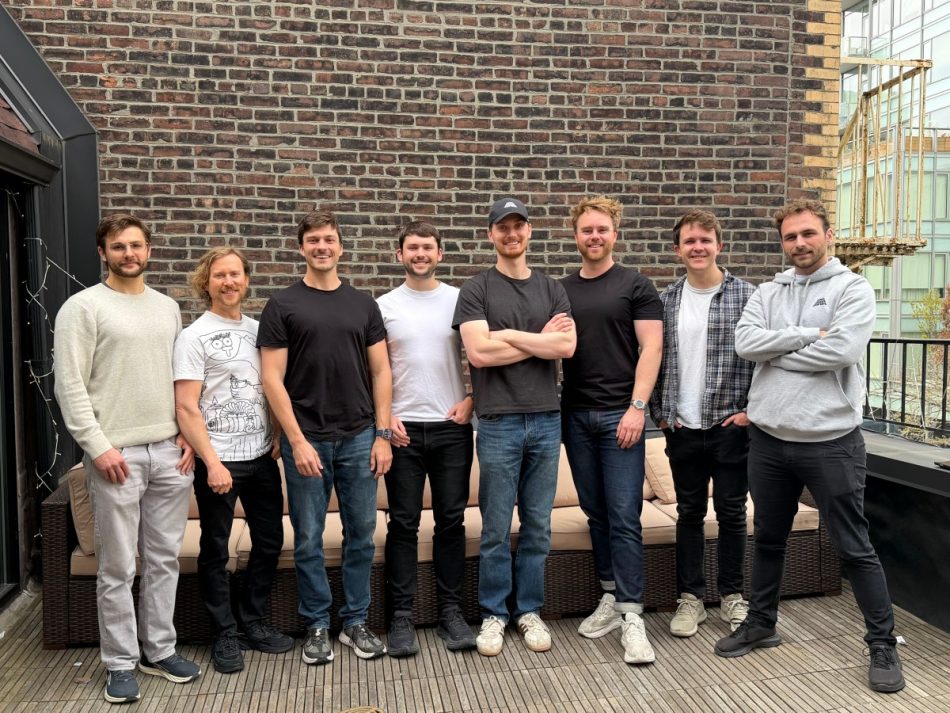
Recently, Antioch raised an impressive $8.5 million in a seed funding round, valuing the company at $60 million. The funding was led by venture firms A* and Category Ventures, with additional participation from MaC Venture Capital, Abstract, Box Group, and Icehouse Ventures. The company was founded in May of last year by Mellsop and four other co-founders, including Alex Langshur and Michael Calvey, who have a history of successful ventures in the tech industry.
The Need for Better Simulation Tools
The demand for improved simulation tools is becoming increasingly apparent in the autonomy sector. For instance, self-driving car companies like Waymo utilize advanced world models developed by Google DeepMind to test and evaluate their driving algorithms. This approach reduces the need for extensive data collection when deploying autonomous vehicles in new areas, significantly lowering costs associated with scaling up technology.
Antioch seeks to provide a platform that enables newer companies, which may lack the financial resources to build their own testing arenas or conduct extensive real-world trials, to access high-quality simulation tools. Mellsop notes, “The vast majority of the industry doesn’t use simulation whatsoever, and I think we’re now just really understanding clearly that we need to move faster.”
Antioch’s Unique Offering
Antioch’s product is often compared to Cursor, a widely-used AI-powered software development tool. The platform allows robot builders to create multiple digital instances of their hardware and connect them to simulated sensors that replicate the data the robot’s software would receive in real-world scenarios. This capability enables developers to test various edge cases, perform reinforcement learning, and generate new training data, provided that the simulation is of high fidelity.
The challenge lies in ensuring that the physics of the simulation accurately reflects reality. If not, there is a risk of malfunction when the model is deployed in a real machine. Antioch begins with models developed by Nvidia and World Labs, enhancing them with domain-specific libraries to facilitate ease of use.
Collaborative Learning
By working with multiple customers, Antioch gains a depth of context for refining its simulations that no single physical AI company could achieve on its own. Çağla Kaymaz, a partner at Category Ventures, highlights the significance of this collaborative approach: “What happened with software engineering and LLMs is just starting to happen with physical AI.”
Kaymaz further explains that the risks associated with physical AI are considerably higher than those in software development, making accurate simulation tools essential for success.
Focus on Sensor and Perception Systems
Currently, Antioch is concentrating on sensor and perception systems, which are critical components in automated vehicles, farm machinery, construction equipment, and aerial drones. While the ultimate goal of creating generalized robots capable of replicating human tasks is still on the horizon, Antioch’s initial focus on these core areas positions it well within the industry.
Engagement with Major Companies
Although Antioch primarily targets startups, some of its earliest collaborations have been with large multinational corporations already investing heavily in robotics. Adrian Macneil, a former executive at the self-driving startup Cruise, recognizes the importance of simulation in building safety cases and executing high-accuracy tasks. He states, “It’s not possible to drive enough miles in the real world.”
Macneil envisions a future where tools similar to those that spurred the SaaS revolution—such as GitHub, Stripe, and Twilio—will emerge to support physical AI, creating a robust ecosystem for developers.
The Future of Physical AI
As the field of physical AI continues to evolve, Antioch is positioned to play a significant role in its development. Mellsop believes that within the next two to three years, most autonomous systems will be developed primarily through software. He asserts, “It’s the first time you can have autonomous agents iterate on a physical autonomy system and actually close the feedback loop.”
Innovative experiments are already underway. For example, David Mayo, a researcher at MIT’s Computer Science and Artificial Intelligence Laboratory, is utilizing Antioch’s platform to evaluate large language models (LLMs). In one experiment, Mayo has AI models design robots, which are then tested in Antioch’s simulator. This groundbreaking approach could redefine how robots are developed and tested in the future.
Note: The landscape of physical AI is rapidly changing, and companies like Antioch are at the forefront of this evolution. Their innovative simulation tools could be pivotal in bridging the gap between virtual and real-world applications, paving the way for safer and more efficient robotic systems.