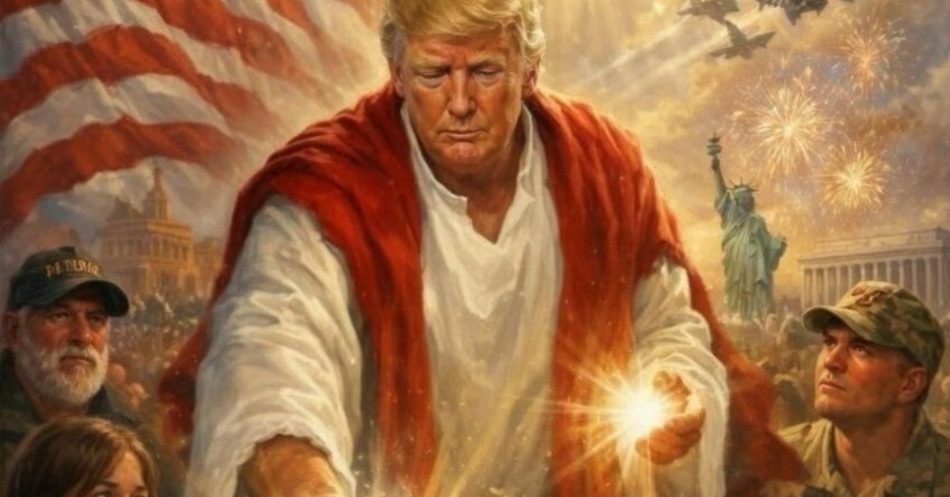
Trump posts AI image of himself as Jesus-like figure, drawing outrage
In a recent social media post, former President Donald Trump shared an AI-generated image depicting him as a Jesus-like figure. The image has sparked significant controversy and backlash from various quarters, igniting discussions about the implications of such portrayals in the political and social landscape of the United States.
The Image and Its Context
The AI-generated artwork features Trump with long hair and a glowing aura, reminiscent of traditional depictions of Jesus Christ. The post was made on Trump’s platform, Truth Social, where he frequently shares his thoughts and engages with supporters. The image was accompanied by a caption that many interpreted as a bold statement of his self-perception and political identity.
Public Reaction
The response to the image has been overwhelmingly negative among critics. Many have taken to social media to voice their outrage, arguing that the depiction is blasphemous and trivializes religious figures. Some have expressed concern that such imagery could further polarize an already divided nation.
Criticism from Religious Leaders
Religious leaders from various faiths have condemned the image. They argue that equating a political figure with Jesus undermines the sanctity of religious beliefs. A prominent pastor stated, “This is not just a political statement; it’s an affront to the faith of millions.”
Political Implications
Political analysts have weighed in on the potential ramifications of Trump’s actions. Some believe that this move could alienate moderate voters who may find the image offensive. Others suggest that it may resonate with his base, who often view Trump as a savior figure in the political arena.
The Role of AI in Politics
This incident raises questions about the use of artificial intelligence in political messaging. As AI technology becomes more advanced, its ability to create compelling visuals can be harnessed for various purposes, including propaganda and political campaigning. The ethical implications of using AI in this manner are still being debated.
Potential for Misuse
Experts warn that AI-generated images can easily be manipulated to spread misinformation. The ability to create realistic images that are not based on reality can lead to confusion among the public. This incident serves as a reminder of the need for critical thinking and media literacy in an age where digital content can be easily fabricated.
Support from Followers
Despite the backlash, many of Trump’s supporters have praised the image. They argue that it symbolizes his fight against what they perceive as a corrupt political system. Supporters have taken to social media to share their approval, framing the image as a representation of Trump’s resilience and determination.
Social Media Dynamics
The incident highlights the role of social media in shaping public perception. Platforms like Truth Social allow Trump to communicate directly with his followers, bypassing traditional media channels. This direct line of communication can amplify his messages and create a sense of community among supporters.
Historical Context
The use of religious imagery in politics is not new. Throughout history, political figures have invoked religious symbolism to garner support and legitimize their authority. However, the blending of politics and religion in such a blatant manner raises concerns about the separation of church and state.
Comparisons to Previous Incidents
Similar controversies have arisen in the past, such as when political figures have used religious language or imagery to connect with voters. These instances often lead to debates about the appropriateness of such tactics and their impact on public discourse.
Conclusion
The posting of an AI-generated image of Donald Trump as a Jesus-like figure has ignited a firestorm of criticism and debate. As the lines between politics, religion, and technology continue to blur, it is essential for society to engage in thoughtful discussions about the implications of such portrayals. The incident serves as a reminder of the power of imagery in shaping public perception and the responsibility that comes with it.
Note: This article reflects the opinions and reactions surrounding the incident as of October 2023 and aims to provide a balanced overview of the situation.